
Home battery storage for Irish installers, factory-direct from Huizhou and Shenzhen
Home batteries are now the natural add-on to every solar job, and from 6 October 2026 a new grant of up to €600 for residential batteries was reported to sit alongside the solar PV grant. Ériu Sourcing buys LiFePO4 batteries and hybrid inverters from the Huizhou, Shenzhen and Dongguan battery cluster for Irish solar and EV-charger installers, with the grid, safety and transport paperwork checked before anything ships.
Last reviewed:
- Guangdong Manufacturing region
- 1–3 weeks Stock models, then DG sea freight
- EN + CE Compliance verified at factory
Guangdong (Huizhou, Shenzhen and Dongguan battery cluster)
Huizhou is home to major lithium cell makers, and Shenzhen and Dongguan build many of the battery packs and inverters sold under European brands. Buying from the pack and inverter makers, with the cell source documented, removes the brand importer's margin without giving up traceability.
See our full China network →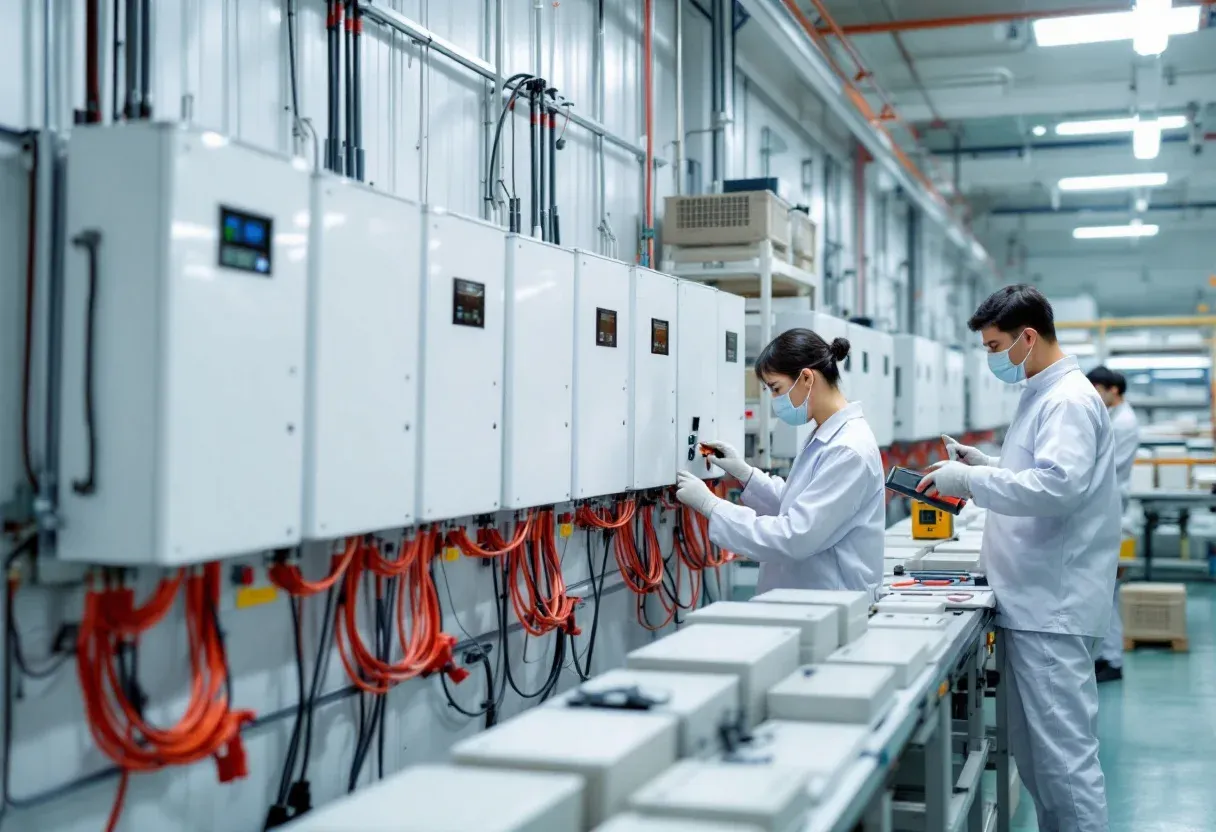
Built for Irish trade buyers, not consumers
- ✓ Solar PV installers
- ✓ EV-charger installers
- ✓ Electrical contractors
- ✓ Heat-pump and retrofit installers
- ✓ Housing developers fitting solar as standard
Technical specification
| Battery chemistry | LiFePO4 (lithium iron phosphate) with documented cell source and grade |
|---|---|
| Formats | Wall-mounted and stackable modules, typically 5–15 kWh for homes; low-voltage and high-voltage systems |
| Inverters | Hybrid (solar + battery) inverters, single and three phase, with EN 50549-1 type-test certificates for Irish settings |
| Monitoring | App and web monitoring; check RED cybersecurity compliance for Wi-Fi dongles |
| Warranty | Battery and inverter warranty terms and cycle/throughput limits agreed in writing; spare stock and RMA route confirmed before ordering |
What we verify at the factory, before the container is sealed
- Inverters: type-test certificate to IS EN 50549-1 with current Irish settings, required by ESB Networks for microgeneration (NC6 notification by the installer)
- Batteries: EU Battery Regulation (EU) 2023/1542, including safety requirements for stationary battery energy storage; battery passport due for industrial batteries over 2 kWh from 18 February 2027
- Battery safety test reports (for example IEC 62619) and UN38.3 transport testing for each model
- CE: LVD 2014/35/EU and EMC 2014/30/EU; RED 2014/53/EU for wireless monitoring
- WEEE and battery producer registration in Ireland for the importer of record
Goods that fail compliance or pre-shipment QC stay in China at the factory's cost, you do not pay freight on non-compliant product.
Ask about compliance documentation →What this lands at in Ireland
Battery and inverter prices from the factory sit well below branded European distribution, and the gap is widest on the battery modules. Freight is a real cost because batteries ship as dangerous goods, so orders work best by the pallet or container. We quote landed cost including DG freight, duty and 23% VAT.
Lead time and logistics
Lead time: Stock models 1–3 weeks; custom branding 4–6 weeks; then dangerous-goods sea freight (book ahead, as not every sailing accepts batteries).
Battery modules ship as Class 9 dangerous goods (UN3480) by sea, usually on pallets in a full or shared container booked with a DG-approved carrier. Inverters ship as general cargo and can travel with the batteries. Ériu Sourcing supplies and ships only; installation is done by your own registered electrical contractor.
Electronics, sourcing questions answered
Does Ériu Sourcing install home batteries?
No. We source, check and ship batteries and inverters from China to installers and businesses in Ireland, and we do not install anything. Homeowners should go to an SEAI-registered installer; installers can buy from us.
Can installers use batteries from China on SEAI grant jobs?
A new residential battery grant of up to €600 was reported to take effect from 6 October 2026, alongside the solar PV grant of up to €1,800. Grant jobs come with SEAI rules on installers and equipment, so check SEAI's current product and installer requirements for each model before you quote. We supply the certificates and datasheets you need for that check.
What does ESB Networks need for the inverter?
For microgeneration, ESB Networks requires the inverter to comply with IS EN 50549-1 with current Irish settings, and the NC6 notification must be accompanied by a type-test certificate. We check the certificate covers the exact inverter model and Irish settings before you order.
How are home batteries shipped from China?
As Class 9 dangerous goods, usually by sea. Each battery model needs a UN38.3 test report, correct packing and labelling, and a dangerous-goods declaration, and the booking must go with a carrier that accepts them. We handle that end to end.
What about the EU battery passport?
Under the EU Battery Regulation, industrial batteries over 2 kWh need a digital battery passport from 18 February 2027, and stationary storage batteries are generally treated as industrial batteries. We confirm with each supplier how they will meet the passport requirement before you commit to a range.
Related products you can source direct
- Portable power stations
- CCTV & IP security cameras
- Network switches & equipment
- Smart home & IoT devices
- Commercial digital signage & displays
- POS hardware & barcode scanners
- Phone replacement screens
- Phone replacement batteries
Get factory-direct pricing for home battery storage for irish installers, factory-direct from huizhou and shenzhen
Send a brief, specification, quantity, timeline. We come back with factory-level pricing, a supplier shortlist, and a clear plan. No obligation.