They're in their late twenties or early thirties. They're working, maybe doing well. And they're still in the box room they grew up in, because the maths of moving out simply won't close. The rent eats the deposit; the deposit never grows; another year goes by.
If that's your house, the first thing worth saying is: you are not unusual, and neither are they.
440,000 grown adults, and counting
In Census 2022, 41% of Irish adults aged 18 to 34 were living with their parents, more than 440,000 people, up from 32% in 2011 (CSO, Census 2022). That isn't a generation that didn't try hard enough. It's a country tens of thousands of homes a year short, with rents past €2,000 a month in much of the State.
For most parents there have only ever been two responses, and both hurt: hand over a deposit you can't really spare, or watch a capable adult stay stuck. As of 2026, there is a third.
The third option: a home of their own, twenty steps away
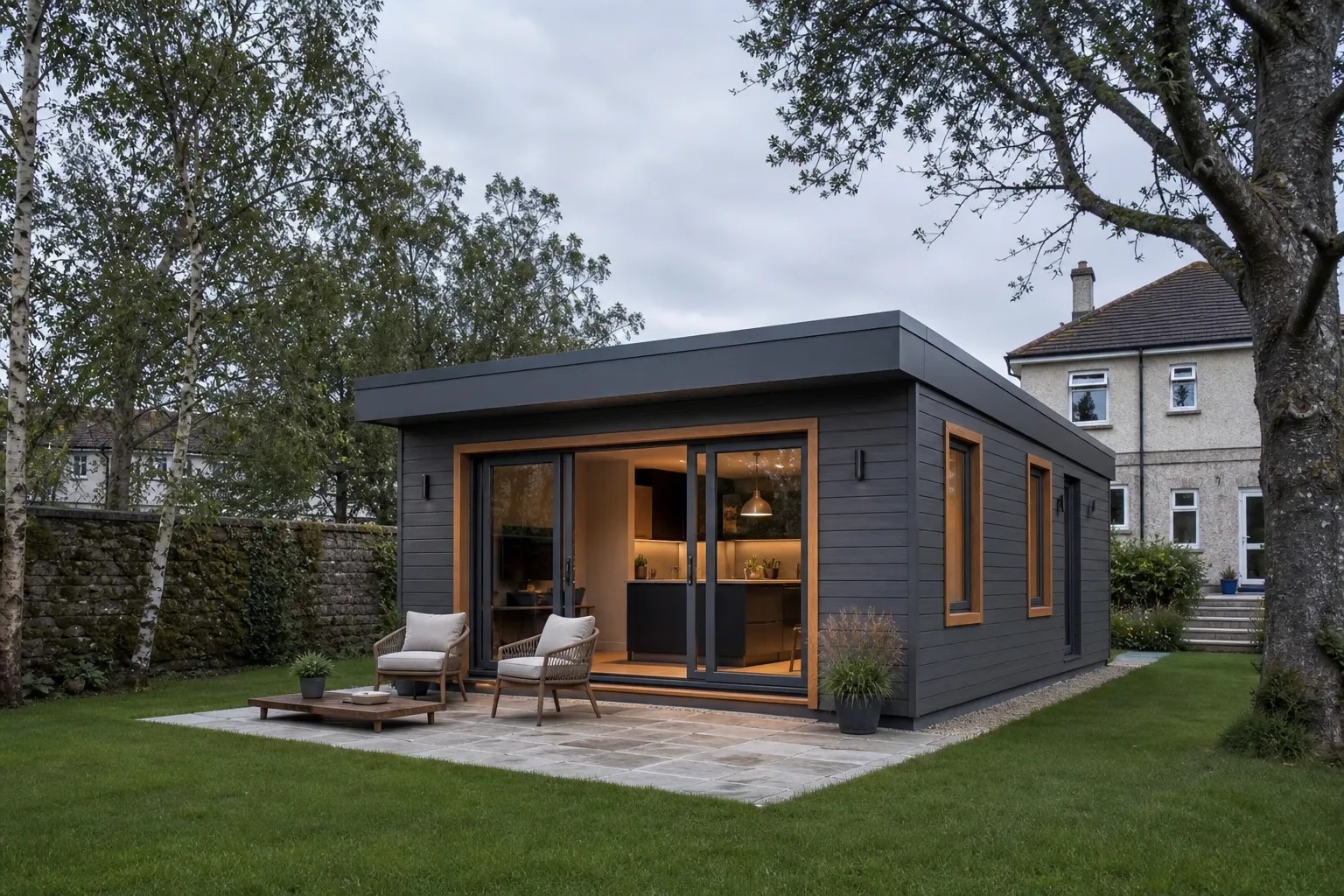
Since 27 July 2026, Irish planning law has a new category of home: a detached, self-contained dwelling of 32 to 45 m² in the rear garden of the house you live in, which needs no planning application where the Class 3A conditions are met, including linking its services to the main house and giving your council 14 days' notice before work starts.
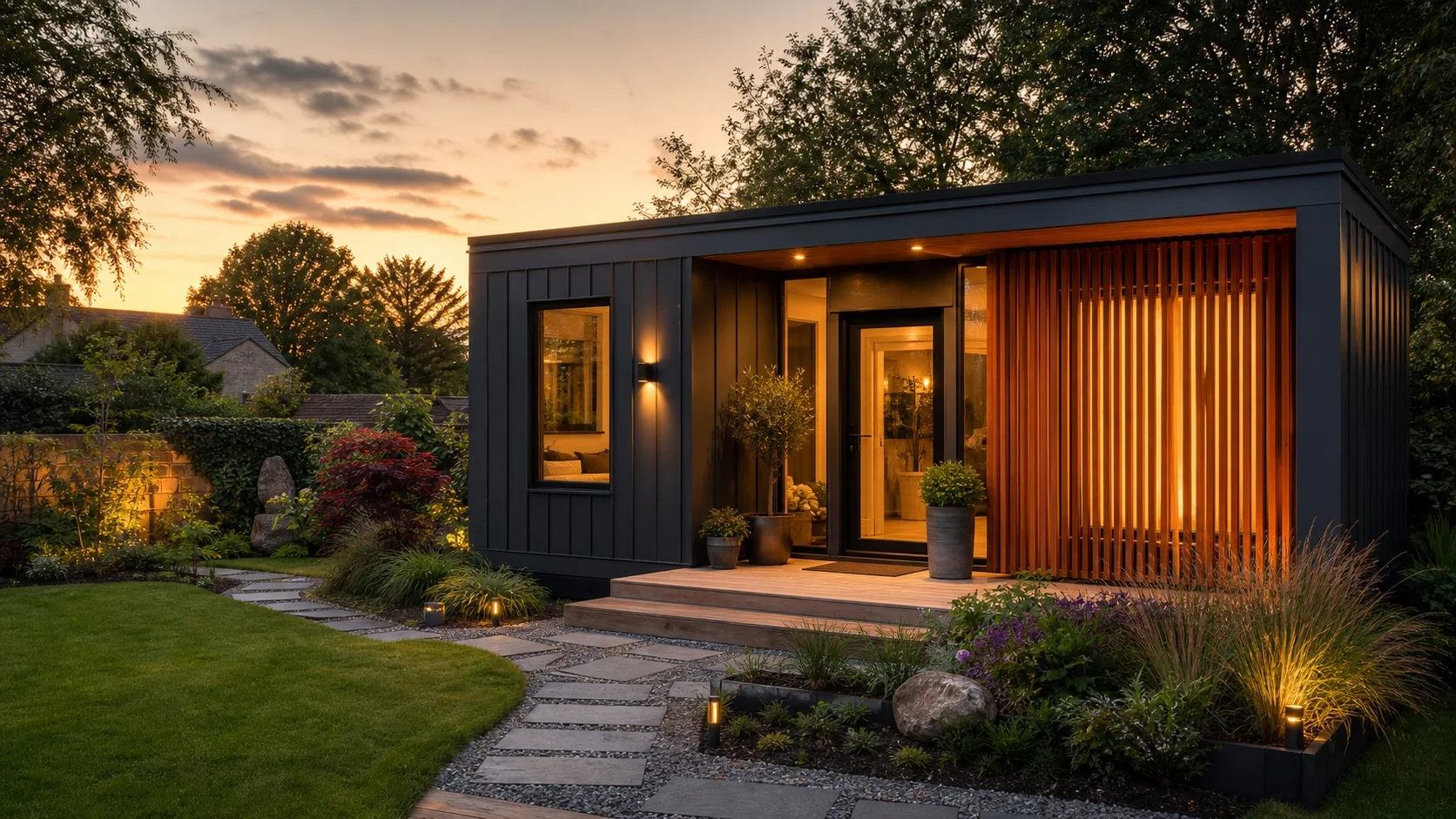
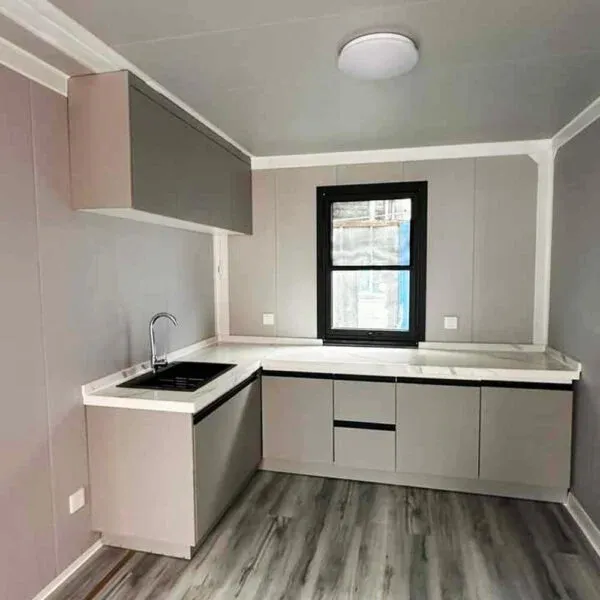
That is not a glorified shed. It's a real one-bedroom home: their own front door, their own kitchen, their own bathroom, their own life, close enough that family stays family, independent enough that they're finally living rather than waiting.
It is important to be straight about the conditions: the exemption is law since 27 July 2026 (S.I. No. 340 of 2026), but it only applies where every condition is met, and the home must stay with the main house rather than be sold separately. The sensible first step is always a site review against the Class 3A conditions, we set out exactly what the rules say here.
For the price of a small car, not a deposit you'll never see again
This is what makes it finally realistic for ordinary families: it doesn't cost what a house costs. A unit like the Ériu 20ft Expandable, which opens to roughly 34 m² in a single working day, starts from €12,995 FOB China for a basic but livable specification including simple furniture, and finishes up to a fully-fitted, compliant, A2-BER home for a fraction of the €110,000–€180,000 an Irish-built equivalent typically costs.
Because the foundation, crane, services connection and BER differ from one garden to the next, there is no single all-in figure to quote honestly, so we model the exact number for your site and itemise every line. What's certain is the comparison most parents come back to: a deposit handed over is gone, while a home built on your own ground is an asset that stays in the family and keeps working long after they've found their feet.
If you want to see the buyer's-eye version of all this, the layouts, the spec, and how families are using it, we've laid it out on one page here.
What it takes, told straight
We would rather you knew this now than after you'd signed. Two things matter most:
- Planning-exempt is not building-regulations-exempt. Even under Class 3A, a back-garden home still needs a Commencement Notice, services connected from your house, a foundation, and a BER on completion. Every Ériu unit is specified to the Irish Building Regulations (TGD Parts A–M) and ships with a full compliance pack; the site phase is carried out by your own Irish contractor. Here's exactly what that involves.
- The mortgage point. Most Irish lenders will not currently mortgage a property that has a second self-contained dwelling on the same title, which can affect remortgaging and resale. Many families therefore fund the unit from savings, a credit union loan or a personal loan rather than the house mortgage. We provide a written briefing on this with every quote, and you should confirm the position with your solicitor.
None of that is a reason not to do it. It's the difference between a complete, lawful, occupiable home and a box with a problem attached, which is the whole reason to buy from an Irish-owned company that inspects every unit in person and answers the phone here.
If your back garden is big enough, the box room might not have to be forever.
Frequently asked questions
Can I legally build a home for my adult child in my back garden?
Yes, under Class 3A of S.I. No. 340 of 2026, in force since 27 July 2026. A detached self-contained home of 32 to 45 m² in the rear garden of the house you live in can be built without a planning application where every condition is met, including linking services to the main house and notifying your council at least 14 days before work starts. It must still meet the Irish Building Regulations and carry a BER. Start with a site review against the Class 3A conditions, and confirm the position with your local authority and solicitor.
How much would a back-garden home for my son or daughter cost?
A unit like the Ériu 20ft Expandable starts from €12,995 FOB China for a basic livable specification including simple furniture, and finishes up to a fully-fitted, compliant A2 home for a fraction of the €110,000–€180,000 an Irish-built equivalent costs. Site works, foundation, crane, services, BER, vary per garden and are priced by your own contractor, so the all-in installed figure is project-specific.
Will building a second home in the garden affect my mortgage?
Most Irish lenders will not currently mortgage a property that contains a second self-contained dwelling on the same title, which can affect remortgaging and resale. Many families fund the unit from savings or other finance rather than the house mortgage. We provide a written briefing on this with every quote and recommend you confirm the position with your solicitor.