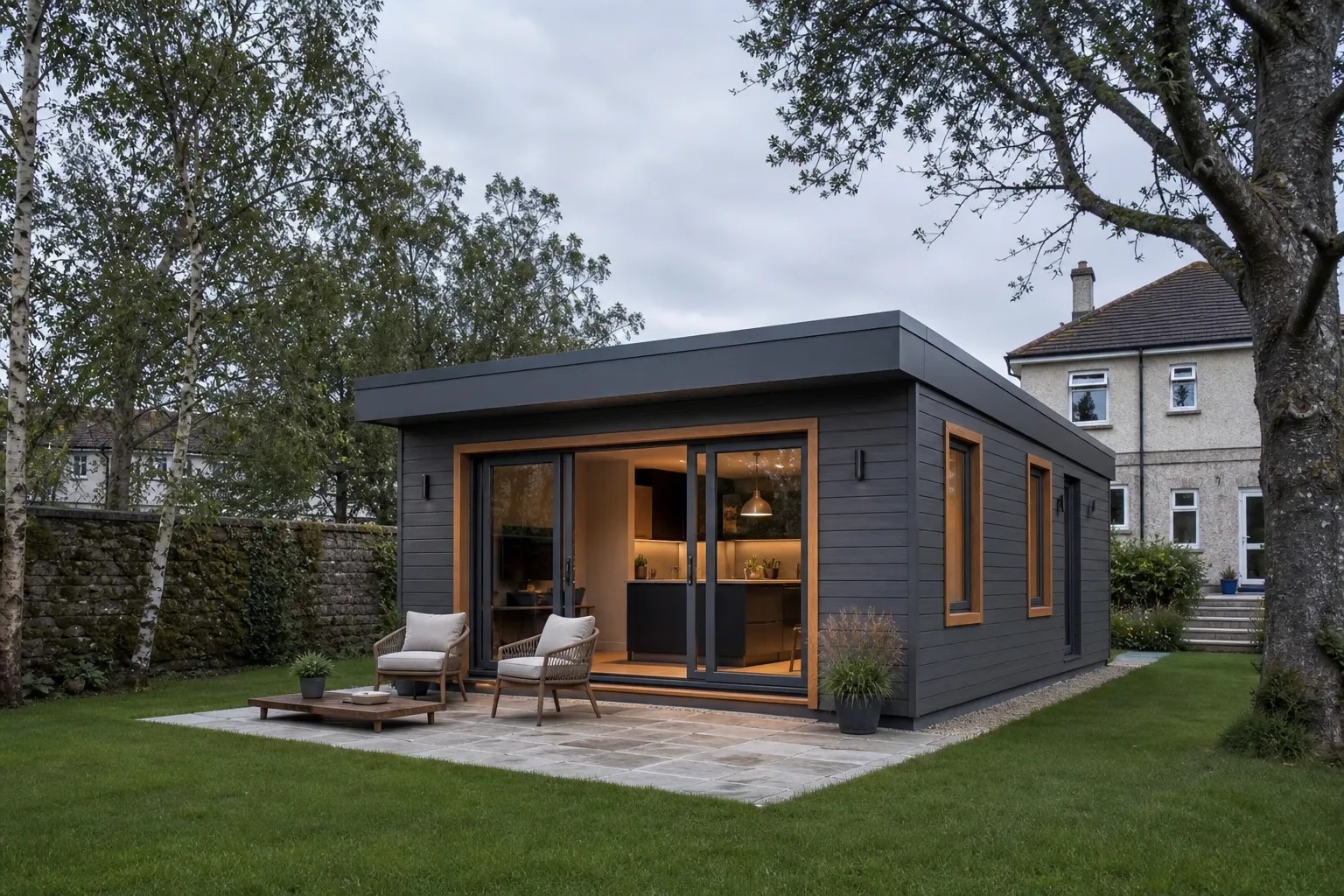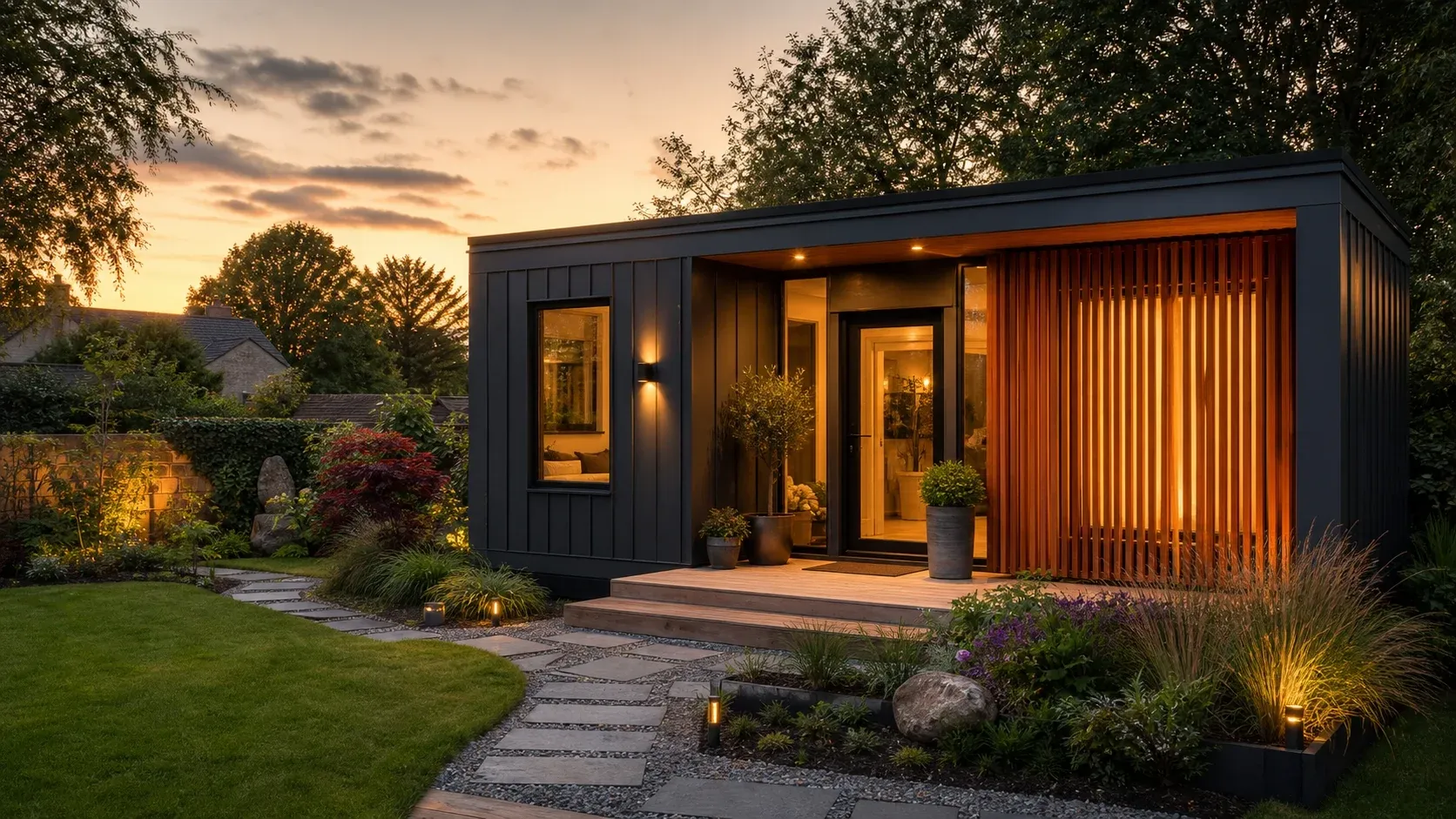
The short answer: since 27 July 2026, Irish homeowners can build a detached home of 32 to 45 m² in the rear garden of the house they live in without a planning application. This is Class 3A of S.I. No. 340 of 2026. You must notify your council at least 14 days before work starts, stay within the height limits, keep the unit tied to the main house (no separate sale, no short-term letting) and finish by 31 December 2030. Building regulations still apply in full, and rent from the unit should be treated as taxable.
When this article first ran in May, the rules were a draft that Ministers Browne and Cummins had brought to Cabinet on 21 April 2026. The regulations were signed on 16 July 2026 and came into operation on 27 July. Some of the detail changed along the way, and one widely repeated assumption about tax, which this article also made, turned out to be wrong. This is the updated version.
What is the Class 3A exemption?
Class 3A is a new class of exempted development in the Planning and Development (Exempted Development (Act of 2000)) (No. 3) Regulations 2026, S.I. No. 340 of 2026. It covers a permanent, detached, self-contained home in the rear garden of an existing house. Government material calls it an auxiliary dwelling. Estate agents call it a garden home, and most families call it a granny flat. In law it is one thing: a Class 3A detached auxiliary dwelling.
The same regulations made three other changes worth knowing:
- Class 1A, subdivision. One extra self-contained unit of at least 32 m² can be created inside the existing house, subject to the same notification rule.
- Garden structures up to 30 m². The exemption for sheds, garden offices, gyms and studios rises from 25 m² to 30 m². These are non-habitable structures, not homes.
- Rear extensions up to 45 m². The single-storey rear extension limit rises from 40 m² to 45 m², counting previous extensions.
What conditions does a Class 3A garden home have to meet?
Every condition must be met. Miss one and the project needs a planning application. In plain English, the conditions that matter most are:
- Size: between 32 m² and 45 m² of floor area.
- Location: detached, and in the rear garden of the principal house.
- Your home: the principal house must be the owner's sole or main residence when work begins. A landlord cannot add a Class 3A unit behind a rented-out house.
- Services: water, electricity and drainage are linked to those of the principal house.
- Height: no more than 4 metres with a pitched tiled or slated roof, or 3 metres for any other roof.
- Garden space: the unit counts together with existing garden structures, and a minimum area of private garden must remain.
- Notice: the planning authority must be told at least 14 days before development starts. Most councils now publish a Class 3A notification form.
- Occupancy: the unit may only be occupied with the main house. It cannot be sold or subdivided separately, and it cannot be used for short-term letting.
- Time limit: works must be started and finished by 31 December 2030, when the exemption currently expires.
This is a summary, not the statutory text. Protected Structures, some designated areas and other site factors can take a project outside the exemption, so check the regulations or ask your local authority before you commit.
What changed between the April draft and the final rules?
Three things are clearer now than they were in April:
- It is law. The exemption no longer depends on environmental assessment or final wording. It has applied since 27 July 2026.
- There is a notification step. The 14-day notice to the planning authority is mandatory. Skip it and the exemption does not apply.
- The occupancy rules are tight. No separate sale, no subdivision, no short-term letting, and the main house must be your home when work begins.
One thing turned out differently from the early coverage: tax. More on that below.
Does exempt from planning mean exempt from building regulations?
No, and this is still where buyers are most likely to make an expensive mistake. Planning and building control are two separate legal systems. Class 3A removes the need for a planning application. It does nothing to the Building Regulations, which apply to every new home regardless of planning status. As The Irish Times put it in August, no planning permission is required, but construction regulations still apply.
For a Class 3A garden home that means:
- A Commencement Notice lodged through the Building Control Management System before work starts.
- Compliance with TGD Parts A to M, covering structure, fire, moisture, materials, sound, ventilation, hygiene, drainage, heat, stairs, energy and access.
- A BER at NZEB standard, in practice an A-rated home, assessed by an SEAI-registered assessor.
- A Certificate of Compliance on Completion from the assigned certifier.
So there are two separate notices: the 14-day Class 3A notification to the planning authority, and the Commencement Notice to building control. You need both.
Can you rent it out, and is the rent tax-free?
You can rent it out long-term. Short-term letting is prohibited, so holiday-let platforms are out. For long-term lets, the RTB has stated that renting a qualifying Class 3A unit does not come under its remit and does not need to be registered with the RTB. That makes a garden home simpler to let than a conventional tenancy.
The tax is where the early coverage went wrong. In April, much of the commentary, this article included, assumed rent from a garden home linked to the main house's services would be tax-free under the Rent-a-Room scheme. Revenue's published Rent-a-Room guidance says that a self-contained unit which is not attached to the property cannot qualify for the relief. Unless Revenue changes that position, plan on the rent being taxed as ordinary rental income, with allowable expenses deducted. We cover the numbers in detail in is rent from a garden home tax-free?
What about Local Property Tax, insurance and mortgages?
Local Property Tax. Revenue has confirmed that a permanent garden home suitable for use as a separate dwelling attracts its own LPT charge. It is valued in its own right, gets its own property ID, and LPT is payable even when it is empty.
Home insurance. Declare the new structure to your insurer before it is installed. An undeclared dwelling can invalidate cover on the main house. Most insurers quote an uplift rather than a separate policy.
Mortgages and resale. Many Irish lenders remain cautious about a property with a second self-contained home on the same title. That can affect remortgaging and a future buyer's mortgage. Because a Class 3A unit cannot be sold separately, it adds value only as part of the whole property. Talk to your lender first if you expect to remortgage or sell in the medium term.
Which modular home sizes fit Class 3A?
Floor area decides it. Of the four expandable models Ériu supplies:
- 20ft Expandable: about 34 m² internal, 2.48 m high. Inside the 32–45 m² band and well under the 3 m flat-roof limit. This is the Class 3A unit.
- 30ft Expandable: about 52 m². Over the 45 m² cap, so it needs a planning application.
- 40ft Expandable: about 70 m². Needs a planning application.
- 20FT700 Foldable: about 25 m². Below the 32 m² minimum for a Class 3A home, though it can work as a garden structure or on a site with permission.
Existing sheds and garden rooms count toward the limits, so a large shed can squeeze what's left. We check this against your site plan before quoting. See the 20ft Expandable specification.
Who is Class 3A right for?
- Families housing an adult child or an older parent on the same site. This is the use with the fewest complications: no tenant, no rental tax question.
- Homeowners with a good-sized rear garden in areas with strong long-term rental demand.
- People planning to rightsize without leaving the family home or the area.
It is a harder fit for small or tightly overlooked gardens, Protected Structures, houses that are not the owner's main home, and anyone who needs to remortgage soon with a lender that won't accept a second dwelling on title.
If you want to know whether your garden qualifies, send us your site details. We check the unit against the Class 3A conditions, including height and garden space, and come back with a factory-direct quote and a compliance pack.
Frequently asked questions
Do I need planning permission for a garden home in Ireland?
Not if it qualifies under Class 3A of S.I. No. 340 of 2026, in force since 27 July 2026. A detached home of 32 to 45 m² in the rear garden of the house you live in can be built without a planning application, provided it is linked to the main house services, stays within the height limits (4 m for a pitched tiled or slated roof, 3 m otherwise), you notify the council at least 14 days before work starts, and the works are finished by 31 December 2030.
Do I need to notify the council before building a Class 3A garden home?
Yes. You must notify the planning authority at least 14 days before development starts. This is separate from the Commencement Notice required under the Building Control Regulations, which you also need.
Is rent from a Class 3A garden home tax-free?
Plan on it being taxable. Revenue guidance states that a self-contained unit not attached to the property cannot qualify for Rent-a-Room relief. The RTB has stated that renting a qualifying Class 3A unit is outside its remit and needs no RTB registration. Short-term letting is not permitted.
Does planning exemption mean I don't need building regulations?
No. Every Class 3A garden home must meet the Irish Building Regulations (TGD Parts A to M), needs a Commencement Notice, must reach an NZEB-standard BER, and needs a Certificate of Compliance on Completion.
Can I sell a Class 3A garden home separately from my house?
No. A Class 3A unit must be occupied with the main house and cannot be sold or subdivided separately from it.