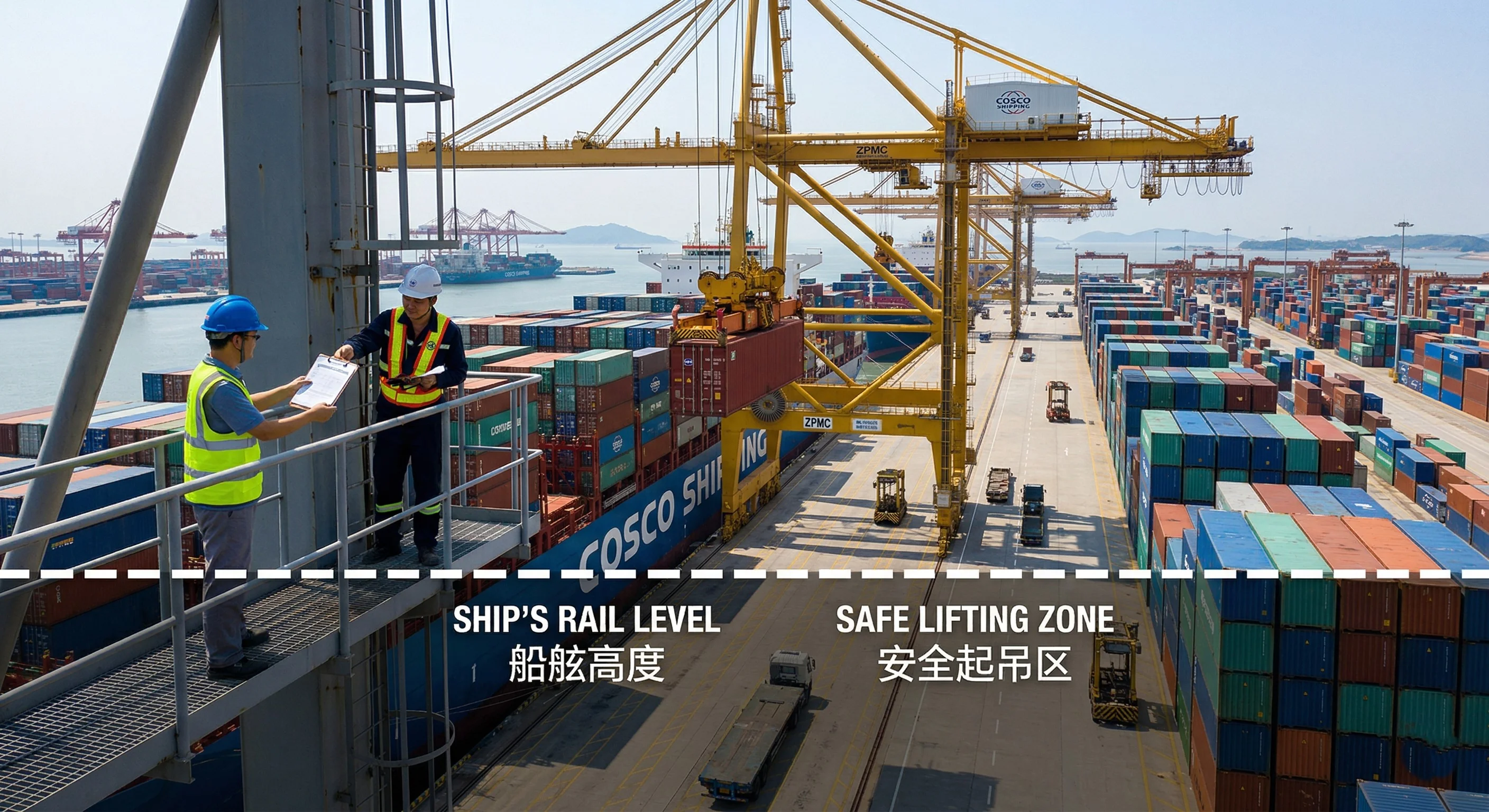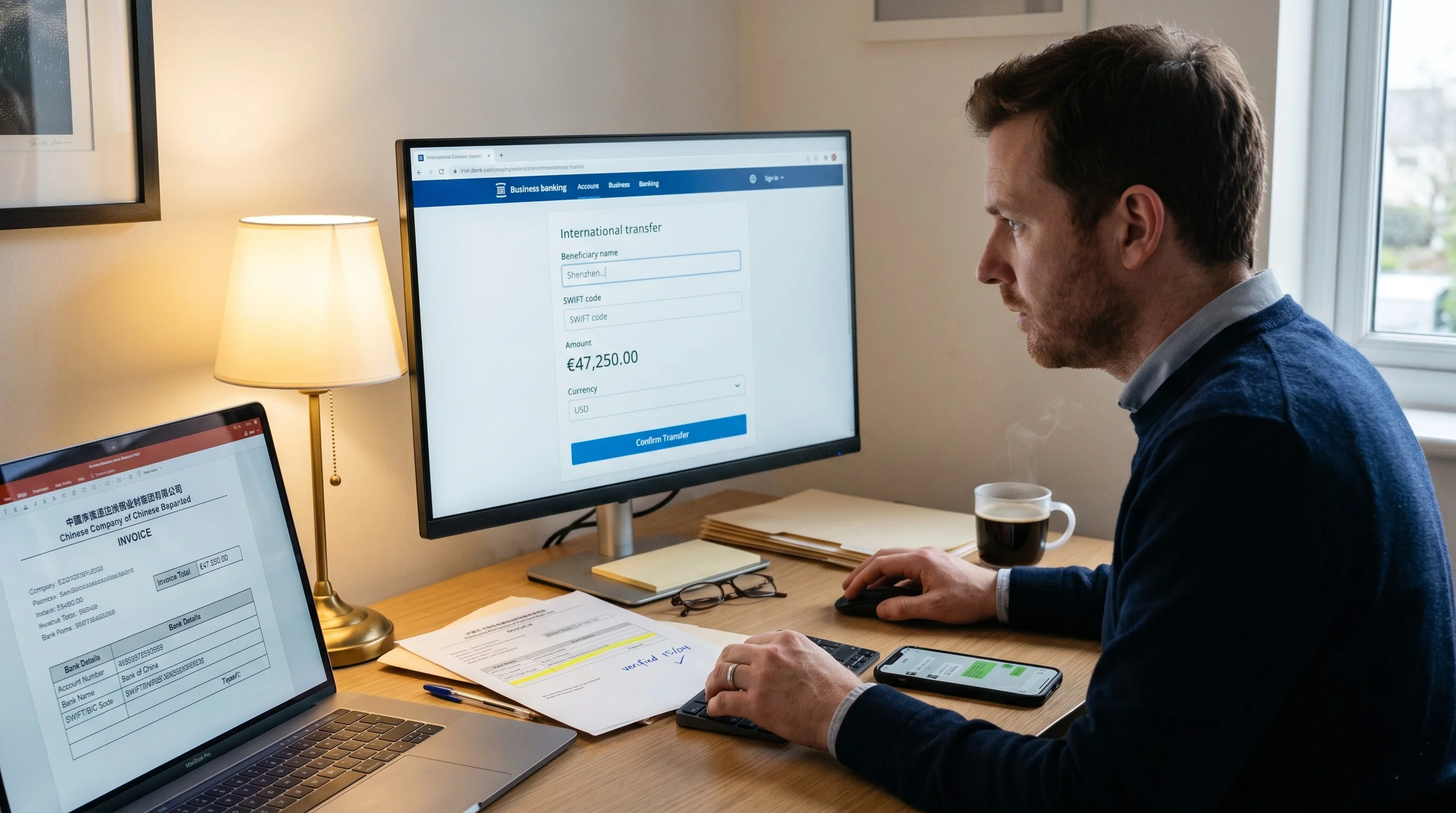
Your production run is finishing this week. The factory says everything looks good. Your 30% deposit has gone, your 70% balance is waiting. In three weeks, a sealed container leaves Shenzhen Port. When that container opens in Dublin, you are legally and financially responsible for every unit inside, whether they match your spec or not.
This is the moment that pre-shipment inspection exists to protect. It is the only window in the entire supply chain where you can catch defects, quantify failure rates, demand rework, and legally refuse to release payment, all while your goods are still in China, at the factory's door.
Once that container is sealed and on a ship, your leverage drops to near zero. The goods are yours. The shipping costs are yours. The customs duties are yours. And the defects are yours.
This guide explains exactly how pre-shipment inspection works, how AQL sampling quantifies defect rates, what a QC inspector checks during a factory visit, and what your options are when goods fail.
Why Pre-Shipment Inspection is Non-Negotiable
The prevailing Irish business assumption about Chinese manufacturing defects is that they happen to other people. They do not. Defect rates exist on a spectrum across every factory, every product category, and every production run. The variables are not random, they are predictable based on the quality controls in place.
Factories without external QC oversight self-certify. The same factory workers who made the goods are asked to check the goods. Production line supervisors face pressure to ship on time and hit output targets. When those incentives conflict with quality standards, output wins.
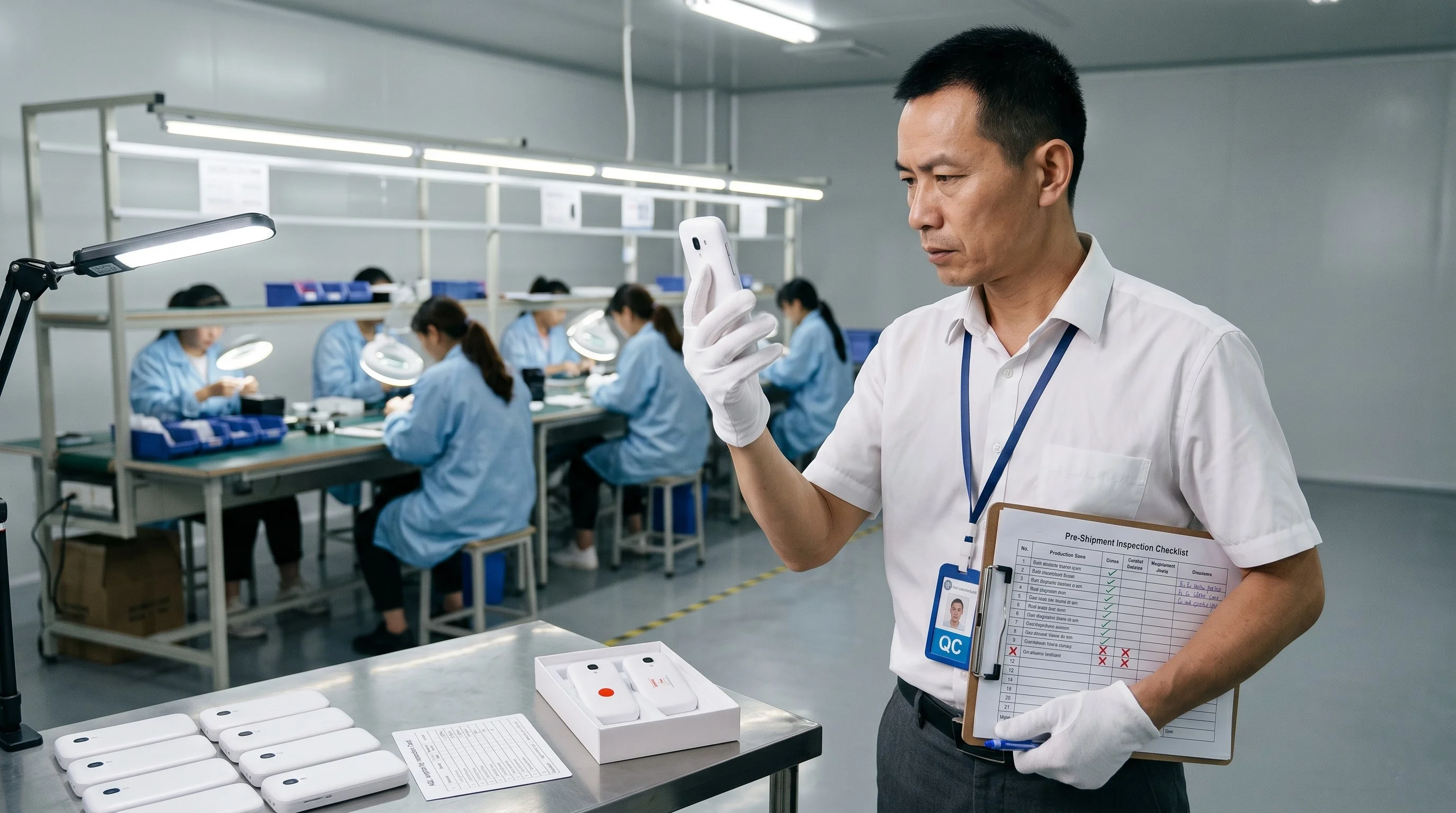
Third-party pre-shipment inspection removes that conflict entirely. An inspector from outside the factory, representing your interests alone, checks the finished goods against your written specification before shipment is authorised. The factory knows that inspection is coming. That knowledge alone changes production behaviour.
What Is AQL Sampling?
AQL stands for Acceptable Quality Limit. It is the internationally used statistical framework for determining how many units to inspect from a batch and at what defect rate a batch is rejected. AQL is not a guarantee of perfection, it is a statistically valid method of making a judgment about an entire production run based on a representative sample.
In practice, AQL works as follows. The inspection standard most commonly used is ISO 2859-1. You specify a sample size based on your total production quantity and an inspection level (typically General Inspection Level II for consumer goods). The AQL table then tells your inspector how many units to pull, and at what defect count threshold, split between Major and Minor defects, the batch passes or fails.
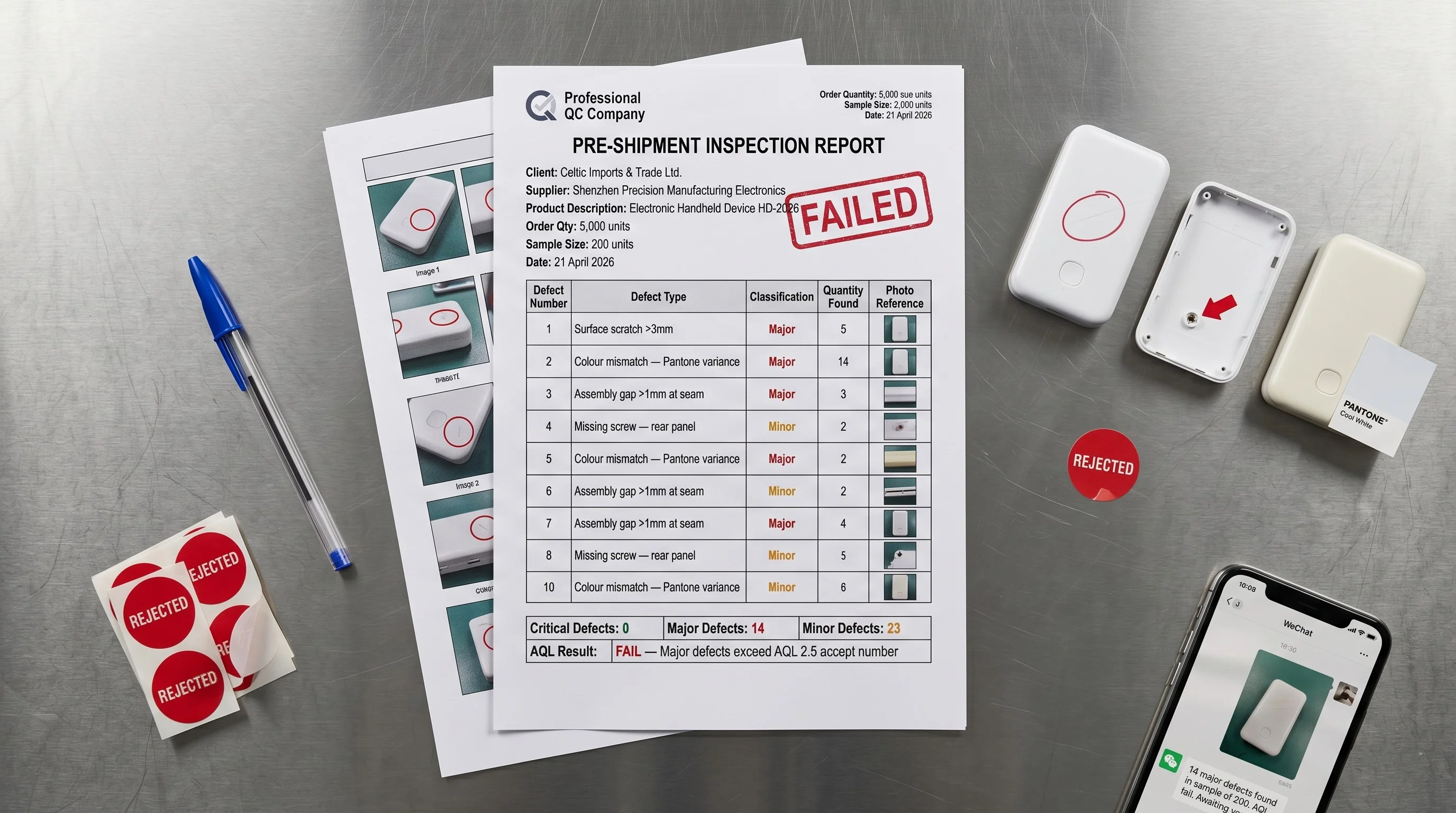
For a production run of 5,000 units at AQL 2.5 (a common standard for consumer goods), your inspector will typically examine around 200 units. If more than 14 units show Major defects, the batch fails. If more than 21 show Minor defects, the batch also fails.
The Three Defect Classifications
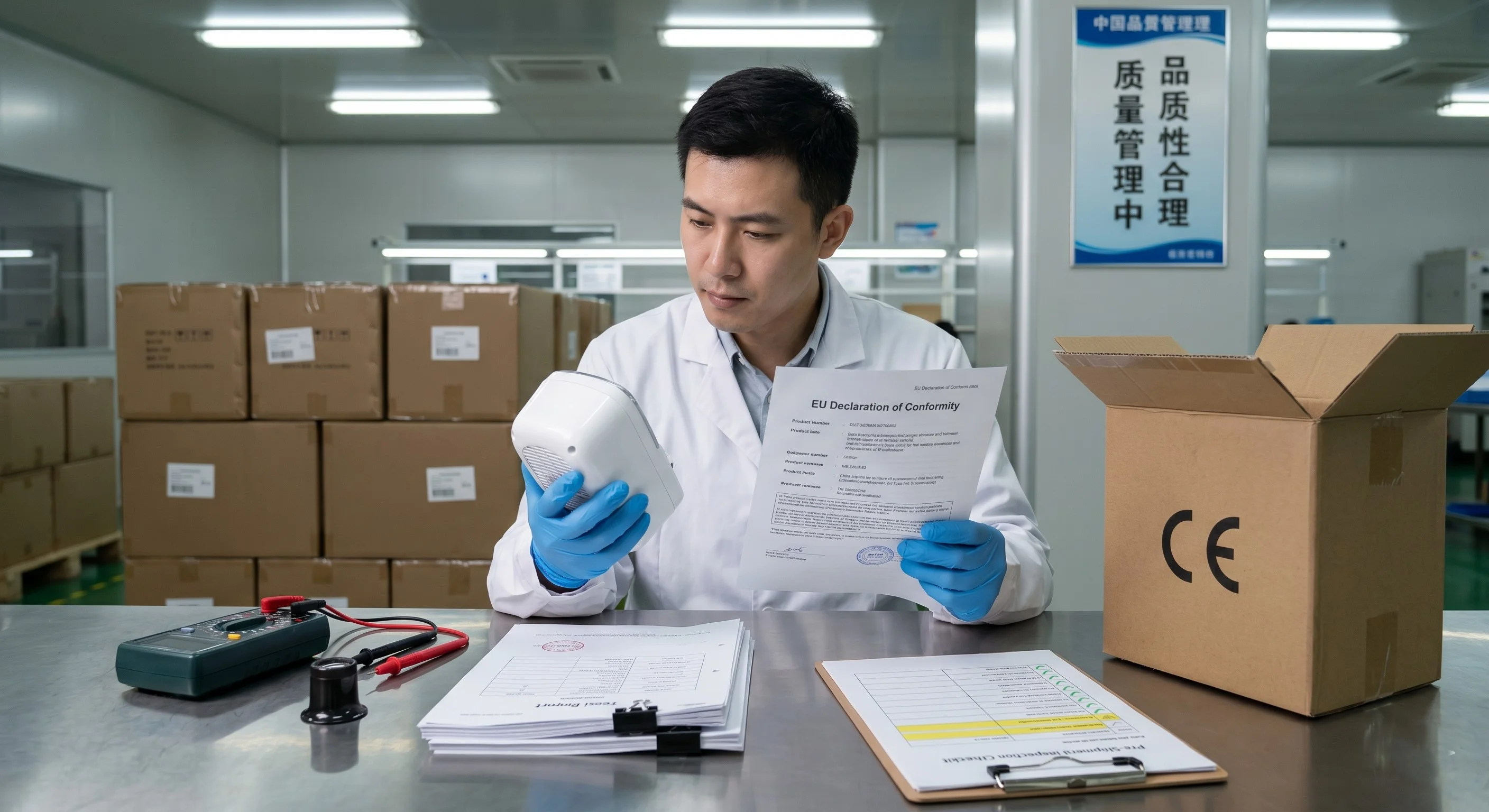
Critical defects are zero-tolerance. A Critical defect is anything that poses a safety risk to the end user, violates regulatory requirements (such as CE marking), or makes the product completely non-functional. In Ireland and the EU, a product with a Critical defect cannot legally be placed on the market. One Critical defect in your inspected sample fails the entire batch. Non-negotiable.
Major defects are defects that would cause the product to be returned or lead to significant customer dissatisfaction, visible surface scratches on a premium product, incorrect colour against your approved Pantone spec, assembly defects that affect function, missing components. Major defects fail the batch at the AQL threshold.
Minor defects are imperfections that would not typically cause a return but deviate from specification. Slight variations in finish, minor packaging inconsistencies, small cosmetic deviations within agreed tolerances. These are tracked and counted, but the AQL threshold is more lenient.
What a QC Inspector Actually Checks
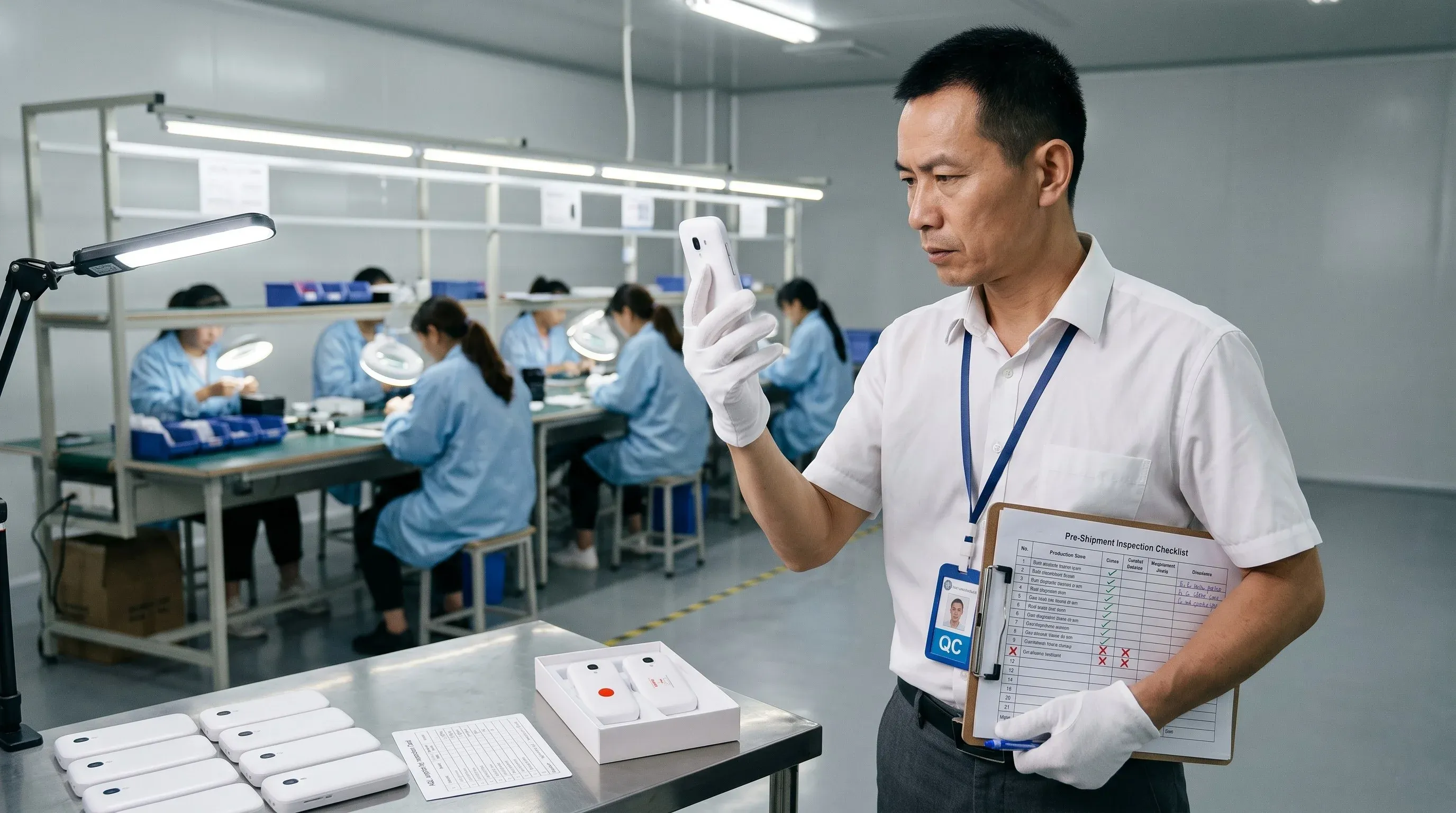
A professional pre-shipment inspection is a structured, documented audit against a specific checklist derived from your purchase order and product specification. The checklist should be agreed between you and your inspector before the inspection date. The areas covered include:
Quantity verification: The inspector physically counts cartons, verifies inner pack quantities, and confirms that what was ordered is what is in the warehouse ready to ship. Quantity errors, short shipments and overshipments, are common and are caught here.
Product appearance and workmanship: Every sampled unit is examined for surface defects, colour consistency against your approved sample or Pantone reference, texture and finish quality, and any visible assembly defects.
Functional testing: The inspector tests a proportion of sampled units for basic functionality. For electronics, this means powering on, testing features, checking battery performance. For mechanical products, checking moving parts and assembly integrity.
Measurements and dimensions: Key measurements from your specification are verified using calibrated instruments. This is critical for anything that must fit with other components, comply with EU size regulations, or meet a declared product dimension.
Labelling and packaging compliance: CE marking presence and accuracy (where required), country of origin declaration, warning labels, language requirements (English for the Irish market), SKU and barcode accuracy. Labelling errors are surprisingly common and are a customs compliance risk.
Carton drop test: Cartons are dropped from a standard height to simulate handling in transit. Inadequate packaging that causes damage during sea freight is caught here rather than when your goods arrive.
Who Should Conduct the Inspection?
There are three options, listed in order of reliability.
Independent third-party inspection company (QIMA, Intertek, Bureau Veritas): The gold standard. The inspector has no relationship with the factory, legal obligation to provide an accurate report, and professional liability. Reports include photographic evidence. Cost: typically €250–€400 per man-day for a standard inspection.
Sourcing agent QC inspection: If you are working with a sourcing agent like Ériu Sourcing with a China-based team, our QC inspectors conduct pre-shipment inspections as part of the sourcing service. This combines factory relationship knowledge with independent QC, we know the factory's historical failure patterns and check accordingly.
Factory self-inspection: This is not an independent inspection. The factory inspecting its own goods is an internal quality process. It is better than nothing, but never substitute factory QC certificates for independent inspection on orders above €5,000.
What Happens When Goods Fail?
A failed inspection triggers one of three responses depending on the severity of the failure, the relationship with the factory, and your timeline.
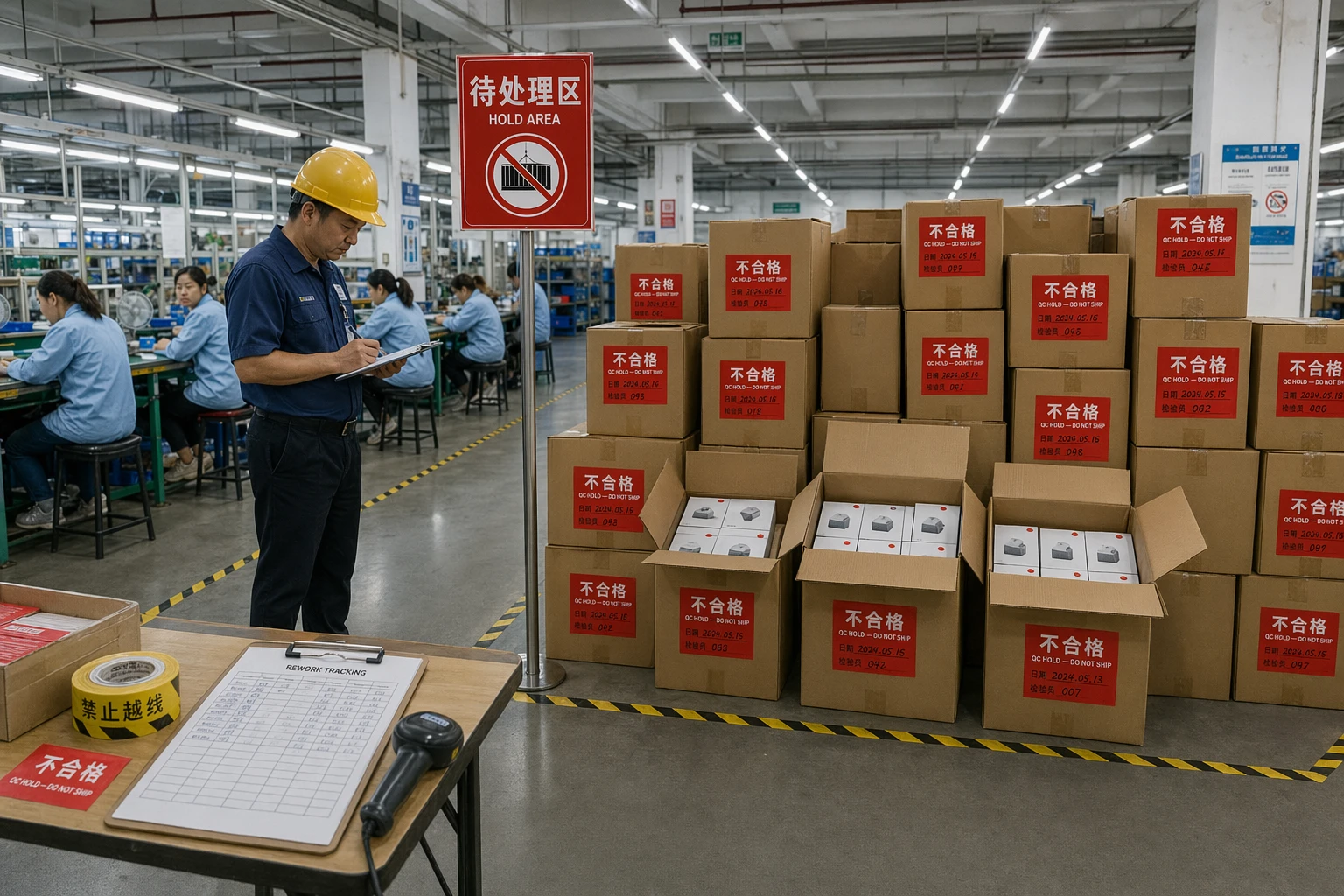
Rework: The most common outcome for Major defects that are correctable. Defective units are repaired at the factory. A reinspection is then conducted (at additional cost) to verify the rework meets standard. Under correct payment terms (30% deposit, 70% on inspection pass), you do not release the balance until the reinspection passes.
Partial shipment: If the failing rate is concentrated in specific batches or if the deadline is critical, a partial shipment of passing units may be agreed while rework is completed on the remainder.
Rejection and replacement: For severe failures, Critical defects, major specification non-conformance, or where the factory is unwilling to rework, you reject the batch and demand replacement production. Under a correctly structured purchase agreement, replacement production is at the factory's cost.
The Cost Calculation
A pre-shipment inspection for a standard consumer goods order costs between €250 and €400 for a single inspection day. For most orders, one day is sufficient.
The cost of receiving a defective shipment in Dublin without inspection: 100% of your goods value at risk, plus €2,500–€5,000 in sea freight, plus Irish import duties and VAT on goods you cannot sell, plus warehouse costs while the dispute runs, plus the legal cost of pursuing a factory in China.
Pre-shipment inspection has the strongest risk-adjusted return of any cost in the China sourcing process. It is not optional on orders above €5,000.
How Ériu Sourcing Handles QC
With Ériu Sourcing managing your production order, pre-shipment inspection is built into the standard process. Our China-based team conducts factory floor visits during production, not just at final inspection, to identify quality deviations before they become systemic defects across the entire run. Final pre-shipment inspection is conducted against your approved product specification before we authorise container loading.
Failed inspections trigger immediate communication with full photographic evidence. Rework requirements are communicated to the factory in Chinese, with a written reinspection schedule. You retain full payment leverage throughout.
Frequently asked questions
How much does a pre-shipment inspection in China cost for Irish importers?
A standard one-day pre-shipment inspection from an independent third-party firm (QIMA, Intertek, Bureau Veritas) costs approximately €250–€400 including the report. For context, this insures a €20,000–€50,000 order against a defective shipment. Ériu Sourcing includes pre-shipment QC as part of our sourcing service for managed orders.
What is AQL and what AQL level should I specify for my China order?
AQL (Acceptable Quality Limit) is the internationally used statistical standard for quality sampling. For most consumer goods imported into Ireland, AQL 2.5 for Major defects and AQL 4.0 for Minor defects is standard. Higher-value products or safety-critical components should use AQL 1.0 for Major defects. Your inspection company can advise based on your product category.
What happens if my goods fail pre-shipment inspection in China?
A failed inspection triggers a hold on the shipment. You then have three options: demand rework at the factory's cost with a scheduled reinspection, negotiate a partial shipment of passing units, or reject the batch and demand replacement production. Under a correctly structured 30/70 payment agreement, you hold the 70% balance as leverage throughout this process.