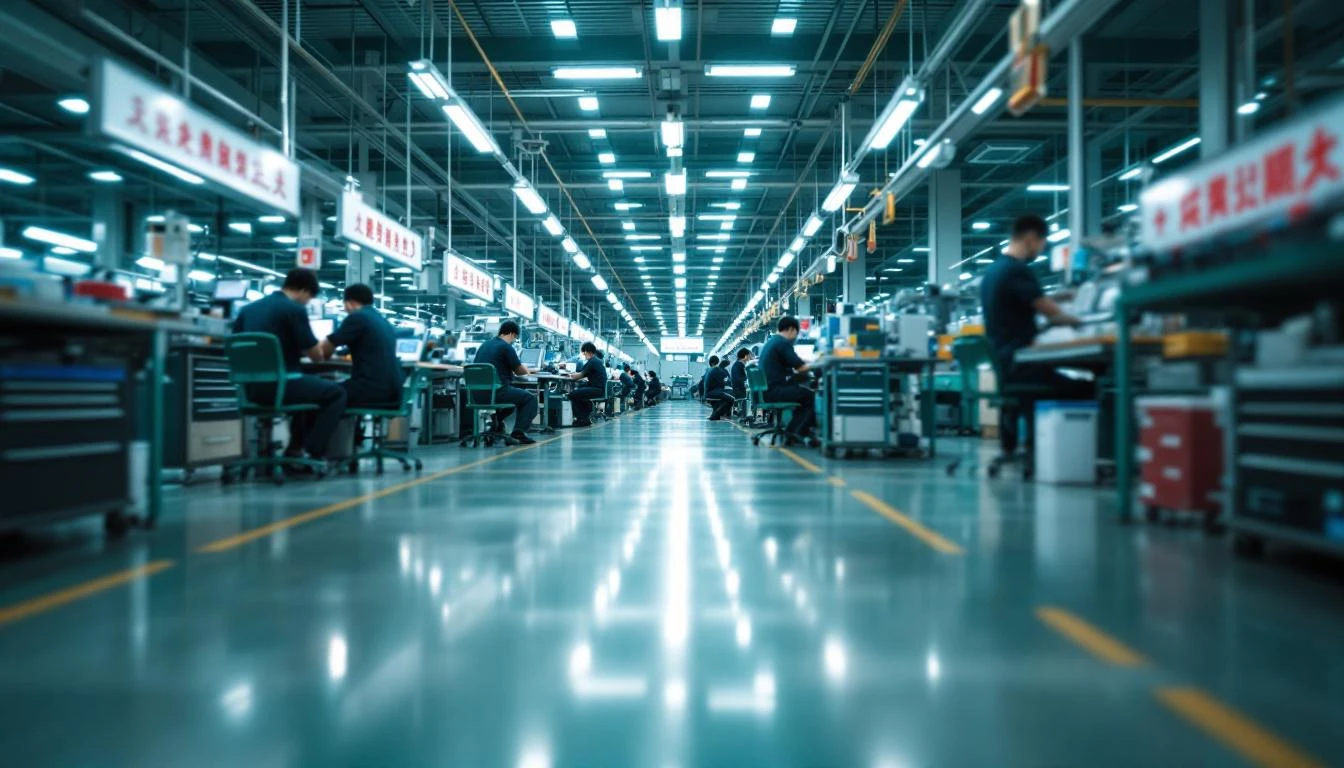
The CE mark on a product from a Chinese factory is one of the most misunderstood documents in international trade. Irish importers see it and assume compliance. Often, that assumption is wrong, and the consequences land at Dublin Port, not at the factory gate where the problem started.
This is not primarily about catching dishonest suppliers, though that matters too. It is about understanding what CE compliance actually requires, what it does not require, and what the Irish importer is legally responsible for when goods carrying that mark arrive in Ireland. The importer's responsibility under EU product safety law does not disappear because the factory issued a document saying it should not.
What CE marking actually means, and what it does not
CE marking is a manufacturer's declaration that a product meets the requirements of the EU directives that apply to it. No government body issues it, tests it, or verifies it at source. The legal weight of that declaration rests entirely on the evidence behind it, and the mark on the product looks identical whether that evidence is solid or absent.
When a product carries a CE mark legitimately, it means the manufacturer has identified which EU directives apply, ensured the product meets the essential requirements of those directives, prepared or obtained a technical file documenting that assessment, and issued a Declaration of Conformity. For lower-risk product categories, this process can be completed internally by the manufacturer. For higher-risk categories, it requires testing by a notified body, an accredited third party registered on the EU NANDO database.
The mark has no bearing on quality, durability, or performance beyond the minimum safety threshold. A product can be CE-marked and still be poorly made. It can be CE-marked under one directive while failing the requirements of another that also applies. And it can carry a mark that visually resembles the official EU CE mark while meaning nothing under EU law.
That last point matters more than most Irish importers realise. The China Export mark, a different symbol produced by some Chinese manufacturers, uses the same two letters in a compressed form. The letters are positioned closer together than in the official EU mark. To the untrained eye, they look identical. To an Irish customs officer or market surveillance inspector, they are not.
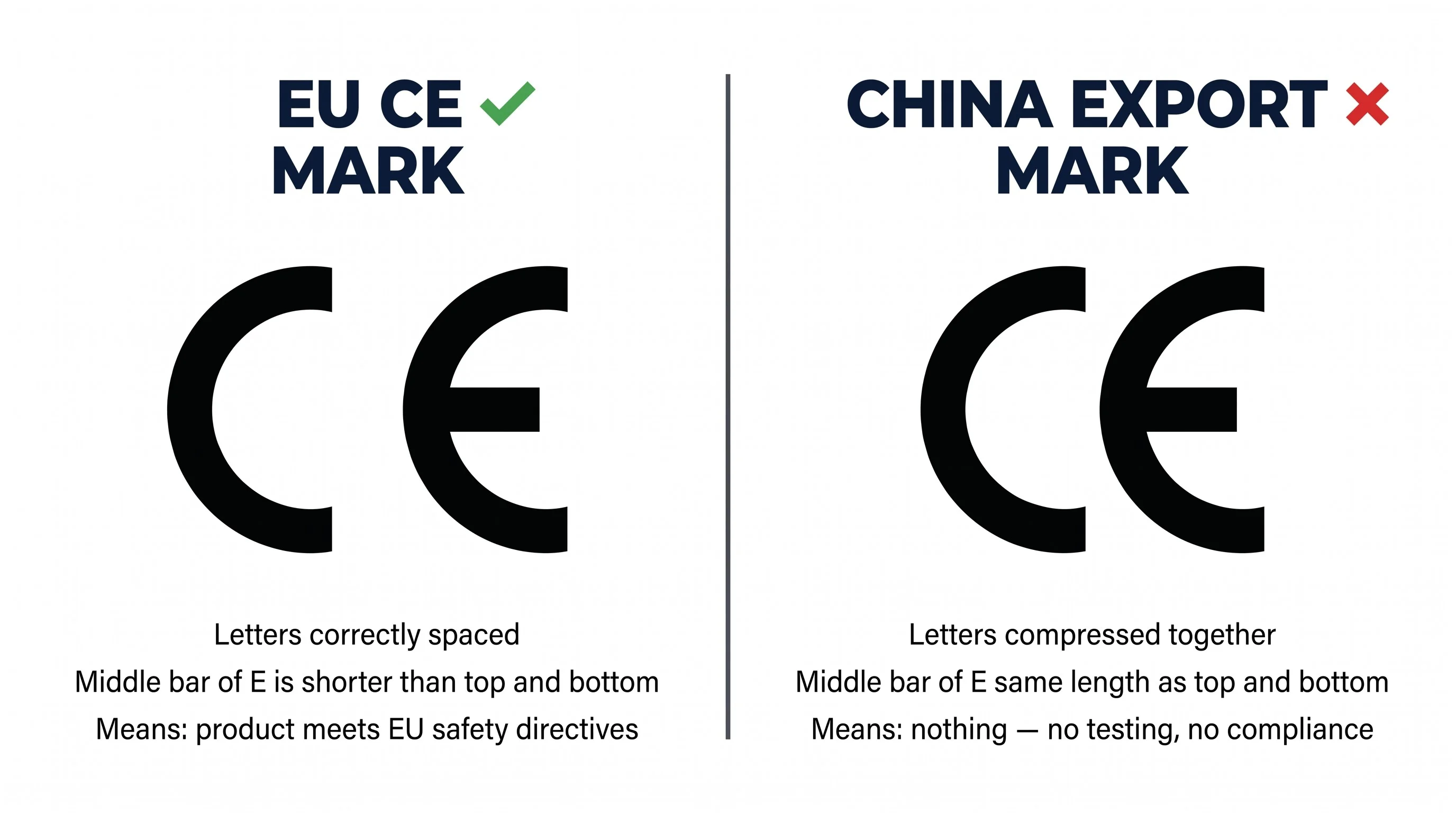
The visual difference is a matter of spacing. In the official EU CE mark, the C and E are correctly proportioned with a specific gap between them, defined in the annex to EU directives. In the China Export mark, the letters are compressed together. If the letters on your product are touching, you do not have CE compliance. You have a label that looks like one.
Self-declared CE versus verified CE
EU directives divide products into risk categories, and the level of conformity assessment required depends on where a product falls. For lower-risk products, many categories under the Low Voltage Directive, for example, a manufacturer can carry out the conformity assessment themselves, produce the technical file, and issue a Declaration of Conformity without third-party involvement. This is called self-declaration, or Module A conformity assessment.
For higher-risk products, medical devices, certain machinery, PPE rated for life-critical applications, radio equipment in specific categories, the directive requires involvement of a notified body. A notified body is an organisation accredited by a national authority and listed on the European Commission's NANDO database. Only products tested and certified by a listed notified body can validly carry the CE mark in those categories.
Both self-declared and notified-body-verified products carry the same mark. There is no visual difference on the product between a CE mark backed by a full technical file and third-party testing, and a CE mark placed there by a factory with a printer and an optimistic attitude to European safety law.
The Declaration of Conformity, the test report, and the name of the testing body tell you far more than the mark itself, assuming those documents are genuine and the product in the container matches what was tested.
Which product categories require CE marking in Ireland
CE marking applies to products sold in Ireland and across the EU that fall within specific regulated categories. The categories most relevant to Irish importers sourcing from China include:
Electrical and electronic equipment, regulated under the Low Voltage Directive (LVD) and the Electromagnetic Compatibility Directive (EMC). This covers the vast majority of powered consumer and commercial electrical products: power tools, lighting, heating equipment, consumer electronics, and anything that runs on mains electricity or connects to it.
Machinery, regulated under the Machinery Directive. Covers powered machinery including construction equipment, production machinery, and certain motorised tools. The Machinery Directive was revised in 2023, with a transition period running to 2027, machinery imported during this window may need to comply with either the original or revised directive depending on its certification date.
Radio equipment, regulated under the Radio Equipment Directive (RED). Covers any product that transmits or receives radio waves, including Bluetooth devices, WiFi-enabled equipment, drones, and wireless peripherals. RED requires notified body involvement for certain product types and introduced specific software security requirements for connected devices in 2024.
Personal protective equipment, regulated under the PPE Regulation. Covers gloves, helmets, eye protection, respiratory equipment, and other safety gear. PPE is divided into three categories based on the severity of risk addressed, with Category III, life-critical protection, requiring notified body testing.
Toys, regulated under the Toy Safety Directive. Covers products designed for use by children under 14. Extensive physical, chemical, and mechanical safety requirements apply, and most categories require notified body involvement.
Construction products, regulated under the Construction Products Regulation (CPR). This differs from other CE directives: construction products carry a CE mark alongside a Declaration of Performance, not a Declaration of Conformity. The Declaration of Performance declares the product's measured performance against harmonised technical specifications, not simply that it meets a standard, but what values it achieves.
Medical devices, regulated under the Medical Device Regulation (MDR). Class I devices can be self-certified; Class IIa, IIb, and Class III require notified body involvement. The MDR transition from the older MDD framework completed in 2024, and devices still carrying certification under the older regime may no longer be legally placed on the Irish market.
Categories where CE is not required include most food products, cosmetics, pharmaceuticals, and motor vehicles. Textiles and apparel do not require CE marking but are subject to REACH chemical safety regulations, discussed separately below.
Why Chinese supplier CE claims cannot be taken at face value
The problem is structural rather than uniquely a question of Chinese supplier honesty. The CE mark system depends on accurate self-declaration, and there is limited enforcement upstream in the supply chain. Pressure to provide documentation that enables a sale creates predictable incentives to provide documentation, whether or not it accurately reflects the product.
The most common CE compliance failures Irish importers encounter fall into four categories.
The first is the fabricated test report. Third-party test reports, the documents showing a product was tested by an accredited laboratory and passed, can be copied, modified, and reissued with different product details. The accreditation number on the report can be checked against the NANDO database, but the specific report cannot be verified without contacting the laboratory directly. Several of the larger accredited laboratories now offer online report verification tools. Use them.
The second is the misapplied directive. A factory may hold genuine CE documentation for one directive while additional directives that also apply to the product have never been assessed. A powered wireless device might carry CE marking for the Low Voltage Directive while the EMC and Radio Equipment Directive requirements have gone unaddressed. The mark is present; the compliance is partial.
The third is the outdated certification. CE certification relates to a specific product specification at a specific point in time. Factories that make specification changes, materials substituted, components sourced from different suppliers, production processes modified, may not update their CE documentation to reflect those changes. The certificate remains valid for the original product. The product in your container may no longer match it.
The fourth is the China Export mark described above. In some cases the factory is not making any claim of EU compliance, they are marking goods with a symbol that matches their own brand or export mark. Whether this represents deliberate deception or a genuine misunderstanding of EU requirements varies by supplier. The outcome for the Irish importer is the same either way.
What happens when non-compliant goods reach Ireland
Non-compliant goods entering Ireland face enforcement at two stages. Customs at Dublin Port can identify and hold shipments when there is reason to suspect non-compliance, triggered by documentation that does not align, a commodity flag in the customs intelligence system, or a random sampling exercise on a regulated product category. Goods that cannot be cleared by production of compliant documentation can be refused entry, returned to origin at the importer's cost, or destroyed in Ireland at the importer's expense.
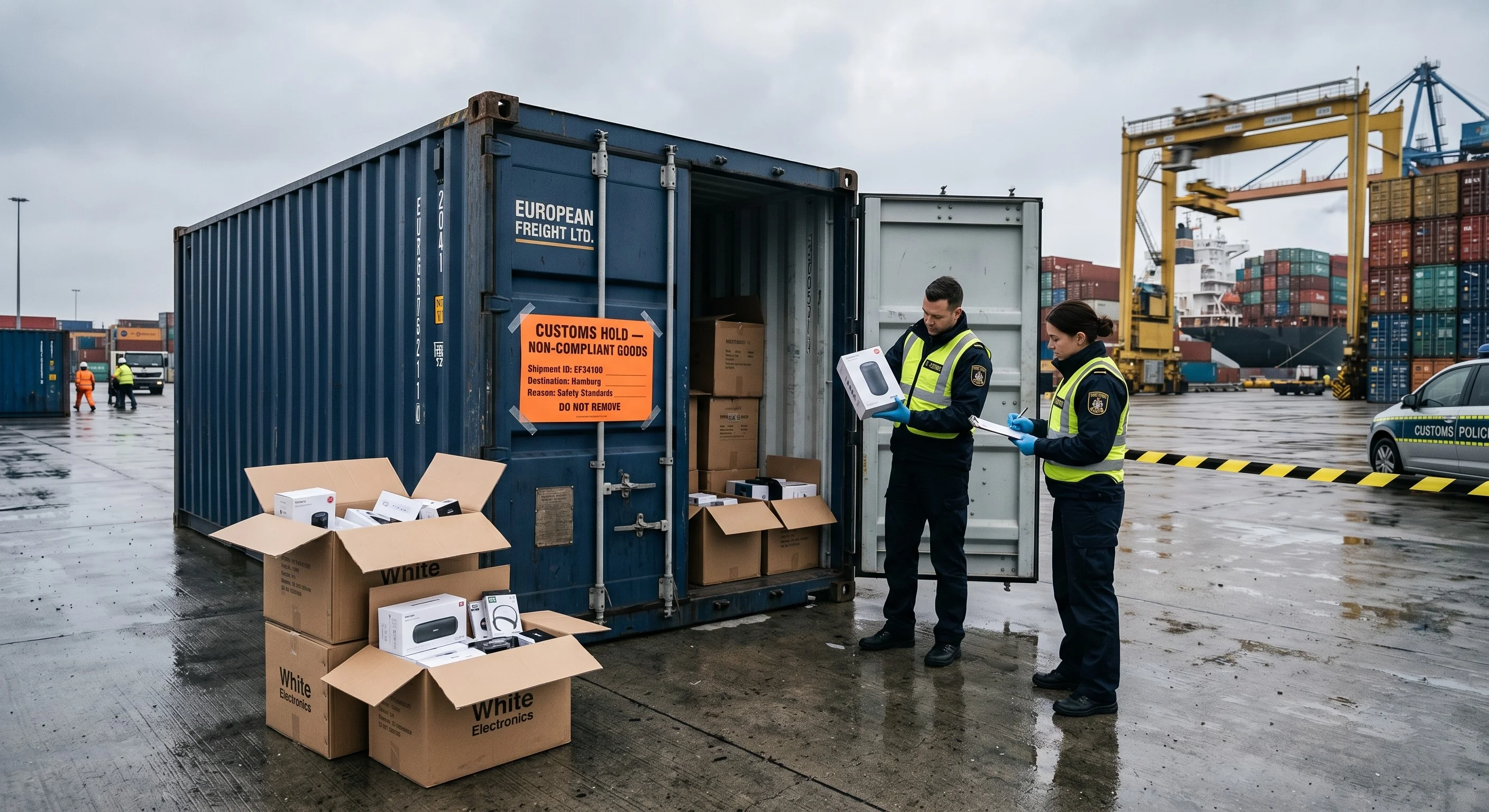
Goods that pass customs and reach the Irish market face market surveillance. The Competition and Consumer Protection Commission (CCPC) and sector-specific authorities, the NSAI, the Health and Safety Authority, and others depending on the product category, conduct market surveillance and can order product recalls, prohibit sale, and impose financial penalties on the importer of record.
The importer of record in Ireland carries full legal responsibility under EU product safety law. Not the Chinese factory. Not the freight forwarder. Not the sourcing agent. If goods bearing a false or invalid CE mark reach Irish consumers and cause harm, the Irish business that imported them carries the liability. The CCPC publishes recall notices and enforcement actions on its website, the products on those lists are often sourced from China, and the businesses named are Irish importers, not Chinese manufacturers.
The commercial cost of a non-compliance failure at Dublin Port is predictable: detention charges, storage fees while a decision is made, potential destruction costs, freight costs for any return shipment, and the loss of the entire order value. On a container of goods worth €60,000, a compliance failure can cost €75,000 to €90,000 before legal fees. CE verification at the factory in China costs less than one per cent of that figure.
How to verify CE compliance before a container is sealed
Verification must happen before goods leave China. Once a container is sealed and a ship has departed, your options reduce to hoping the documentation holds up at customs or managing the consequences of a failed shipment.

Verification covers four things.
First, confirm that the directive cited in the Declaration of Conformity actually applies to your product. CE marking is directive-specific, a DoC citing the Low Voltage Directive for a product that is also regulated under the Radio Equipment Directive is incomplete compliance. If you are uncertain which directives apply, the NSAI can advise on the applicable legislation for your specific product category.
Second, check the test report against the NANDO database. The NANDO database at ec.europa.eu/growth/tools-databases/nando lists every accredited notified body in Europe. Take the notified body identification number from the test report, search it on NANDO, and confirm the body is listed and that its scope of accreditation covers the directive and product type referenced in the report. If the number does not appear on NANDO, the test report is not from an accredited notified body.
Third, check that the Declaration of Conformity identifies the correct responsible person. For goods manufactured outside the EU and imported by an Irish business, the Irish importer is typically the responsible party, not the Chinese manufacturer. A DoC that names only the Chinese factory as responsible party may be invalid for an Irish import, depending on the directive and how it has been transposed into Irish law. The NSAI can confirm the correct approach for your product category.
Fourth, conduct a pre-shipment inspection that specifically covers CE documentation. A qualified QC inspector attending the factory before shipment should review the Declaration of Conformity, cross-reference it against the product specification being shipped, verify that the CE mark is correctly applied to the product and packaging, and confirm that the correct documentation, including the DoC and instructions for use in English, is packed in each carton. CE-marked goods sold in Ireland must include instructions in English as a minimum requirement under most directives.
Construction materials: specific CE requirements under CPR
Construction products imported from China carry different CE requirements from most other product categories. Under the Construction Products Regulation, CE marking on a construction product does not mean the product meets a safety threshold, it means the manufacturer has declared the product's performance against a harmonised technical specification. CE marking on a construction product without a valid Declaration of Performance is not a compliance document.
Irish construction projects procured under public contracts, those subject to BCAR (Building Control Amendment Regulations), and projects requiring sign-off from an assigned certifier require evidence of declared performance characteristics, not simply a CE mark on the box. Structural steel, insulation, cladding, windows, doors, and roofing products all fall within CPR scope. The Declaration of Performance must specify the declared performance levels for the relevant characteristics, not simply state that the product meets a standard, but what values it achieves.
For Irish importers of construction materials from China, Declarations of Performance produced by Chinese factories are often incomplete, cite harmonised standards that have since been superseded, or declare performance levels that are not substantiated by current third-party testing. A pre-order review of the Declaration of Performance, the NSAI Technical Assessment Body can assist, is the right control before committing to a production order.
Electronics and electrical goods: LVD, EMC, and RoHS
Electronics and electrical goods from China typically need to comply with three overlapping frameworks. The Low Voltage Directive covers electrical safety for equipment operating at voltages between 50V and 1, 000V AC or 75V and 1, 500V DC. The Electromagnetic Compatibility Directive covers the equipment's ability to function without creating interference and to resist interference from its environment. Both require CE marking and a Declaration of Conformity. RoHS, the Restriction of Hazardous Substances Directive, restricts the use of specific substances including lead, mercury, cadmium, and several phthalates, and requires its own compliance documentation, separate from CE.
CE compliance for electronics is not a single document, it is a package. A product needs a Declaration of Conformity that correctly cites both the LVD and EMC directives, test reports for both, and a separate RoHS declaration with supporting substance analysis. Chinese suppliers often provide CE documentation covering one directive while the others are unaddressed, or provide RoHS declarations that are self-declared with no substance testing behind them.
For products that include any wireless communication capability, Bluetooth, WiFi, cellular, or otherwise, the Radio Equipment Directive also applies. Adding wireless functionality to an otherwise straightforward electrical product triggers RED requirements, including in some categories notified body testing. Chinese electronics factories sometimes add wireless capability as a standard feature without updating their CE documentation to reflect it. The result is a product that is partially CE-compliant and partially not, with a mark that gives no indication of which category it falls into.
Apparel and textiles: REACH and chemical safety
Clothing, textiles, and accessories sourced from China do not require CE marking. They are, however, subject to REACH, the EU regulation on chemicals, which carries its own compliance requirements and its own enforcement consequences if breached.
REACH restricts or prohibits specific substances in products placed on the EU market. For textiles and apparel, the most relevant restrictions involve azo dyes that can release carcinogenic aromatic amines, formaldehyde content in treated fabrics, nickel release from metal accessories in direct contact with skin, and restricted phthalates in coatings, prints, or trims. These restrictions apply to finished goods regardless of where they were manufactured.
Chinese textile factories routinely use dyes, finishes, and treatments that are permissible in their domestic market but restricted or prohibited under REACH. A factory can produce a REACH compliance declaration, many do, as a matter of course. Whether that declaration is backed by actual substance analysis of their specific dye batches and fabric treatments is a different question entirely.
For Irish importers of clothing or textiles, third-party substance testing before shipment is the appropriate control. REACH testing on a textile sample costs approximately €150 to €400 depending on the number of substances tested and the laboratory used. This is not a discretionary spend, REACH compliance is a legal requirement for goods placed on the Irish market, and market surveillance testing can happen without prior notice.
What to do before your next shipment
CE compliance resolved at Dublin Port is already late. By that point, you either clear customs with the documentation you have, or you deal with the cost of not having it.
The controls that prevent compliance failures are upstream: verify CE documentation before placing an order, include a CE document review as a specific item in your pre-shipment inspection brief, check the NANDO database for every notified body reference in your test reports, and understand which directives apply to your specific product, not CE marking in general, but the exact framework your product sits within.
Discovering a CE problem at the factory gate, before shipment, leaves time to fix it. Discovering it at Dublin Port means absorbing the cost of a shipment you cannot clear.
Ériu Sourcing has been working with Irish businesses on China-sourced goods and CE compliance since 2007. We carry out CE documentation reviews at source, pre-shipment inspections with compliance documentation coverage, and factory audits that include quality management and CE evidence verification. If you are ordering CE-regulated goods from China and are not certain the documentation you have received will clear Irish customs, get in touch before the container is sealed.
Frequently asked questions
Do all products imported from China to Ireland need CE marking?
CE marking is required for specific product categories regulated by EU directives, including electronics, electrical equipment, machinery, construction products, personal protective equipment, toys, and certain medical devices. For these categories, CE marking is a legal requirement for sale in Ireland and the EU, not optional.
Can I trust CE documents provided by a Chinese factory?
Factory-provided CE documents should always be independently verified. Test reports can be fabricated, and Declaration of Conformity documents can be issued by the factory itself without third-party verification. Pre-shipment inspection by a qualified agent or third-party testing body provides a far higher level of assurance than documentation alone.
What happens if non-CE-compliant goods arrive in Ireland?
Non-compliant goods can be seized by customs, refused entry, or destroyed at the importer's cost. If non-compliant goods reach the market, the Irish importer is legally responsible and faces potential fines, forced product recall, and liability for any harm caused. The importer, not the Chinese factory, bears legal responsibility under EU product safety law.