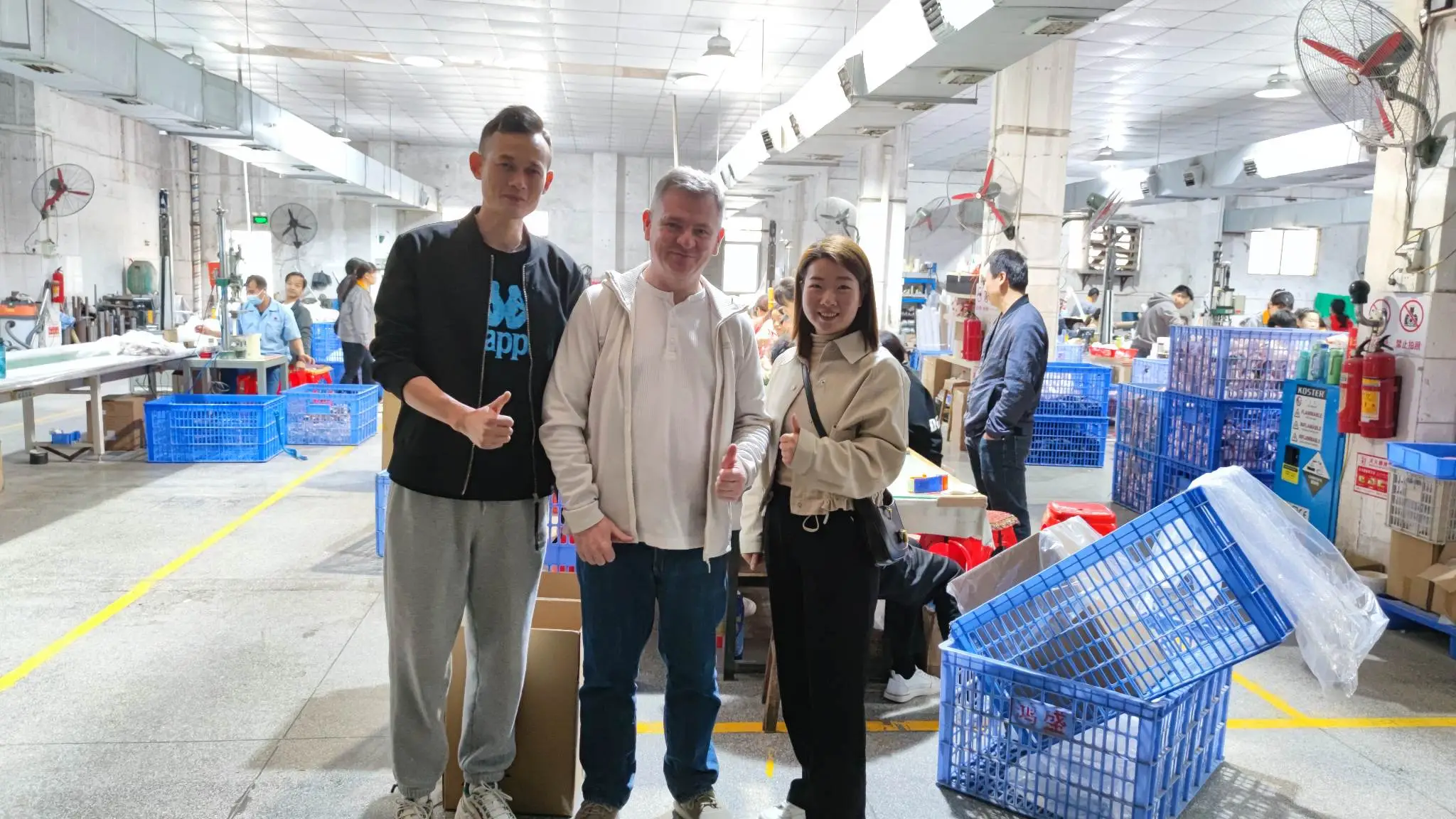
You found a factory on Alibaba. The product photos match what you want. The price is better than anything from Irish or UK suppliers. The sales representative replies quickly, speaks good English, and has sent a slick company profile with photos of a large, clean factory floor.
None of that tells you whether this factory is real, financially stable, capable of meeting your specifications, or the same entity that will receive your wire transfer.
Supplier vetting is the process of verifying all of that before you commit money. It is not optional. It is not bureaucratic. It is risk management, specifically, the risk of losing your entire order value to a factory that cannot deliver, or losing your deposit to a trading company that was never going to manufacture anything at all.
This guide gives you a structured five-layer framework for vetting any Chinese supplier before placing an order, including the red flags that end a supplier relationship at any stage of the process.
Why Supplier Vetting Matters More Than Price
Irish importers consistently make the same mistake: they select a Chinese supplier based on price, then discover during or after production that the factory lacks the capacity, the equipment, or the experience to deliver to standard. By that point, a deposit has been paid, a production timeline has been agreed, and you are three weeks from your Irish customer's delivery deadline.
The 8% you saved on unit price relative to the second-cheapest quote is irrelevant when you are shipping on DHL Express at ten times the cost of sea freight because the factory delayed production by four weeks. Or when your container arrives and the goods are 15% underweight because the factory substituted cheaper materials.
Vetting costs time, typically two to four weeks for a full verification. That time is the cheapest insurance you will ever buy against a five-figure loss on your first import order.
The 5-Layer Verification Framework
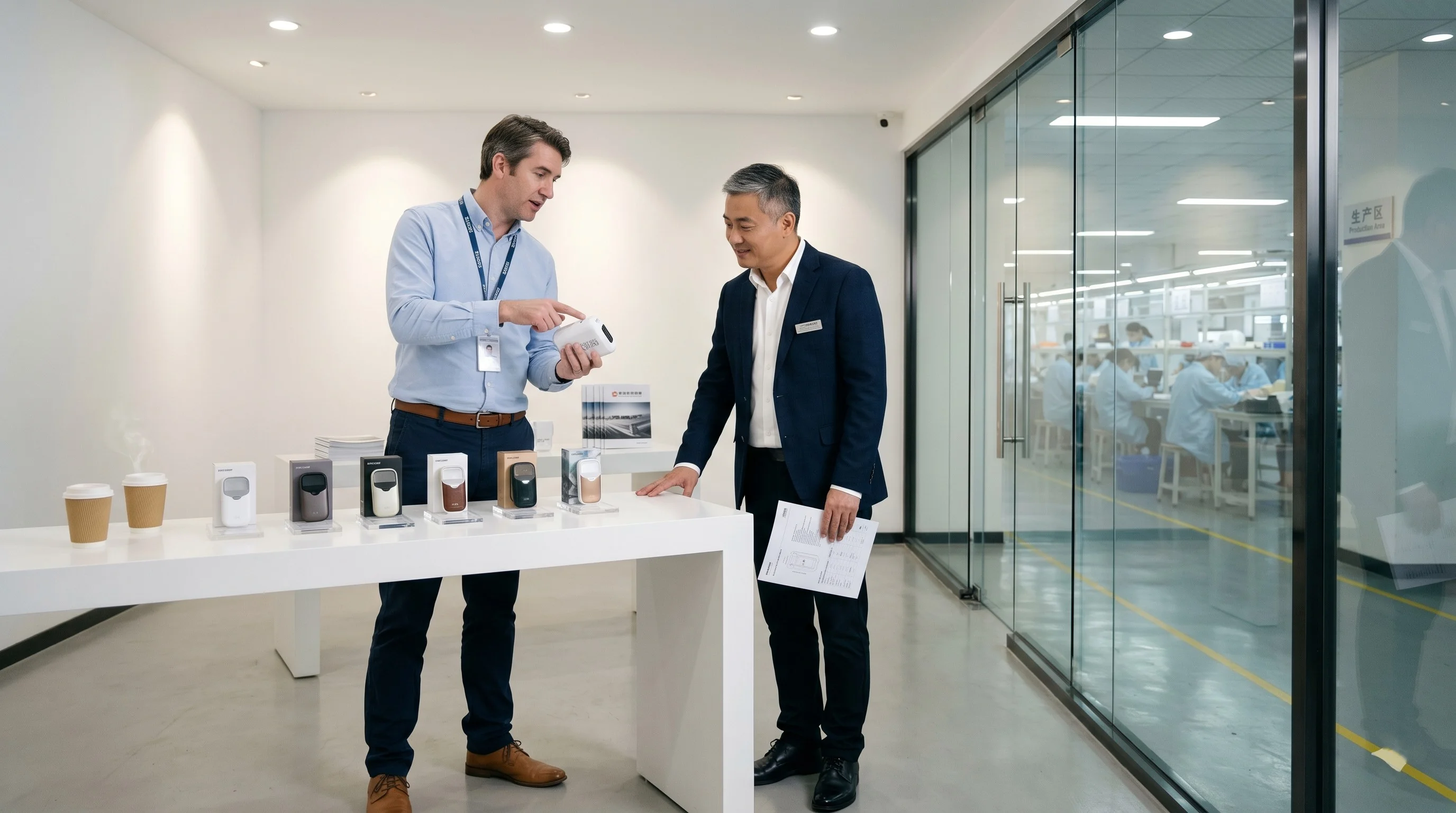
Each layer builds on the previous one. Layers 1 and 2 take hours and are free. Layers 3 and 4 take days to weeks and cost a sample order. Layer 5, a physical factory audit, takes a week and costs €800–€2,000. Not every order requires all five layers. The appropriate depth of vetting scales with your order value and the duration of the intended relationship.
Layer 1: Basic online verification. Before making contact, spend 30 minutes on basic checks. Search the company name on Chinese customs trade data platforms (Panjiva, ImportYeti, Volza) to verify that this factory has actually exported goods, and to which countries and buyers. A factory claiming five years of export experience with no visible trade history is a significant red flag. Check the Alibaba Gold Supplier membership age (older is more credible). Cross-reference the claimed factory location with satellite imagery, the factory should physically exist at the address they provide.
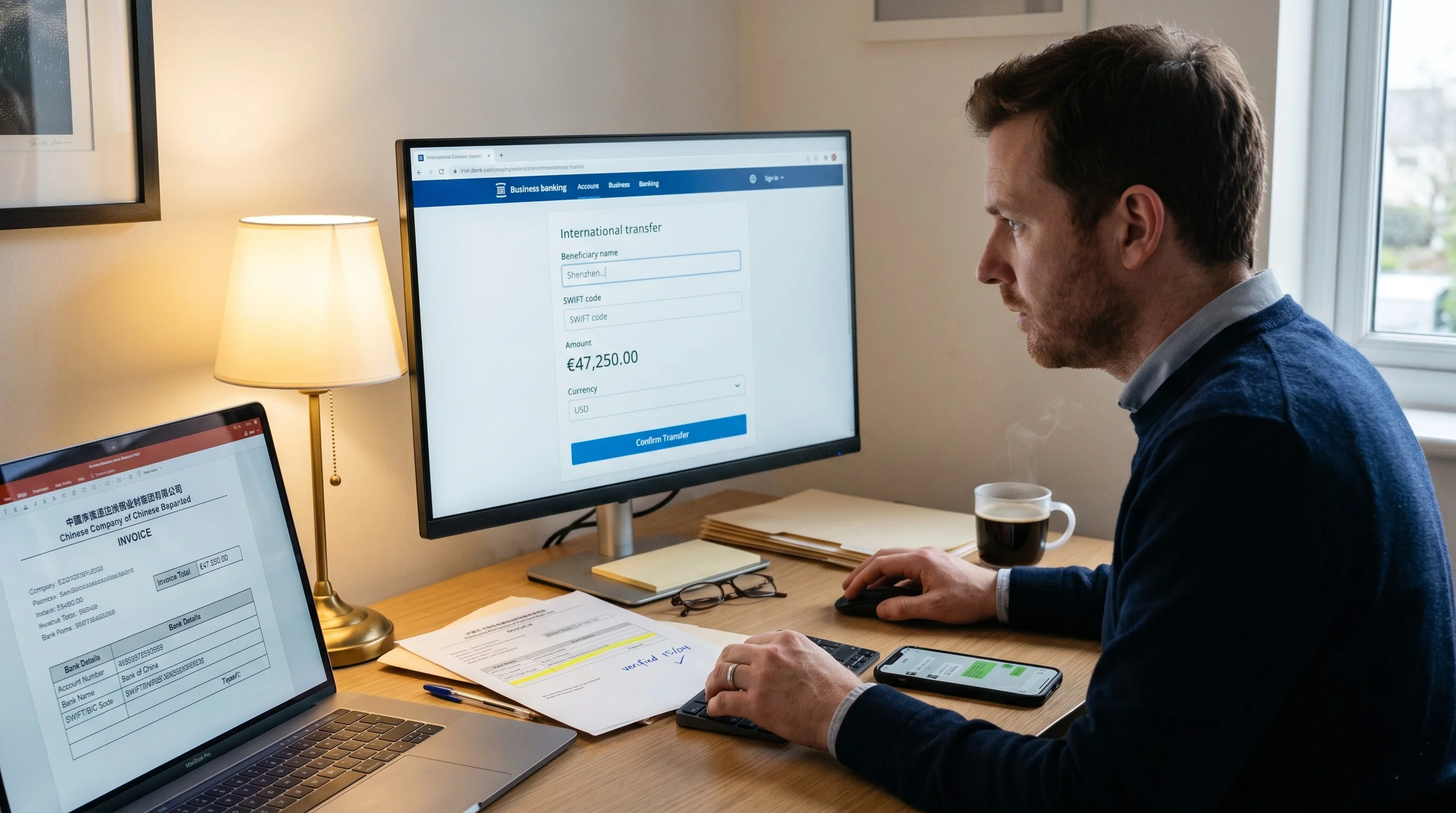
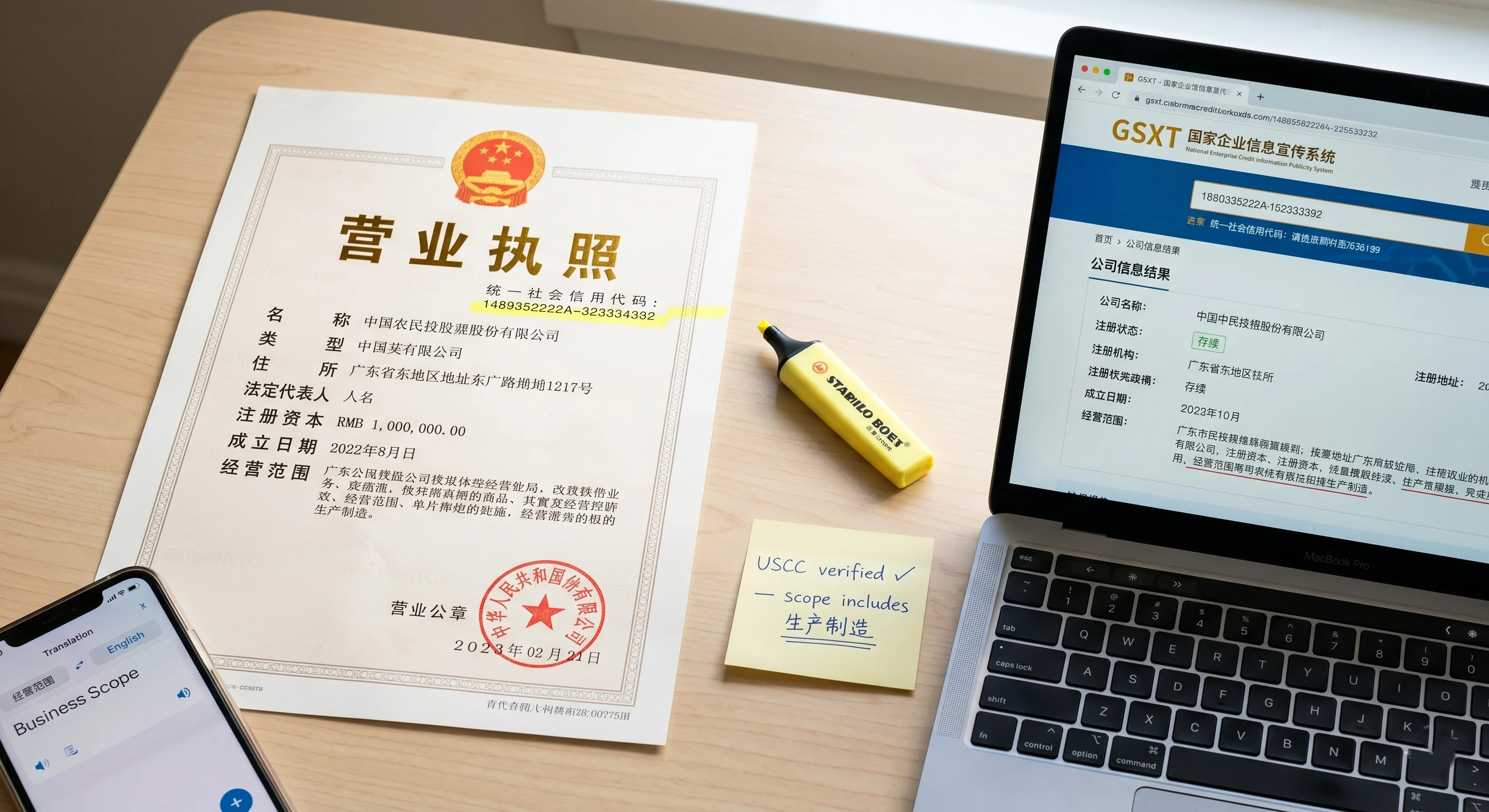
Layer 2: Document verification. Request the Business Licence (营业执照), Export Licence, relevant product certification (CE certificates, ISO 9001, BSCI audit report), and a sample commercial invoice showing bank account details. Critically, cross-reference the Business Licence registration number through China's State Administration for Market Regulation (SAMR) free public database at gsxt.gov.cn. This confirms the company legally exists, its registration status, legal representative, and, critically, its business scope, which tells you whether you are talking to a manufacturer or a trader.
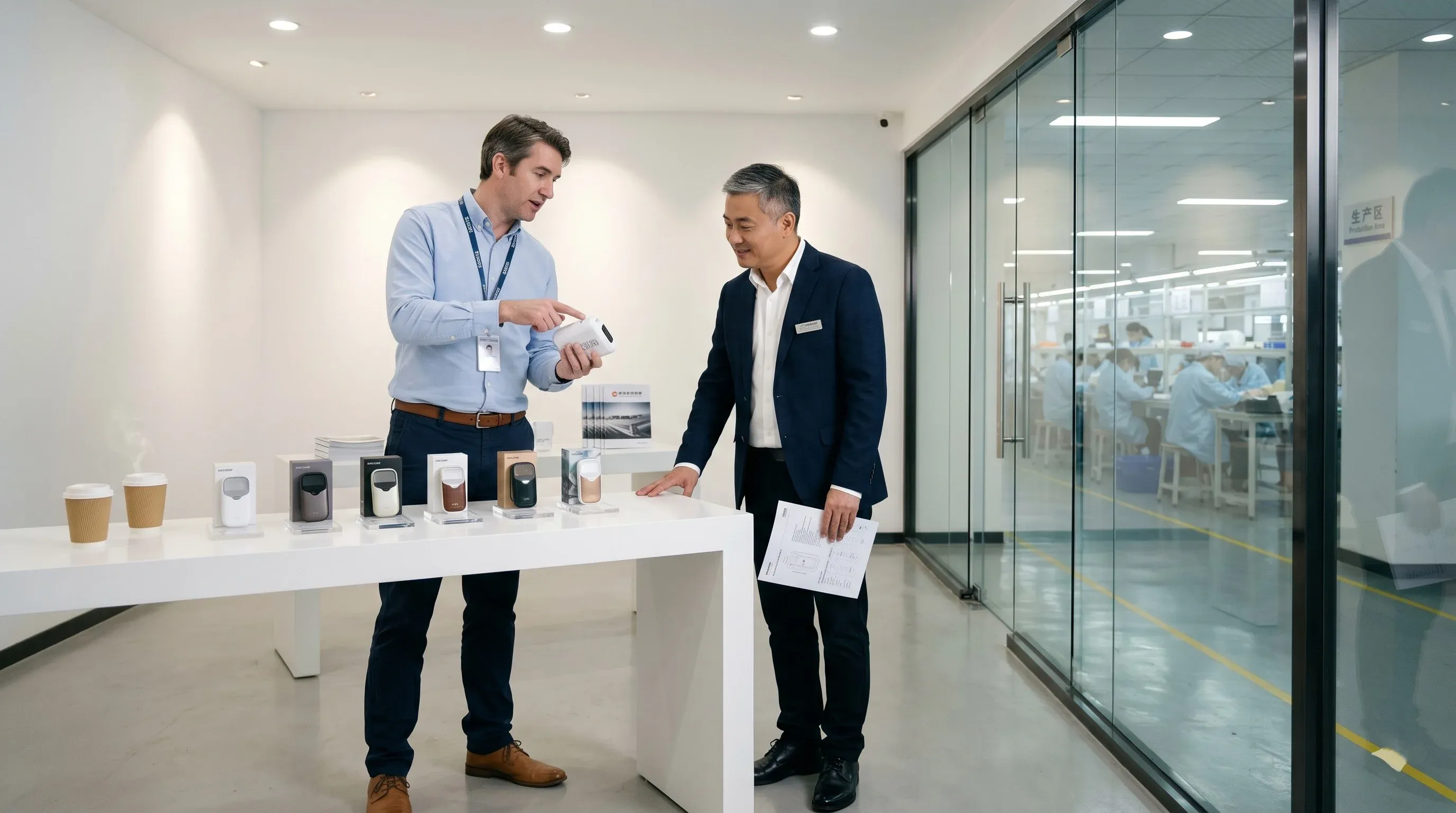
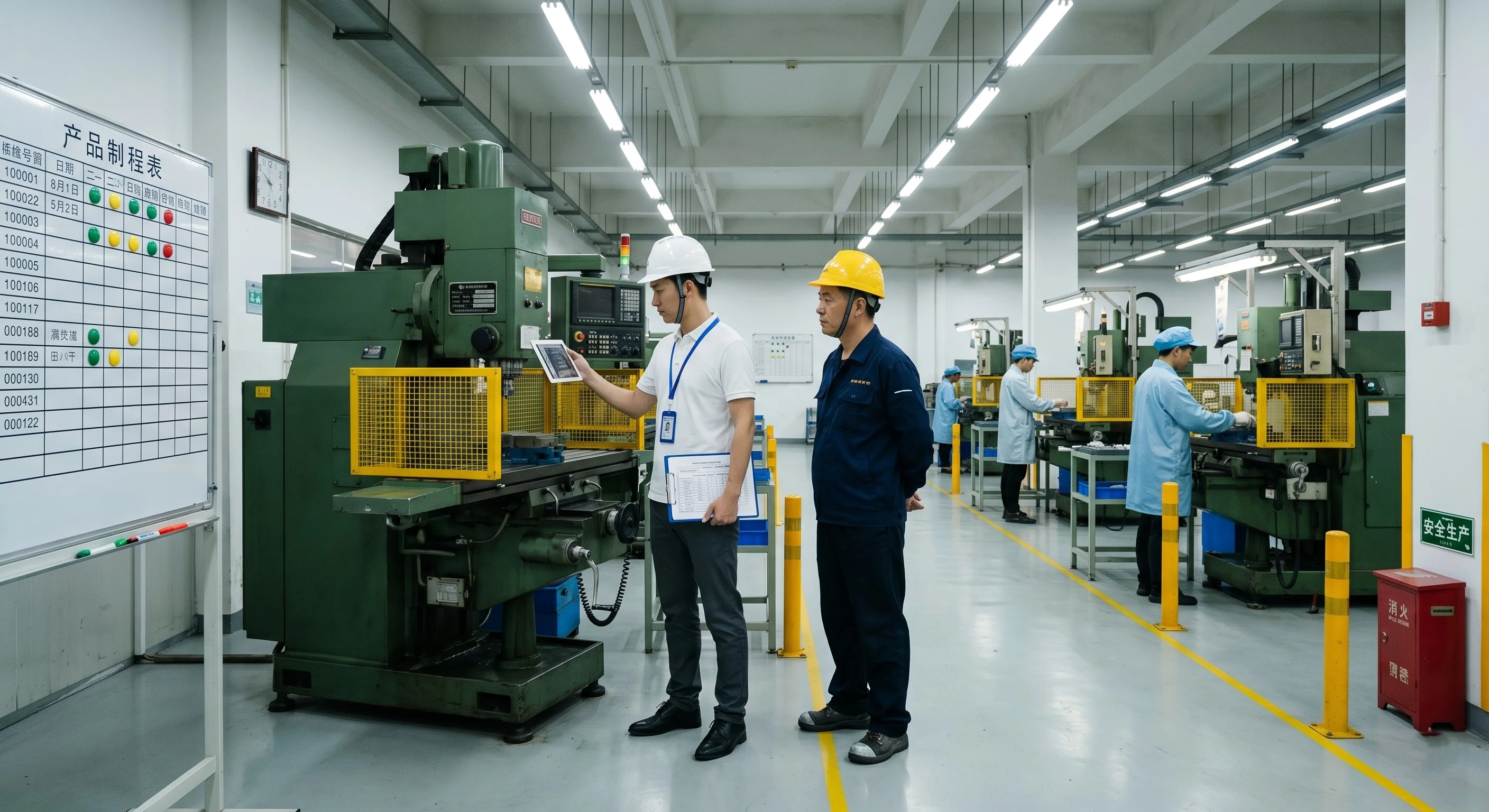
Layer 3: Live video call factory tour. Request a live WeChat or WhatsApp video call factory tour. Minimum 20 minutes. Ask to see: the production floor where your specific product would be made, raw material storage, the QC inspection area, and the warehouse. Ask them to show you machinery nameplates (model, year, capacity). Ask them to show you a product currently in production, preferably similar to your category. A legitimate factory does this without hesitation. A trading company will make excuses, use pre-recorded footage, or claim the factory is "too busy."
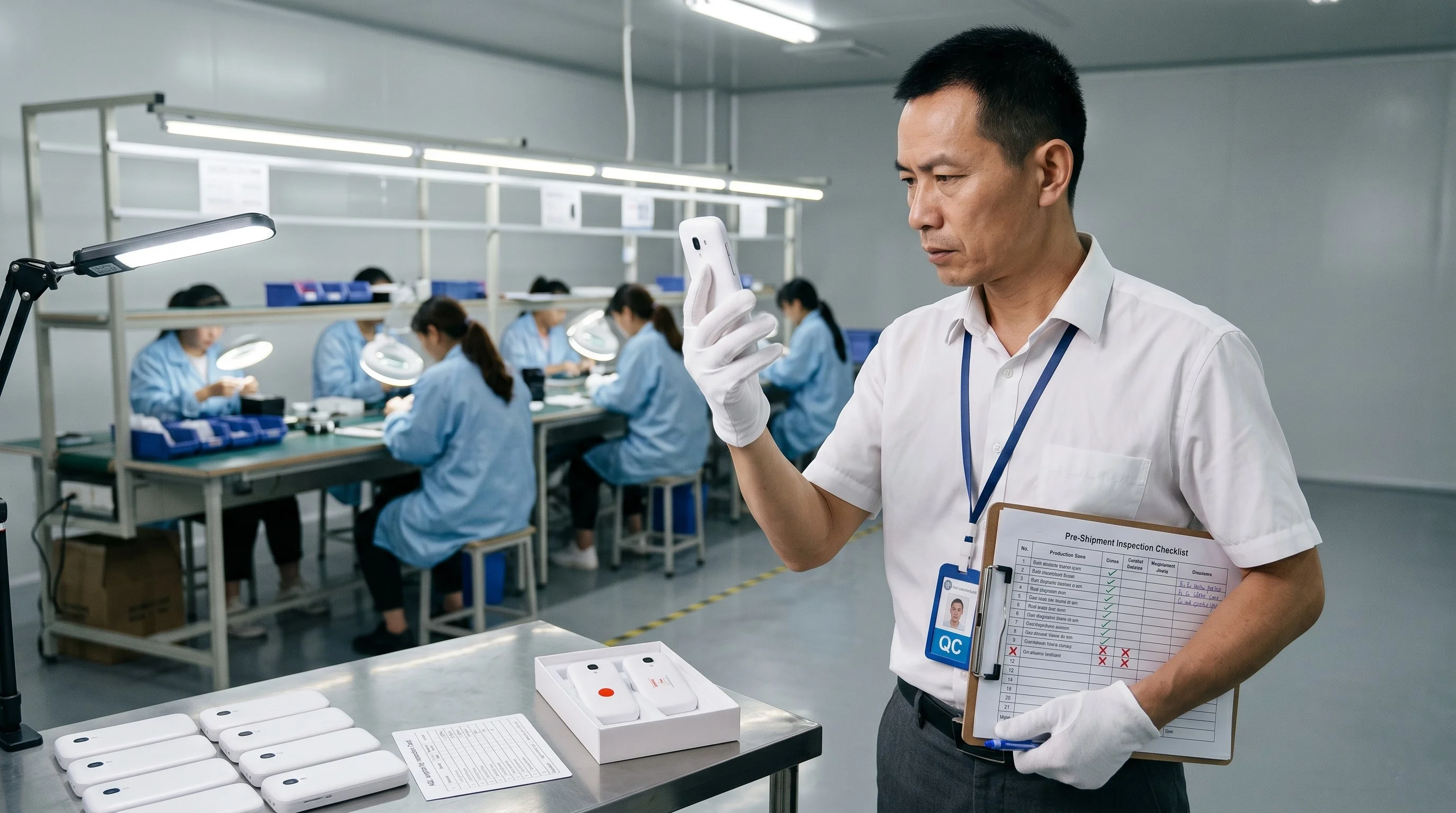
Layer 4: Sample order. Never place a production order without receiving and evaluating a physical sample manufactured to your specification, not a stock sample from their existing range. Evaluate against your product requirement checklist. Test function, check materials, measure dimensions. The sample also confirms payment reliability and production communication quality, two things you need to know before committing production funds.
Layer 5: Physical factory audit. For orders above €50,000, or suppliers intended as long-term manufacturing partners, an independent factory audit (Sedex, BSCI, SGS) is strongly recommended. An audit verifies production capacity, machine inventory, labour force size, financial stability, environmental and social compliance, and sub-contracting practices. Factories that sub-contract your production to third parties without disclosure are a serious quality and compliance risk.
The 7 Red Flags That End a Supplier Relationship
These are absolute disqualifiers at any stage of the vetting process, not negotiating points.
1. The price drops significantly without a credible explanation. If a supplier reduces their price by more than 10% within the first three exchanges without changes to specification, quantity, or Incoterms, they are padding the initial quote or are about to reduce material quality to compensate.
2. They cannot provide a Business Licence. Every legitimate Chinese manufacturer has one. Any excuse for not providing it, "it is being renewed, " "our director is abroad, " "we will send it after you place the order", is disqualifying.
3. The business scope shows trade, not manufacturing. You may choose to work with a trading company, but you must know that is what they are. A supplier claiming to be a factory whose Business Licence shows 贸易 (trade) as their primary business scope is misrepresenting themselves.
4. They request payment to a personal account or a different company name. This is the most common invoice fraud vector. Payment must always go to the exact company name on the Business Licence, to a corporate account. Full stop.
5. They refuse a live video call factory tour. There is no legitimate business reason to refuse this. A real factory will show you round on a live call. Every time.
6. Samples arrive that differ from the approved specification without disclosure. A factory that substitutes materials on a sample will do the same on a production run.
7. They cannot name any other foreign customers. Factories with genuine export experience have international clients they can reference. A factory that claims years of export experience but cannot name a single market has something to hide.
The Role of a China-Based Sourcing Agent
The 5-layer verification framework requires Mandarin-language capability for document checks (the SAMR database is in Chinese), Chinese business network knowledge to interpret audit results, and physical presence in China for Layers 3 and 5.
A China-based sourcing agent like Ériu Sourcing conducts the full verification on your behalf. We have 18 years of factory relationships across Guangdong, Henan, and Zhejiang, which means we already know many factories' reputations and production histories before your brief arrives. For factories outside our existing network, we run the full five-layer process and provide a written sourcing recommendation before any order is placed.
You get the result of the vetting, a verified, production-ready factory, without weeks of Mandarin-language research or the cost of a flight to Shenzhen.
Frequently asked questions
How do I verify if a Chinese supplier on Alibaba is a real factory or a trading company?
The definitive check is the Chinese Business Licence (营业执照). Request a copy and check the business scope (经营范围). If it shows 生产制造 (manufacturing/production), they are a factory. If it shows 贸易 or 销售 (trade or sales), they are a trading company. You can verify the licence is genuine by searching the company's 18-digit Unified Social Credit Code on China's SAMR public database at gsxt.gov.cn. A live video call factory tour is the second critical verification, a real factory will show you around without hesitation.
What is a factory audit and do I need one for my first China order?
A factory audit is an independent assessment of a factory's production capabilities, quality systems, workforce, and compliance status, conducted by a third-party auditor such as Sedex, BSCI, or SGS. For a first order below €30,000, a full factory audit is generally not cost-effective, focus on Layers 1 through 4 of the verification framework. For orders above €50,000 or for long-term suppliers, a factory audit is strongly recommended. Cost is typically €800–€2,000 for a standard audit in Guangdong or Zhejiang.
How long does it take to properly vet a Chinese supplier before placing an order?
Layers 1 and 2 (online checks and document verification) can be completed in 2–3 days. A video call factory tour can be arranged within a week. Receiving and evaluating a production sample typically takes 2–4 weeks including manufacturing, shipping, and evaluation time. A physical factory audit takes 1–2 weeks to schedule. Full five-layer verification therefore takes 4–8 weeks before production begins. Factor this into your sourcing timeline.