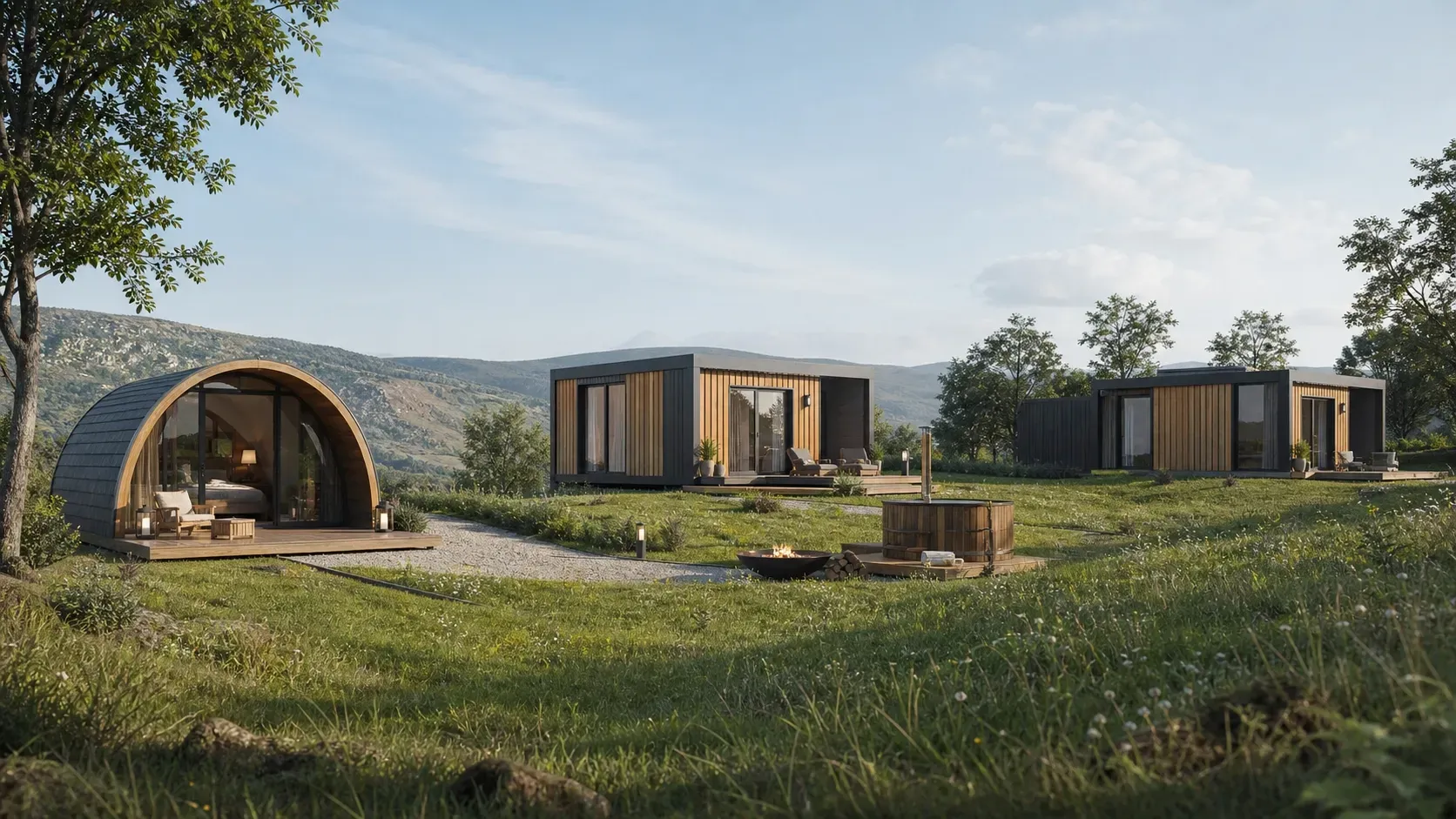
Prefab container homes have moved from quirky experiments to a mainstream option for housing, tourism cabins, and glamping across Europe, pushed by rising construction costs and tighter sustainability rules. For campsite and land owners, understanding how container homes are priced, regulated, and deployed is essential before committing to cabins or pods.
This guide distils current industry data into a glamping-focused playbook, and shows where a China-based sourcing partner like Ériu Sourcing fits in.
What are prefab container homes?
Prefab container homes are residential or hospitality units built from new or repurposed shipping containers, factory-modified with insulation, internal framing, services, and finishes, then delivered to site for final assembly and connection to utilities. The core benefits are a modular steel structure, fast factory production, and the ability to scale from single units to multi-storey arrangements. Modern designs can look indistinguishable from conventional architecture, the "industrial box" aesthetic is optional, not a requirement.
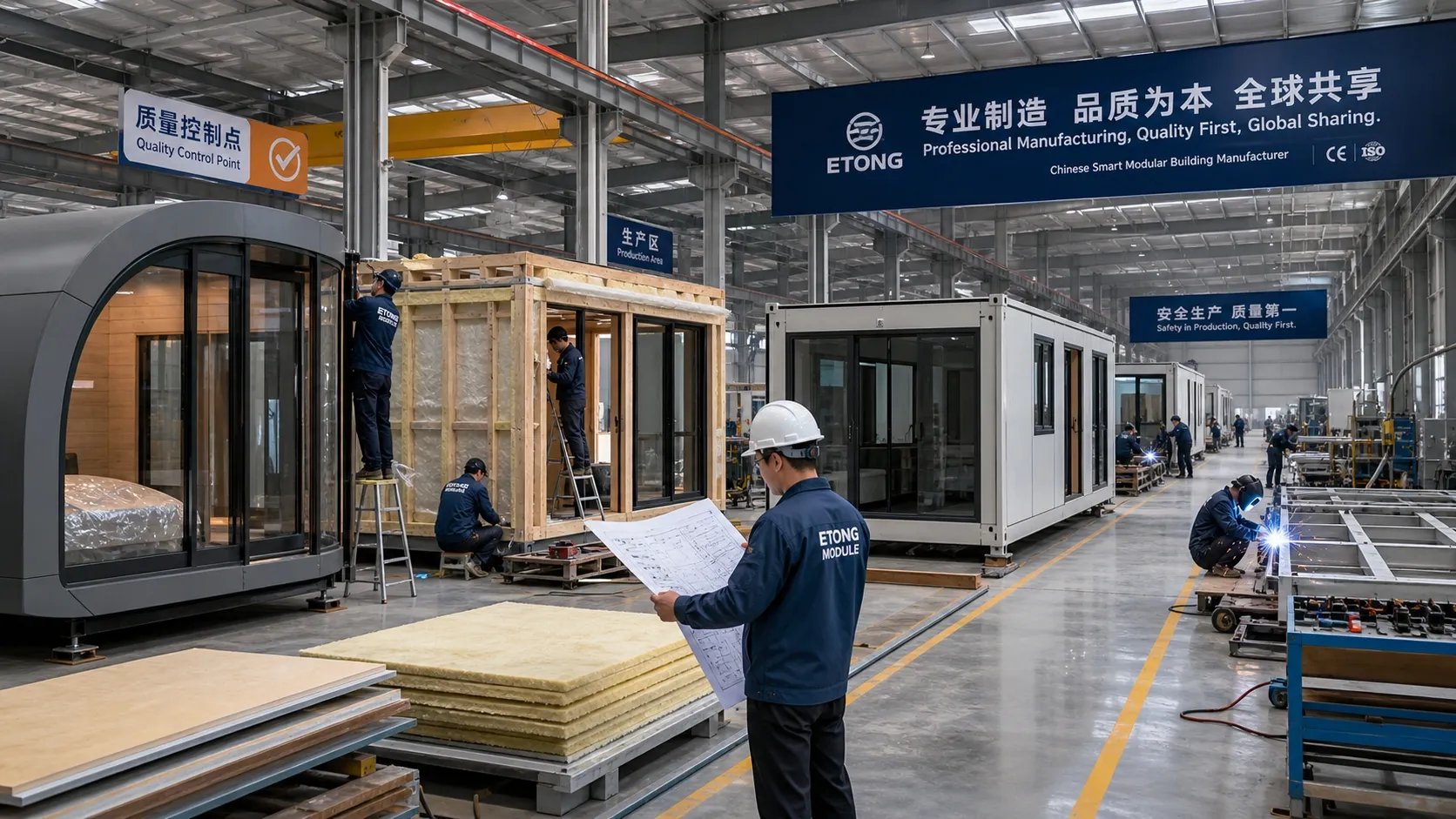
Why prefab container homes are gaining traction in Europe
Three forces are pushing container and modular homes into the mainstream. Rising construction costs: Eurostat data shows construction costs in many EU states have climbed more than 30% over the past five years, making traditional builds harder to justify, and prefabrication cuts on-site labour and delay. Sustainability and energy policy: the European Green Deal and national energy rules push for efficient, low-carbon buildings, and container homes can be designed with thick insulation, high-performance glazing, and integrated renewables. Speed of deployment: traditional builds can take 8–14 months, whereas prefab container homes can often be specified, manufactured, and delivered in 8–16 weeks, which matters in tourism regions where the season is tight.
Cost ranges for prefab container homes in Europe (2026)
Recent analyses of container-home deployments across Europe give a useful 2026 reference band:
- Basic studio units (20–30 m²), typically €25,000–€40,000 depending on insulation, finishes, and bathroom/kitchen configuration.
- One- to two-bedroom modular units (40–70 m²), typically €45,000–€75,000, often formed from two containers or extended frames.
- Luxury or highly customised designs (80+ m²), often €80,000–€120,000, with high-end finishes, glass walls, and complex services.
These figures usually cover the factory-built unit but not site-specific costs such as foundations, utility connections, and planning fees, and they are strongly influenced by transport distance to remote or rural areas. For glamping owners, the most relevant band is usually the 20–40 m² range, which maps well to high-yield cabins and pods. Sourced factory-direct from China, comparable pods and cabins typically come in well below these European figures, often 30–50% less on a landed basis, which is exactly the opening for glamping operators.
Do container homes always need planning permission?
In most European countries, yes, once a container home is connected to services and used as longer-term accommodation, it is treated as a building and requires planning permission. Recent guidance illustrates the pattern:
- Germany, container homes typically require a full building permit (Baugenehmigung).
- France, structures over 20 m² require planning permission; smaller units may still need authorisation depending on use and permanence.
- Spain, municipal approval is generally required.
- Netherlands, zoning and environmental constraints are strict, especially for permanent housing.
Even where small "mobile" units sometimes fall into grey areas, once you connect services and market them as permanent glamping accommodation, you should assume formal approval will be needed. In Ireland and the UK the same logic applies, with the detail set locally.
Energy performance and insulation for container cabins
Energy rules are tightening across Europe, and container cabins used year-round need proper insulation and thermal detailing. A typical wall build-up runs: external steel shell, vapour barrier, 80–150 mm of PU or mineral-wool insulation, then internal gypsum or decorative wall panels. Reference U-values by climate:
- ~0.30–0.35 W/m²K for 80 mm PU (Southern Europe)
- ~0.20–0.25 W/m²K for 120 mm mineral wool (Central Europe)
- ~0.15–0.18 W/m²K for 150 mm high-density insulation (Northern Europe, including Ireland and the UK)
Thermal bridging at floor edges and corners is a common weak point; poor detailing there causes condensation and guest complaints, so it must be resolved at design stage, not discovered after delivery.
Are container homes comfortable enough for glamping?
Modern container homes can absolutely be comfortable for glamping guests when design and execution are handled properly. The common concerns, rain noise, temperature swings, ceiling height, are addressed through adequate insulation and acoustic treatment in the roof, double-roofing or sloped add-on roofs, and modified internal framing to increase perceived height. Real-world projects such as large container student-housing schemes in Amsterdam show that well-detailed container buildings can last decades with appropriate corrosion protection and maintenance.
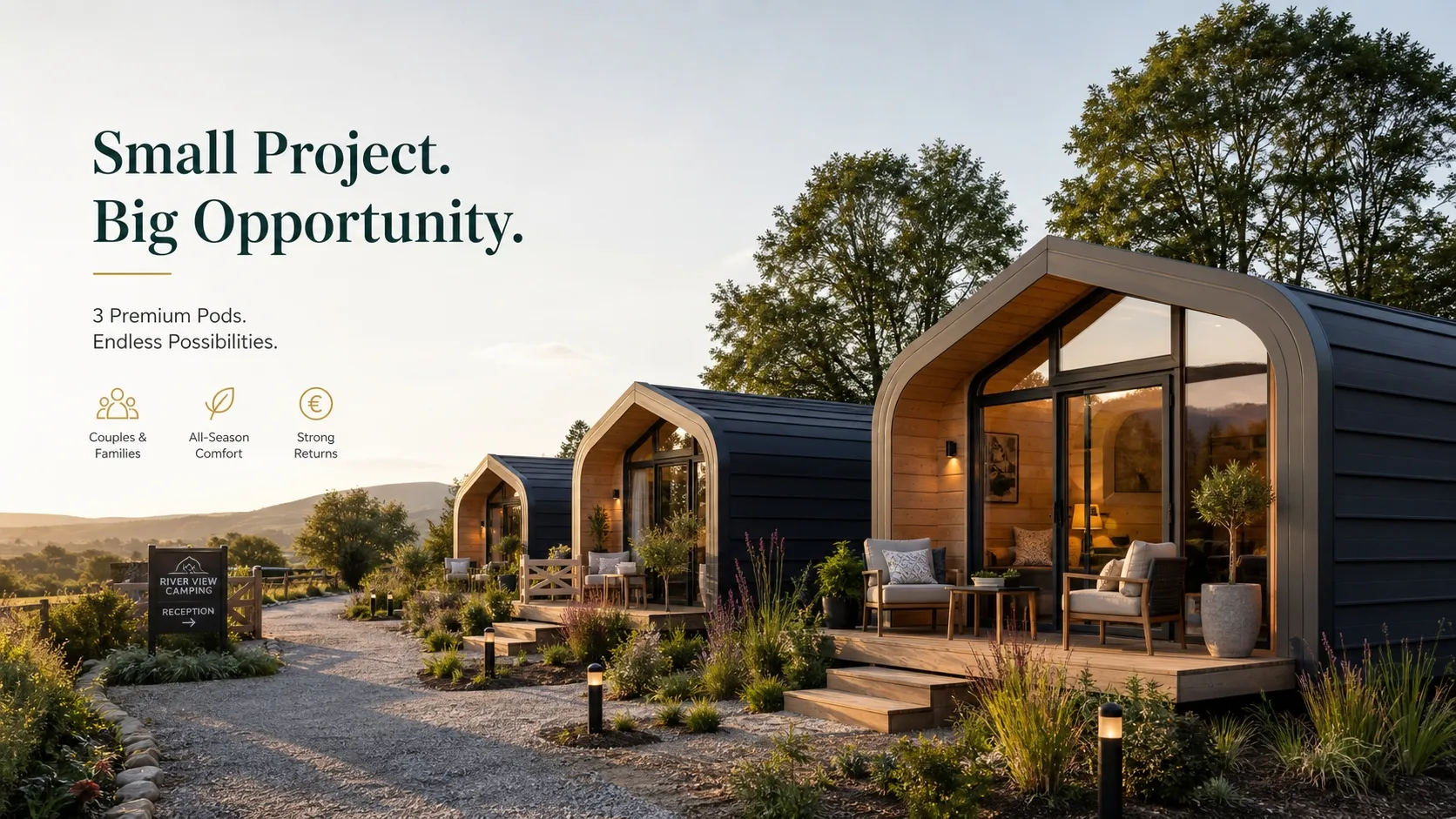
Where container homes fit into glamping strategies
For glamping and campsite owners, container homes and cabins offer higher nightly rates than tents or standard pitches, often €80–€200 per night with ensuite bathrooms and unique designs, plus extended-season operation, because insulated units work in shoulder seasons and winter, and real design flexibility, from simple studio pods to stacked or cantilevered cabins overlooking a view. They integrate well with existing campsites adding premium stock, farm stays diversifying income, and standalone boutique cabin projects.
How to source container cabins safely (and where China fits in)
Many European glamping operators now look to China for cabins and container homes because of competitive factory pricing and the maturity of the modular industry. Henan and Zhengzhou in particular host multiple container-use and steel-structure manufacturers focused on export markets and capable of supporting customisation.
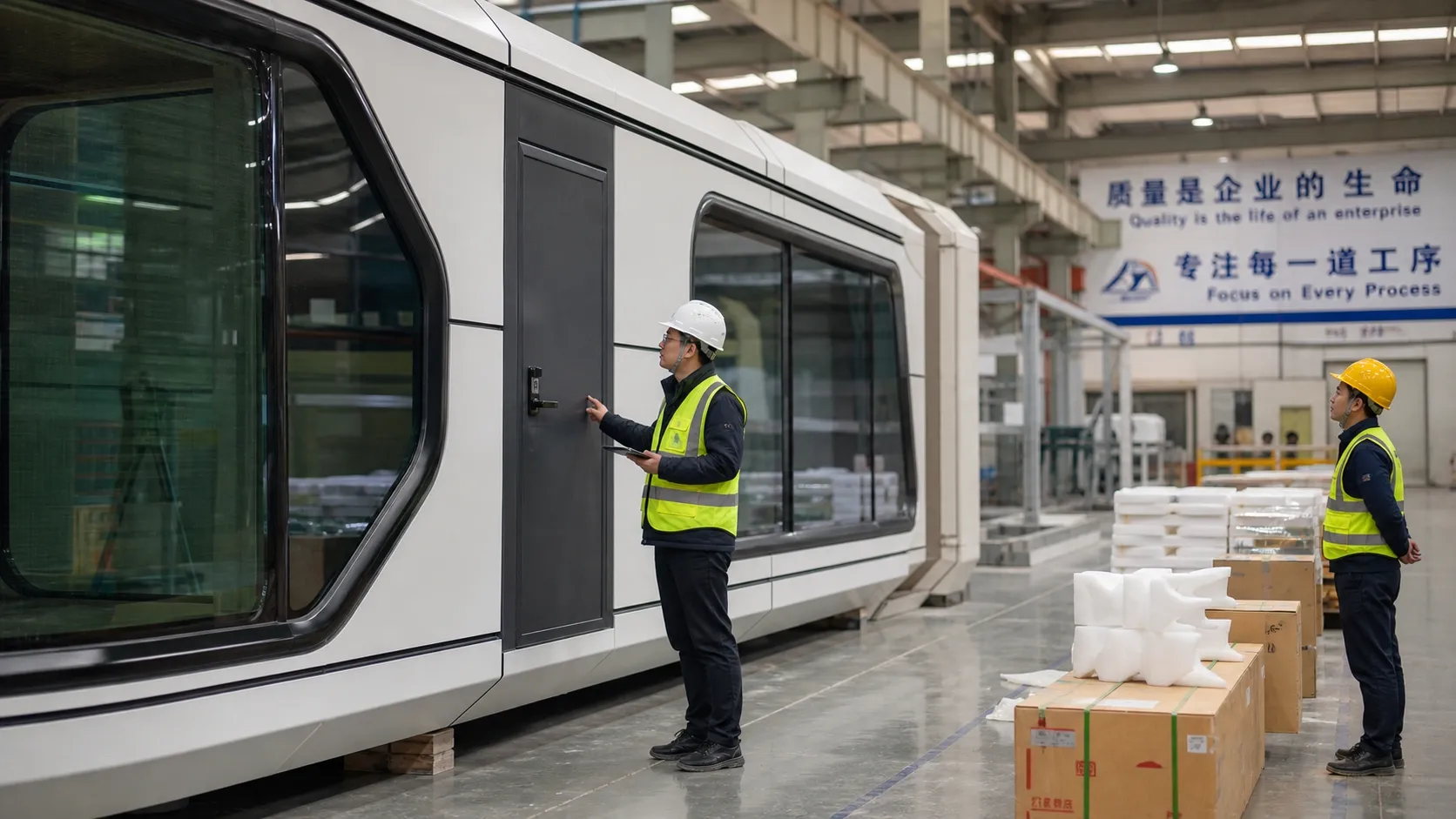
The risks are real, though: quality variation between factories, gaps in documentation (especially structural and energy performance), and logistics complexity with potential damage in transit. This is where a China-based sourcing partner with a permanent presence in Zhengzhou, and experience in logistics, QC, and EU imports, becomes critical. A structured approach typically involves defining your unit types, sizes, and performance requirements; shortlisting and auditing suitable export-experienced factories; coordinating design, samples, and technical documentation; carrying out in-person inspections before shipment; and managing inland transport, export, and import logistics.
Next steps: linking your glamping plans to real numbers
If you are planning to add cabins or pods in the next 12–24 months, now is the time to pin down cost bands, planning constraints, and realistic sourcing options. Ériu Sourcing can translate your site concept into a concrete unit mix, supplier shortlist, and budget range, using our base in Zhengzhou's container-house cluster and our logistics/QC background in China–EU trade.
Share a few details about your land and target guest profile and we will prepare a no-obligation Glamping Container Blueprint with example layouts and cost ranges. Start with the 3-pod glamping cabin package, browse the full glamping pods & cabins category, or get in touch.
Frequently asked questions
How much does a prefab container home cost in Europe in 2026?
Typical 2026 bands: €25,000–€40,000 for a basic 20–30 m² studio, €45,000–€75,000 for a one- to two-bedroom 40–70 m² unit, and €80,000–€120,000 for a luxury 80 m²+ design. These usually cover the factory-built unit but not foundations, utility connections, or planning fees, and transport distance to rural sites affects the total. For glamping, the 20–40 m² band is usually the most relevant.
Do glamping pods and container cabins need planning permission?
In most European countries, and in Ireland and the UK, once a container cabin is connected to services and used as accommodation, it is treated as a building and requires planning permission, with energy-performance (NZEB) standards increasingly enforced. Rules vary by country and local authority, so assume formal approval is needed. A sourcing partner can supply the structural and energy documentation your architect needs, but the application itself is yours.
Can container cabins be used year-round for glamping?
Yes, with proper insulation and detailing. A typical wall build-up uses 80–150 mm of PU or mineral-wool insulation (heavier for Northern Europe, Ireland and the UK), targeting U-values around 0.15–0.35 W/m²K depending on climate, plus high-performance glazing, heating, and roof acoustic treatment. Resolving thermal bridging at floor edges and corners at design stage is what prevents condensation and guest complaints later.