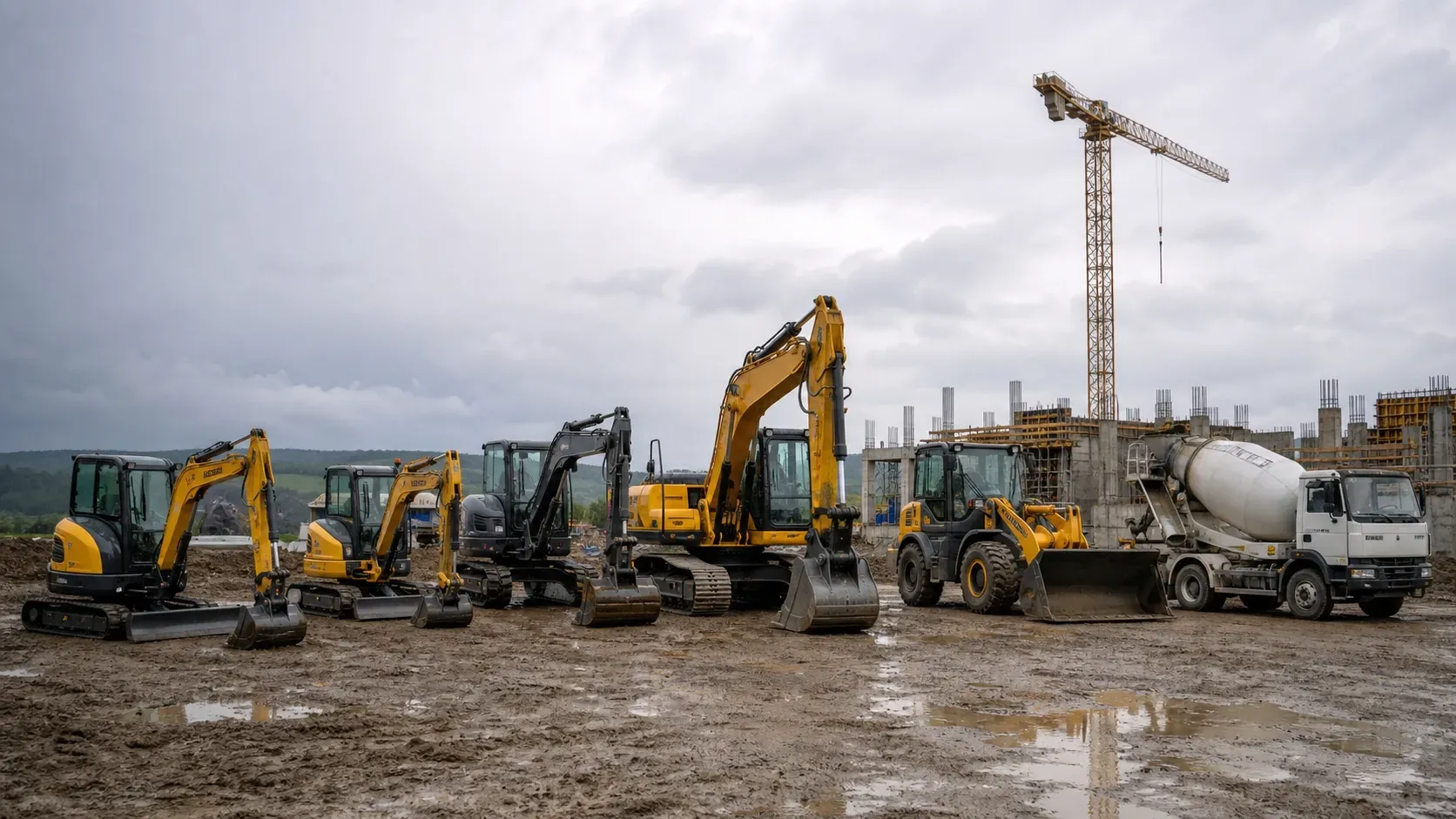
Chinese construction machinery can be a powerful lever for European contractors and rental fleets, but importing excavators, loaders and concrete equipment is nothing like importing hand tools or furniture. You are dealing with the EU Machinery Directive, Stage V emissions, hydraulic-system quality, documentation and long-term support, and any one of them can sink a project.
This guide explains how to source construction machinery from China safely, rooted in current EU regulation and real market data rather than shortcuts. The scale is genuine: Chinese OEMs sold roughly 131,550 excavators between January and August 2024, with around half exported. The discipline below is what turns that supply into machines you can actually run in Europe.
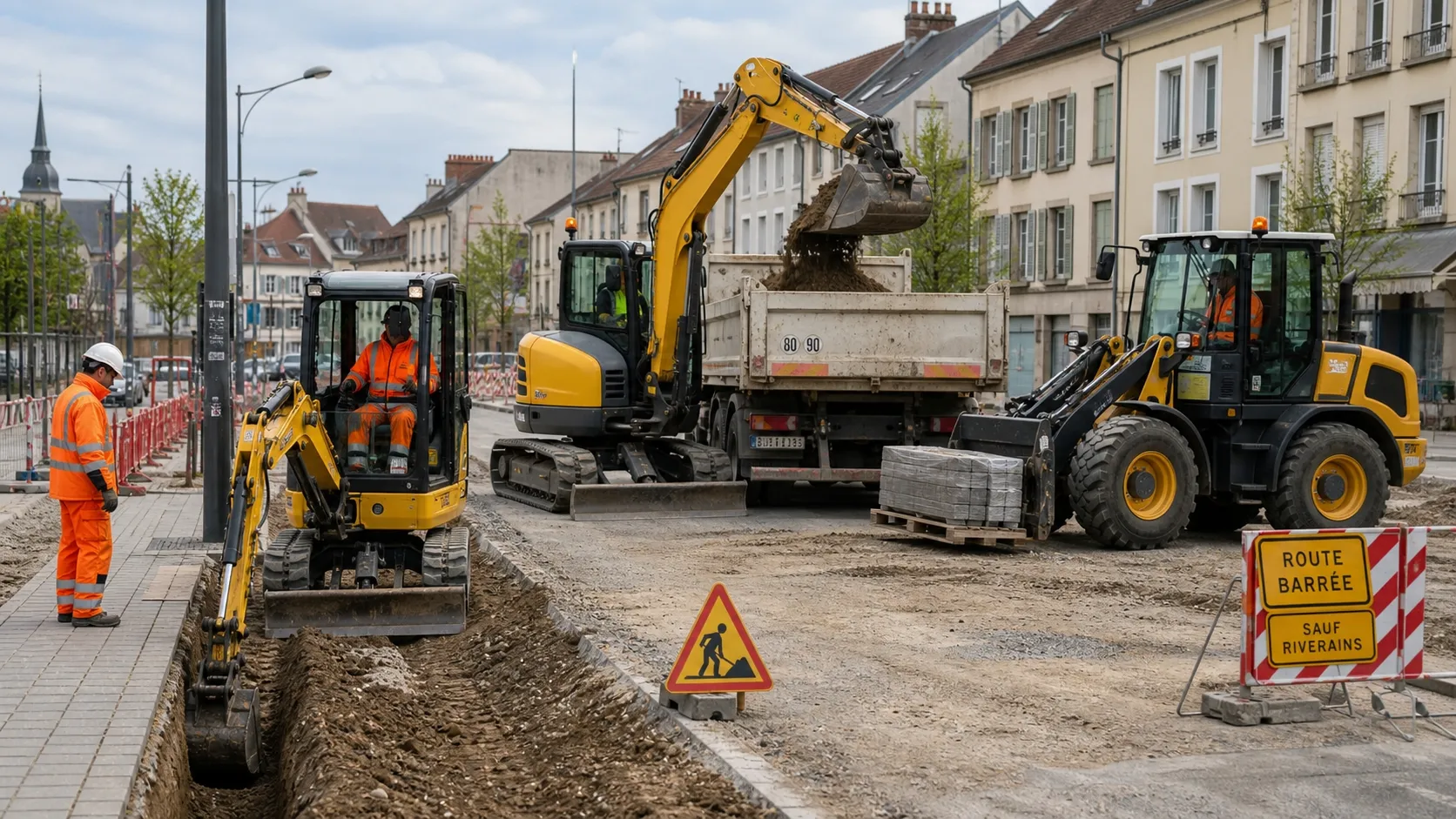
Understand the EU Machinery Directive and CE marking
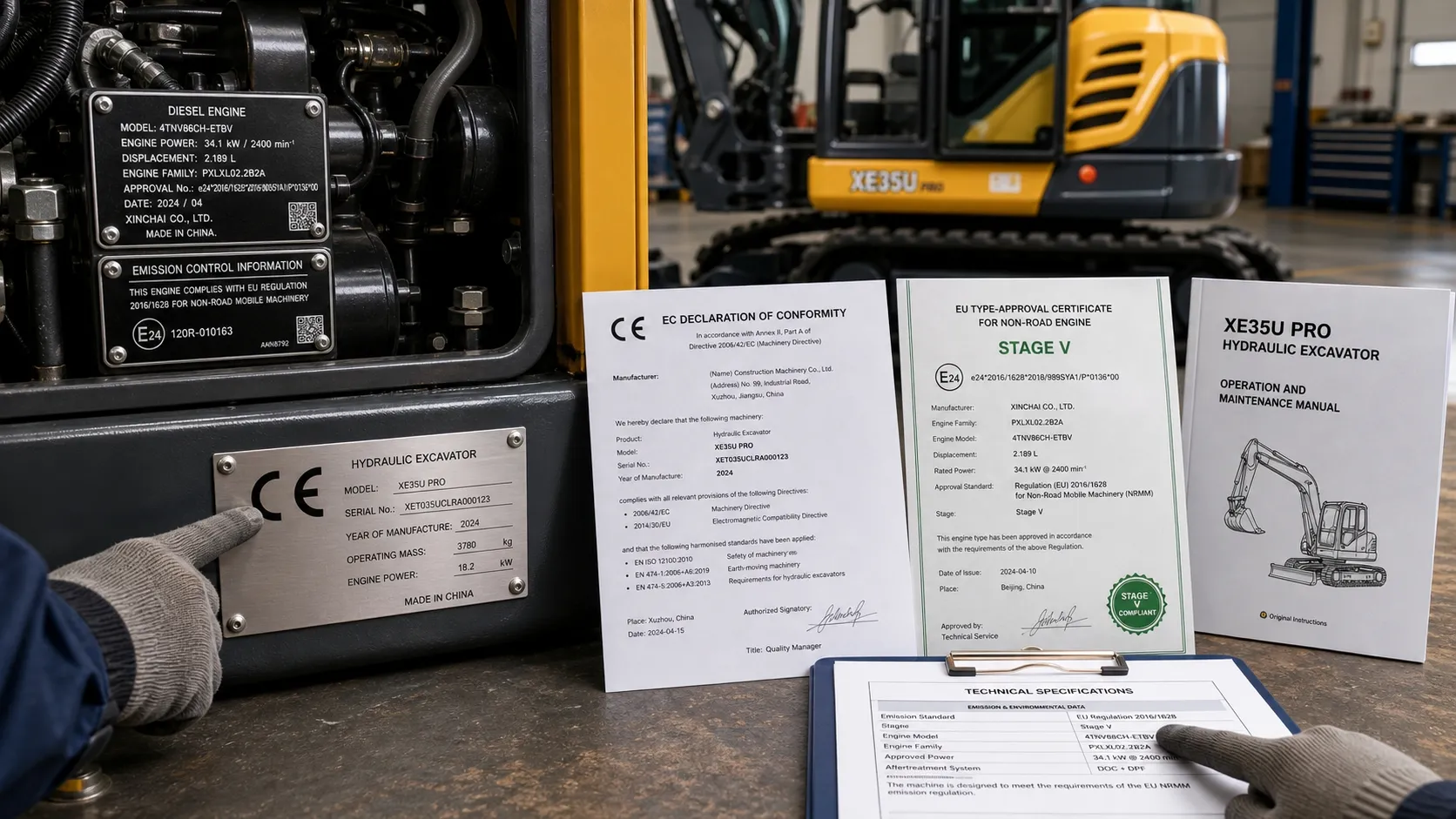
The Machinery Directive (2006/42/EC) governs machinery placed on the EU market, aiming to guarantee both free circulation and a high level of safety. It requires the manufacturer to undertake a risk assessment, demonstrate conformity with the Essential Health and Safety Requirements of Annex I (usually via harmonised EN/ISO standards), compile a technical file of drawings, calculations, test reports and instructions, issue an EC Declaration of Conformity, and affix the CE mark and machine identification.
Most construction machinery follows the "internal checks" conformity route; only certain higher-risk categories require a Notified Body, but the manufacturer remains fully responsible either way. When sourcing from China, the job is to verify the OEM has genuinely done this work, not merely added a CE sticker to a machine built for another market.
Stage V emissions for non-road mobile machinery
Stage V (Regulation (EU) 2016/1628) sets stringent emission limits for engines used in non-road mobile machinery such as excavators, loaders and construction equipment. It applies across a wide power range, from under 19 kW to over 560 kW, with implementation staged from 2018 for type approval and 2020 for placing engines on the market, and it focuses hard on particulate matter and particle number, driving diesel particulate filters even into smaller engines.
For an imported machine this means the engine must be Stage V-approved, with type-approval documentation to prove it. Fitting a random industrial diesel that meets an older regional standard will not pass, and national authorities are increasingly monitoring in-service emissions. Confirm the engine and its paperwork before anything else.
Common pitfalls when importing machinery from China
Experienced importers see the same issues recur. Fake or incomplete CE marking, a CE logo with no real risk assessment, technical file or conformity behind it. Non-compliant engines, meeting older Chinese or other regional standards but not Stage V. Weak documentation, missing manuals, incomplete technical files, or paperwork not available in the required EU languages. Hydraulic and structural weaknesses, underspecified hoses, fittings, seals, welds and structural members that do not meet European operational expectations. Any one of these can lead to refused import, a stalled site, insurance problems or a serious safety incident.
A safe sourcing process, step by step
1. Define application and regulatory scope. Specify the machine's use, power range and duty cycle, and confirm whether it falls under NRMM Stage V and any additional directives (EMC, noise, ATEX). 2. Pre-qualify OEMs on compliance. Ask for evidence of the CE process, a risk-assessment summary, test reports, a sample Declaration of Conformity, and for engine Stage V type-approval certificates and emission data. 3. Do technical due diligence. Have a qualified engineer review drawings, hydraulic schematics, component specs and protection systems, and check that harmonised standards are actually used. 4. Pilot and inspect independently. Import a single machine or small batch, commission independent inspection (hydraulics, welds, structure) and run it in the field. 5. Document and standardise. Verify manuals, labels and documentation meet the Directive and keep them in your technical file. 6. Scale cautiously. Only after a successful pilot, and any remedial improvements, should larger fleet orders follow.
Hydraulics and structural quality: what to watch for
For excavators, loaders and concrete equipment, hydraulic and structural integrity is everything. On hydraulics, verify the quality of pumps, valves, cylinders, hoses and seals, ensure components are rated for the pressures and cycles typical of European use, and check CE/EN compliance on hose assemblies and fittings where relevant. On structure, inspect weld quality (penetration and finish), steel specifications and stress-relief, and look for robust reinforcement at the boom, arm and undercarriage. On routing, make sure hoses and cables are shielded against chafing and damage. Some Chinese OEMs run strong QA and partner with recognised hydraulic suppliers; others cut corners, and differentiating between them is the single most valuable thing a buyer (or their agent) can do.
Why a Zhengzhou-based sourcing and QC partner matters
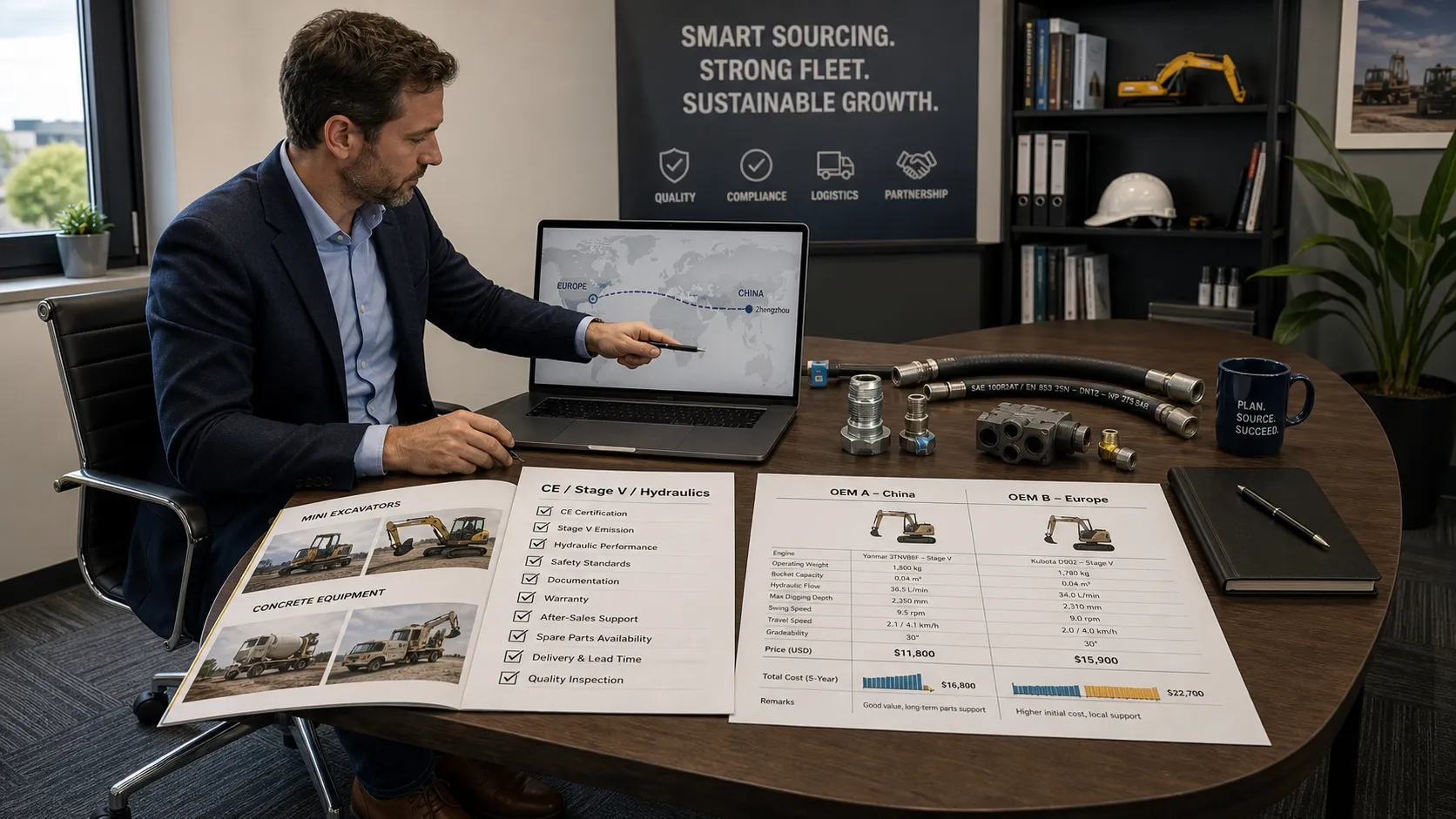
Being physically present in China, near both equipment clusters and a major logistics hub, changes what is possible. It enables factory visits and audits focused on the CE process, QA/QC and component sourcing; live verification of Stage V engines and their documentation rather than PDF claims; on-site testing and pre-shipment inspection that catch issues before they ship; and efficient logistics from a national hub. Zhengzhou is one of China's top-ten China–Europe Railway Express departure points, with rail reaching European terminals in roughly 12–18 days against 30–40 by sea, faster than ocean freight and far cheaper than air. This is the role Ériu Sourcing plays: regulatory awareness, engineering common sense and on-the-ground presence to filter OEMs and supervise projects.
Where to start if you are new to Chinese machinery
If you have never imported machinery from China, start with non-critical categories, auxiliary equipment or a specific compact machine, rather than your core fleet workhorses. Keep pilot projects small and tightly monitored, and use them to test OEM responsiveness, parts availability and support as much as raw machine performance. Once you have evidence that a specific OEM or category works, you can expand exposure, always inside the framework of EU regulation and sound engineering.
If you are considering trialling Chinese machinery, send us one specific machine type and we will outline a safe pilot sourcing plan, the regulatory steps, the technical checks, and a realistic cost/benefit read. Browse the full construction machinery category, see our mini excavator & compact machinery offer, or get in touch.
Frequently asked questions
Is construction machinery from China cheaper than Western OEMs?
Usually, on capex. As a directional guide, a vetted Chinese machine in the 3–5 tonne class with a Stage V engine and CE documentation might land at €40,000–€55,000 against €65,000–€80,000 for a comparable Western-OEM machine, roughly a 20–40% gap, depending on spec and volume. But that only counts if reliability, parts and residual values hold up, so compare on total cost of ownership against your real duty cycle, not the sticker price.
What does a machine need to be legal on a European site?
CE marking under the Machinery Directive (2006/42/EC), backed by a real risk assessment, technical file and EC Declaration of Conformity, not just a sticker, and, for the engine, Stage V approval under Regulation (EU) 2016/1628 with type-approval documentation. The importer placing the machine on the market is responsible for compliance, so verify both the machinery file and the engine paperwork against the exact configuration before you commit.
How do I avoid buying a machine with weak hydraulics or welds?
Treat hydraulics and structure as the main event. Have a qualified engineer review hydraulic schematics and component specs (pumps, valves, cylinders, hoses, seals) and inspect weld penetration, steel grades and reinforcement at the boom, arm and undercarriage. Favour OEMs with documented QA and recognised hydraulic suppliers, and run a pilot machine with independent inspection and field testing before any fleet order.