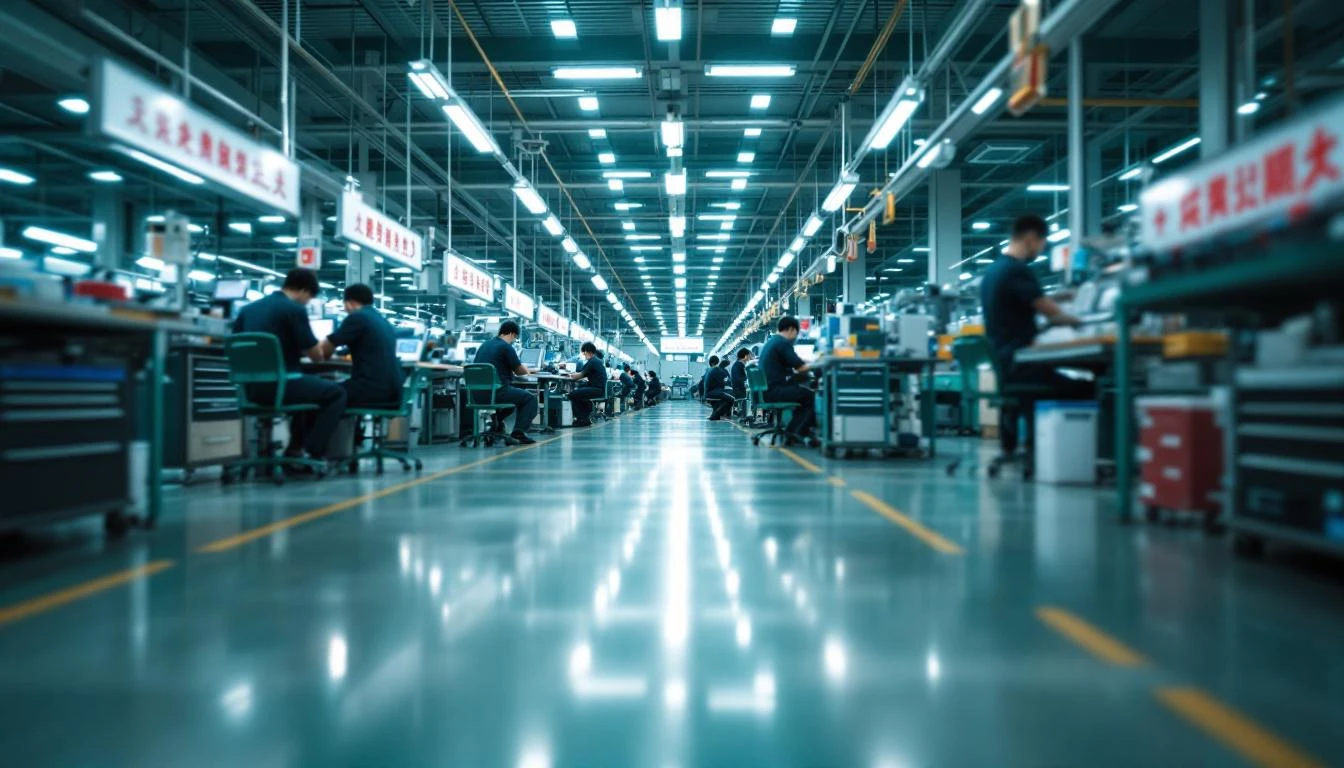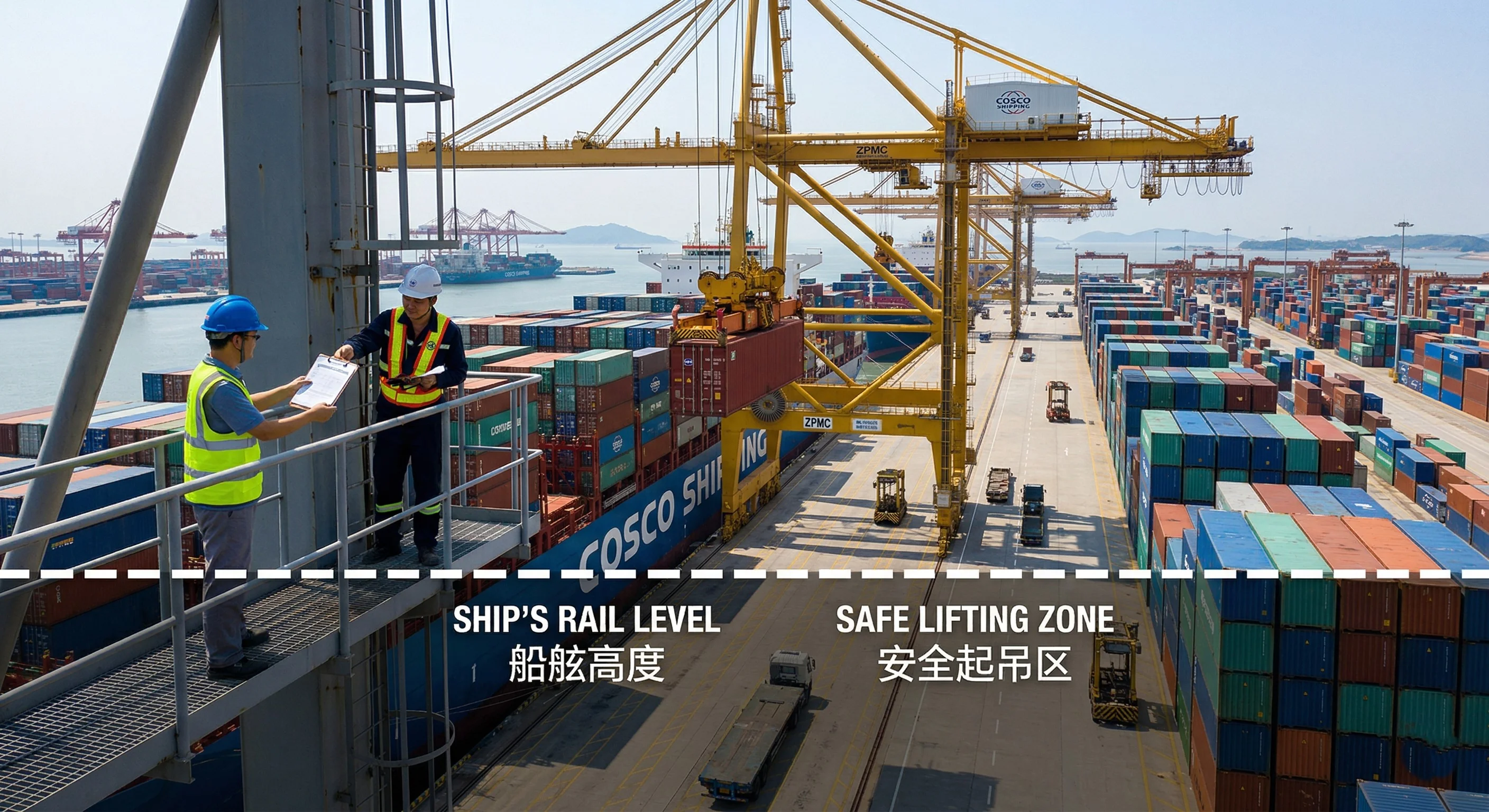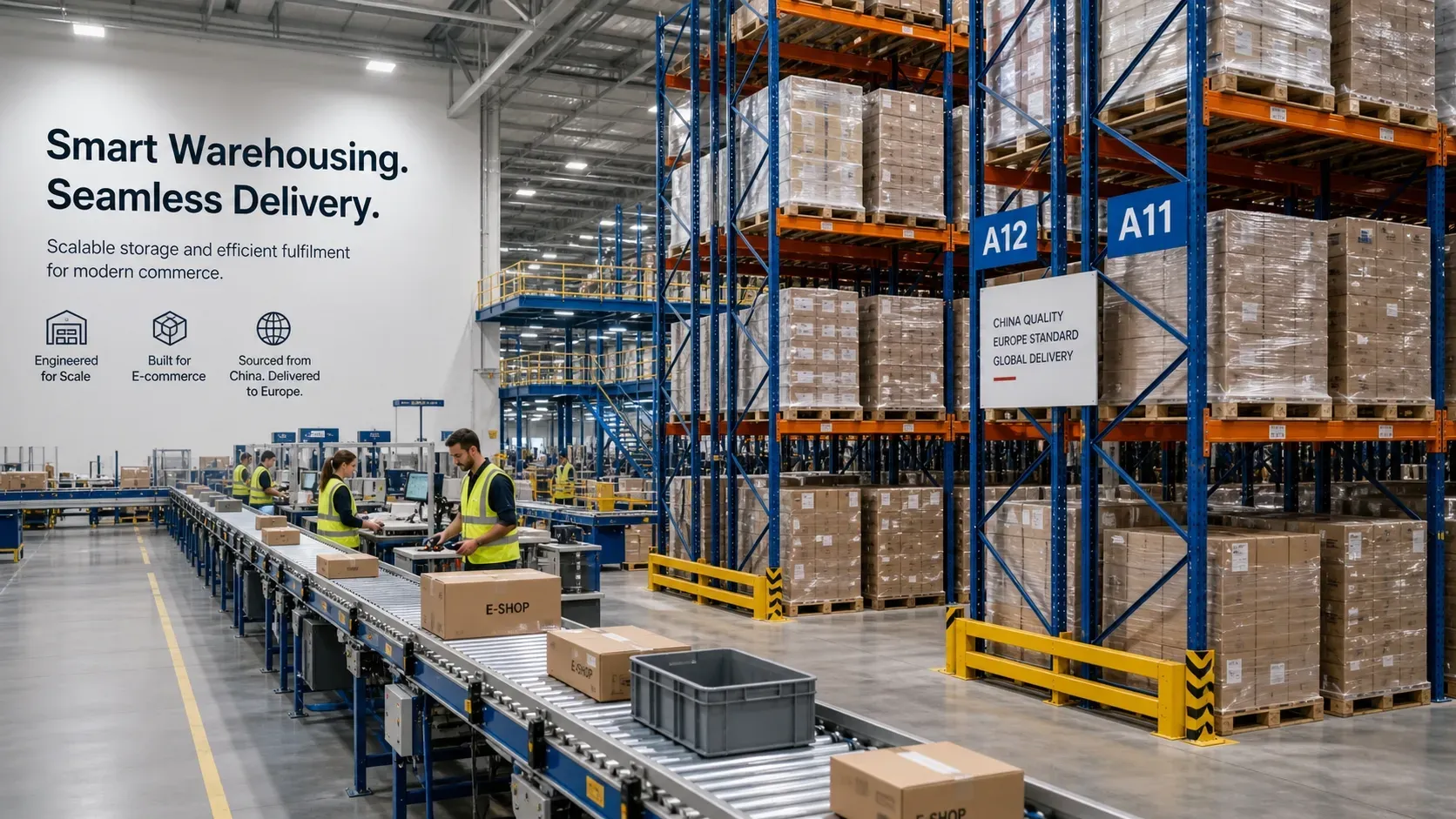
Chinese manufacturers now play a central role in supplying warehouse racking and conveyor/sortation systems for logistics, e-commerce and manufacturing worldwide. For European operators, going direct to China can materially improve hardware economics, but it introduces risk around quality, compliance and project execution that has to be managed deliberately.
This guide sets out how to source racking and conveyor systems from China safely and systematically, with an honest read on capabilities, pricing, and what to verify before you commit.
Why look to China for warehouse equipment?
Three things make China worth a serious look. Scale and export focus, China is a major global manufacturer and exporter of warehouse racking, storage and conveyor/sortation equipment, and leading factories run design, production and installation under one roof. A broad conveyor and sorter ecosystem, suppliers span simple roller conveyors to cross-belt and tilt-tray sorters and integrated logistics automation. Cost and speed, integrated steel, motor and controls supply chains typically bring lower equipment cost than Western-built equivalents.
A note on the numbers you will see quoted: individual Chinese suppliers often advertise two decades of experience, exports to dozens of countries, and four-figure client counts. Treat those as supplier marketing to verify per factory, not as facts about the industry as a whole. The structural cost advantage is real; the specific boast on a homepage needs checking.
Key categories: racking versus conveyors
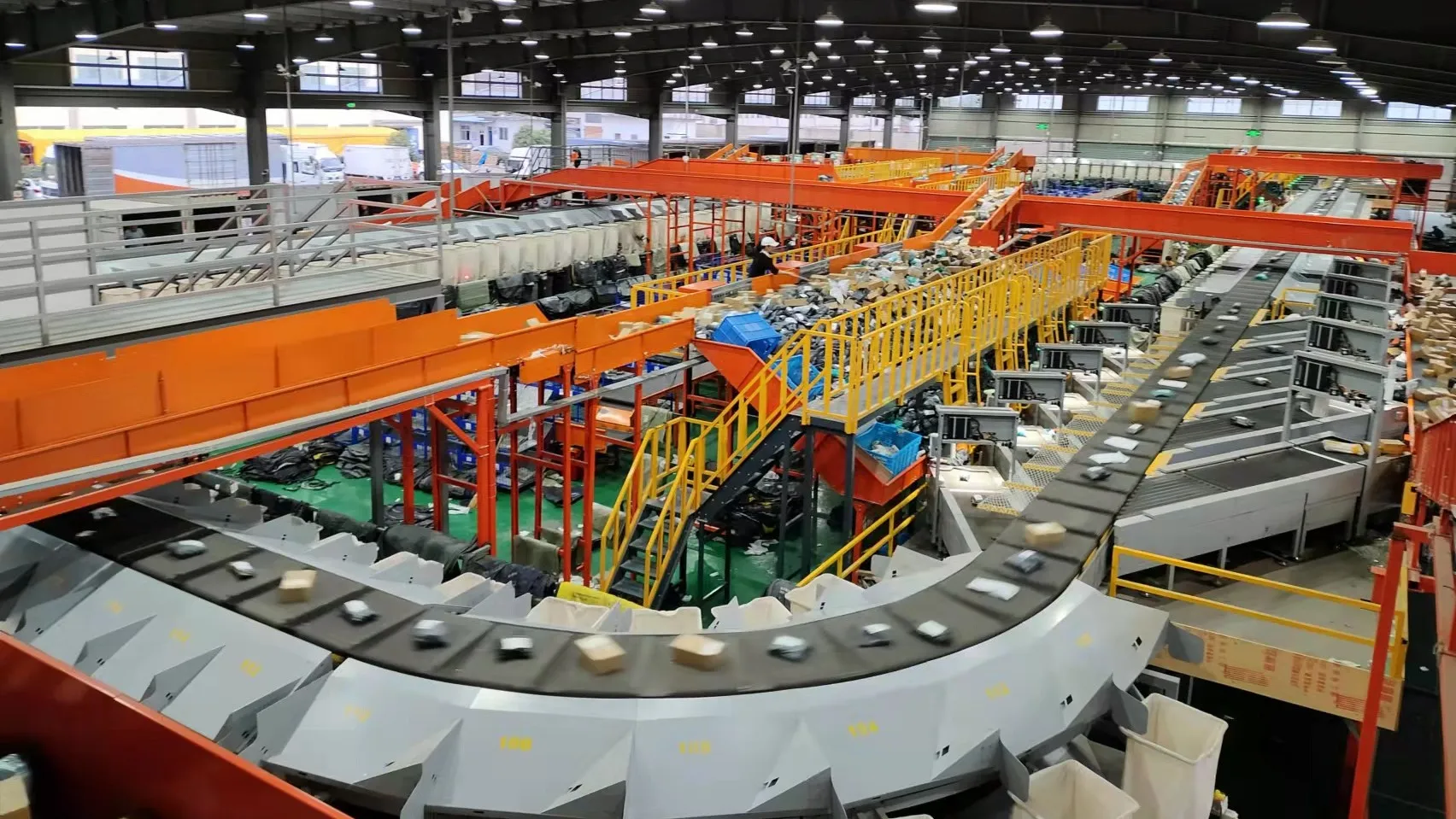
Racking covers selective pallet racking (the standard for most pallets), drive-in/through and deep-lane systems for dense storage, cantilever racks for timber, tubing and long products, and mezzanines or multi-tier pick towers. Conveyors and sortation cover gravity and powered roller conveyors for cartons and totes, belt conveyors for long runs and inclines, and sorters (narrow-belt, cross-belt, sliding-shoe, tilt-tray) for parcel and tote sorting.
The two need different vetting. Racking is steel-intensive and structurally focused, the risks are load ratings, steel grade and weld quality. Conveyors are electro-mechanical with more complex controls, the risks are motors, sensors, controls integration and safety. A supplier strong in one is not automatically strong in the other.
How to choose racking suppliers in China
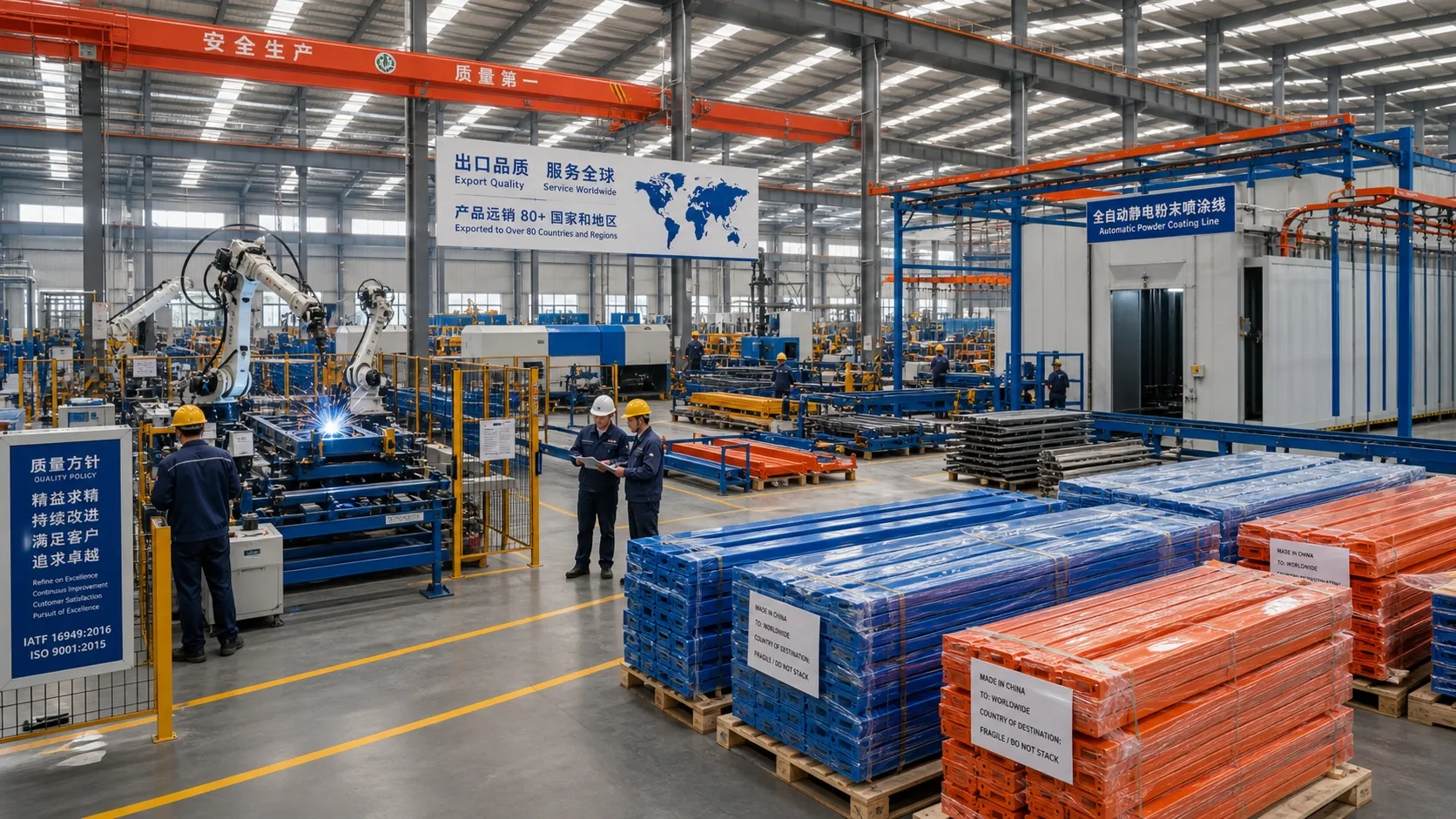
For racking, look for a real export track record into regulated markets, genuine in-house engineering (load calculations, CAD drawings, and seismic/wind design where needed), relevant quality certifications (ISO 9001, ISO 14001) with documented QA/QC procedures, and credible project references for large warehouses, complex mezzanines and shuttle systems. Factories with proven export experience generally offer better documentation, packaging and after-sales support than purely domestic suppliers, but confirm it rather than assume it.
How to choose conveyor and sorting system suppliers
For conveyors and sorters, vet technical capability (can they design and integrate a complete system, layout, controls, WMS interface, sensors?), facility and equipment (assembly space, dedicated testing zones, in-house fabrication), and quality and compliance (ISO 9001, CE marking for export, and test reports for load capacity, noise and safety). Service indicators worth asking about, on-time delivery rates, response times, and reorder rates, are useful signals when you can substantiate them; the better suppliers can show you the evidence. Some leading manufacturers provide genuinely turnkey solutions including layout design, mechanical and electrical integration, and on-site commissioning.
Honest pricing and what drives it
Pricing is highly configuration-dependent, and any single figure should be treated as indicative until a factory quotes against your real specification. As a directional guide: simple modular conveyor is commonly quoted from the low hundreds of dollars per metre; parcel sorters range from a few thousand dollars for basic units to tens of thousands for high-capacity cross-belt systems; and complete custom automation lines, conveyor, sortation, DWS and controls integrated, run well into five or six figures. Racking is quoted per project, effectively per pallet position or per tonne of steel, driven by load class, steel grade and coating.
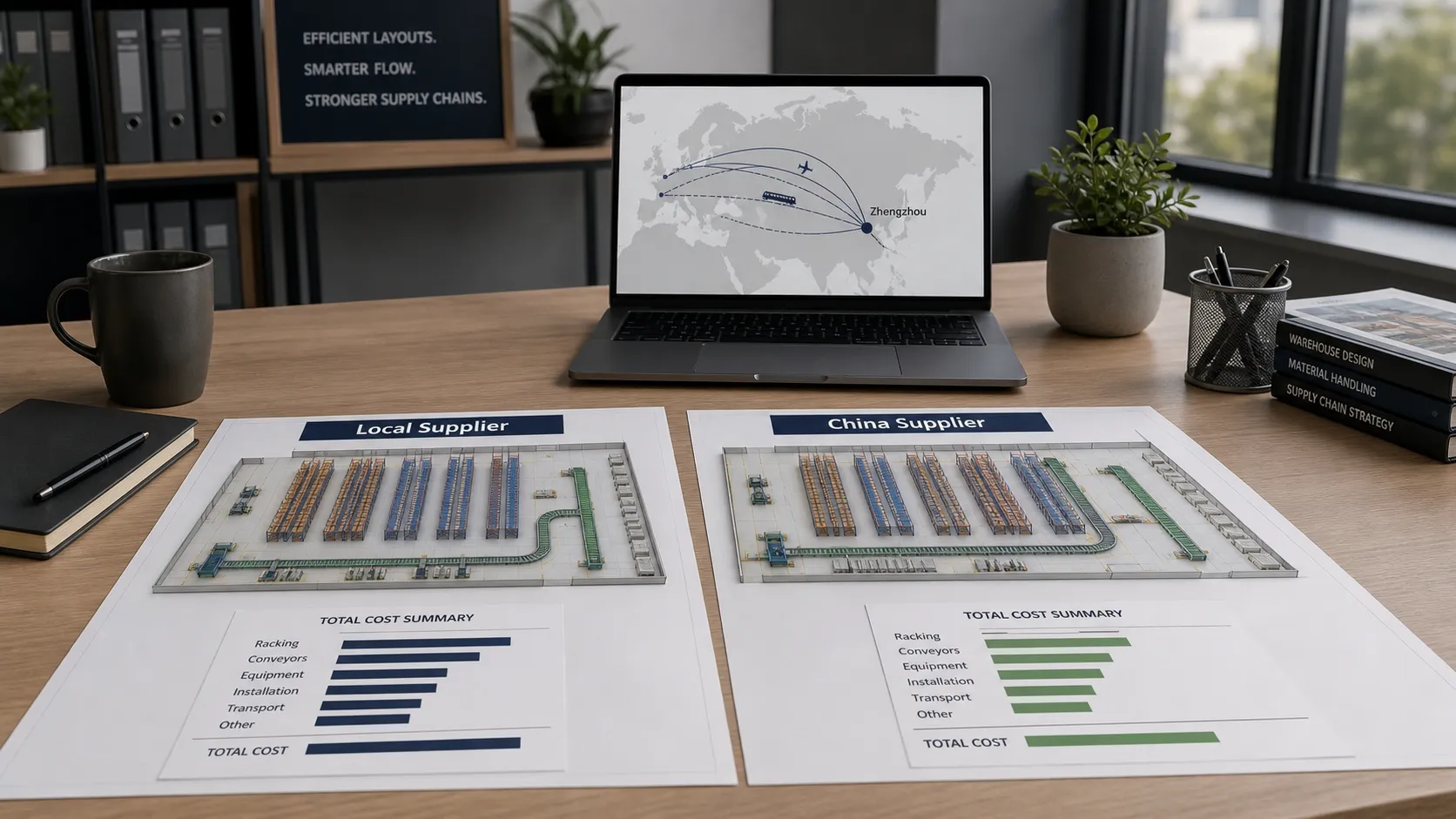
The equipment cost advantage versus European or North American systems is commonly cited in the region of 15–25%, but it varies with category, configuration and the steel price, and is partly offset by freight and local installation. The discipline that protects you is comparing total cost of ownership, equipment, freight, installation, power, maintenance and spares, rather than the headline number.
Managing risk: quality, compliance and installation
To manage risk when importing warehouse equipment: define clear specifications (load ratings, steel grades, finishes, conveyor speeds, noise limits, safety features and integration points); use structured RFQs so multiple suppliers are compared like for like; require samples or mock-ups (sample uprights and beams, or a short conveyor section) before bulk orders; and plan for local design and installation by engaging local structural and electrical engineers to ensure compliance with national standards. Skipping technical specification and independent verification is the fastest route to problems, whatever the supplier's origin.
Where a Zhengzhou-based sourcing partner adds value
A partner embedded in China, and in a genuine logistics hub like Zhengzhou, can identify reliable factories from real-world performance rather than platform listings; visit and audit suppliers, checking fabrication, welding, powder coating and controls; coordinate multi-factory orders, consolidating racking, conveyors and ancillaries into optimised shipments; and use multimodal routes from Zhengzhou to Europe. Zhengzhou is one of China's top-ten China–Europe Railway Express departure points, with rail reaching European terminals in roughly 12–18 days against 30–40 by sea, faster than ocean freight and far cheaper than air. This is the role Ériu Sourcing plays for European 3PLs and warehouse operators.

First practical steps
If you are considering sourcing racking or conveyors from China, identify one concrete project (a new warehouse, a refit, or a conveyor upgrade), document your loads, volumes and flows clearly, and decide whether you want simple equipment (racking only) or system-level integration (racking plus conveyors and sortation). Then engage a China-side partner to build a short list of two or three viable suppliers and honest initial budgets.
Send us a brief on your next warehouse project and we will prepare a short sourcing-options memo, potential Chinese suppliers, solution concepts, and indicative cost ranges against your layout. Browse the full logistics & warehouse equipment category, see our racking & conveyor sourcing offer, or get in touch.
Frequently asked questions
How much cheaper is warehouse racking and conveyor equipment from China?
The equipment cost advantage versus European or North American-built systems is commonly cited in the region of 15–25%, but it genuinely varies by category, configuration and the steel price, and is partly offset by freight and local installation. Pricing is configuration-dependent, simple modular conveyor from the low hundreds of dollars per metre, parcel sorters from a few thousand to tens of thousands, full automation lines into five or six figures, so compare firm quotes against your real layout on total cost of ownership.
Is Chinese warehouse equipment CE-compliant and safe for European use?
Reputable export-focused factories supply load charts, test reports and engineering documentation for racking, and CE marking under the Machinery Directive with manuals, electrical schematics and safety documentation for conveyors and moving machinery. Verify it against the exact configuration, and engage local structural and electrical engineers for installation and national compliance, responsibility for sign-off sits with the operator, not the factory.
Should I vet racking and conveyor suppliers the same way?
No. Racking is steel-intensive and structural, so the priorities are load ratings, steel grade, weld quality and engineering capability. Conveyors and sorters are electro-mechanical, so the priorities are motors, controls, sensors, WMS integration and safety. A supplier strong in one is not automatically strong in the other, which is why structured RFQs, samples or mock-ups, and a factory audit matter on both.