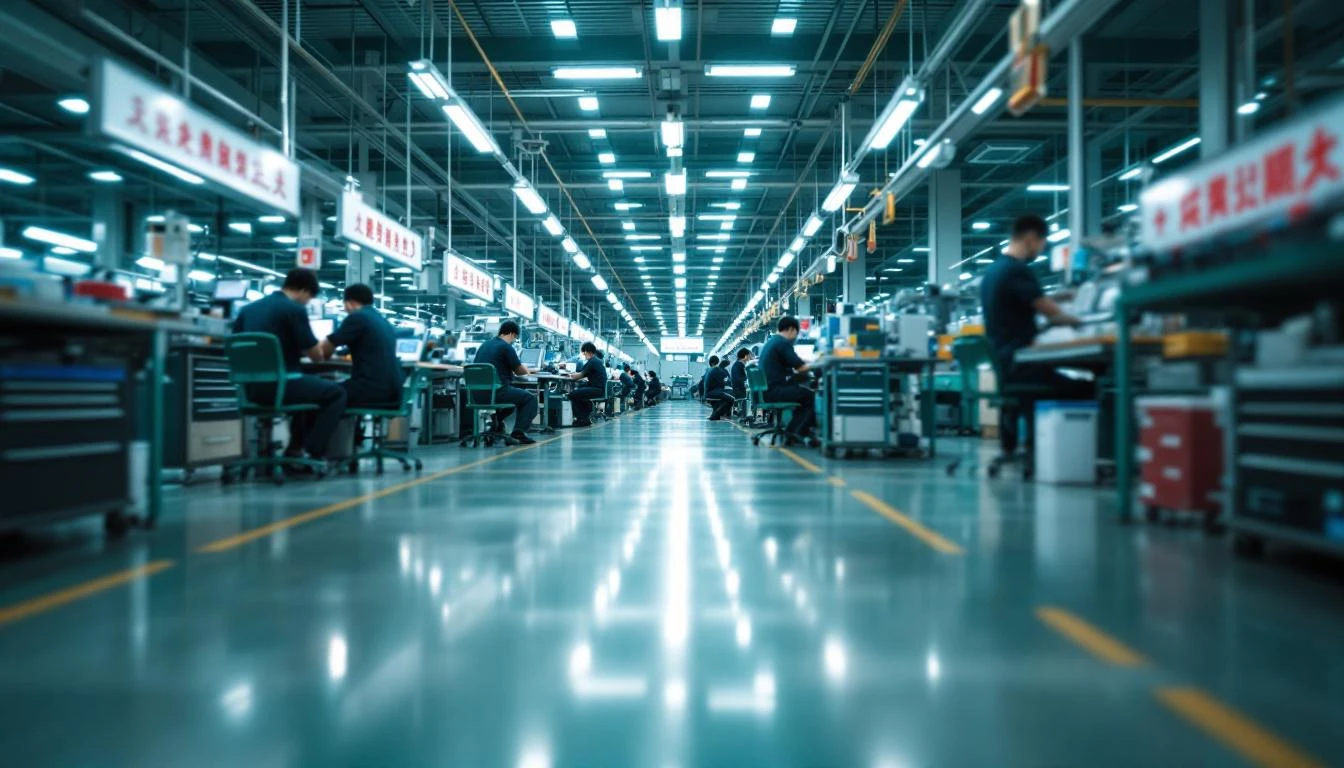
If you have bought furniture for a hotel, a restaurant, a retail range or a property development in Ireland, there is a strong chance it was made in Foshan, whether or not anyone told you. Foshan, in Guangdong Province, is the largest furniture manufacturing cluster on earth, and a great deal of what European importers and retailers sell originates there before the markups are added.
This guide explains why Foshan dominates, how its districts are organised, what factory-gate buying actually looks like, and how an Irish buyer accesses those factories directly, without the European importer's margin stacked on top.
Why Foshan dominates global furniture production
The scale is genuinely hard to overstate. Foshan produces an estimated 75% of China's furniture output, and the city's furniture manufacturing is valued at roughly US$70 billion a year (its wider home-furnishings industry, including materials and fittings, is larger still). It is the largest furniture manufacturing base in China and the largest furniture trading hub in the world.
That dominance comes from clustering. Decades of specialisation have concentrated factories, component suppliers, raw materials, hardware, finishing and logistics into one dense ecosystem, so a factory can source foam, frames, fabric, mechanisms and packaging within a short drive. That density is what makes the pricing and the variety possible, and it is why "Foshan" is effectively shorthand for the global furniture supply chain.
For context on access: Ériu Sourcing operates from Shenzhen, about 45 minutes from Foshan by high-speed rail, with Foshan itself sitting immediately alongside Guangzhou in the Greater Bay Area.
Furniture categories by district: Lecong, Longjiang and Shunde
Foshan's furniture industry is concentrated in Shunde District, and within Shunde the trade is split along a classic "front shop, back factory" model between two towns.
Lecong is the shop window, home to what is widely described as the world's largest furniture wholesale market, a corridor of showroom malls stretching over ten kilometres with millions of square metres of display space. It is where you see finished product across every conceivable style, from European classical to contemporary, residential to contract.
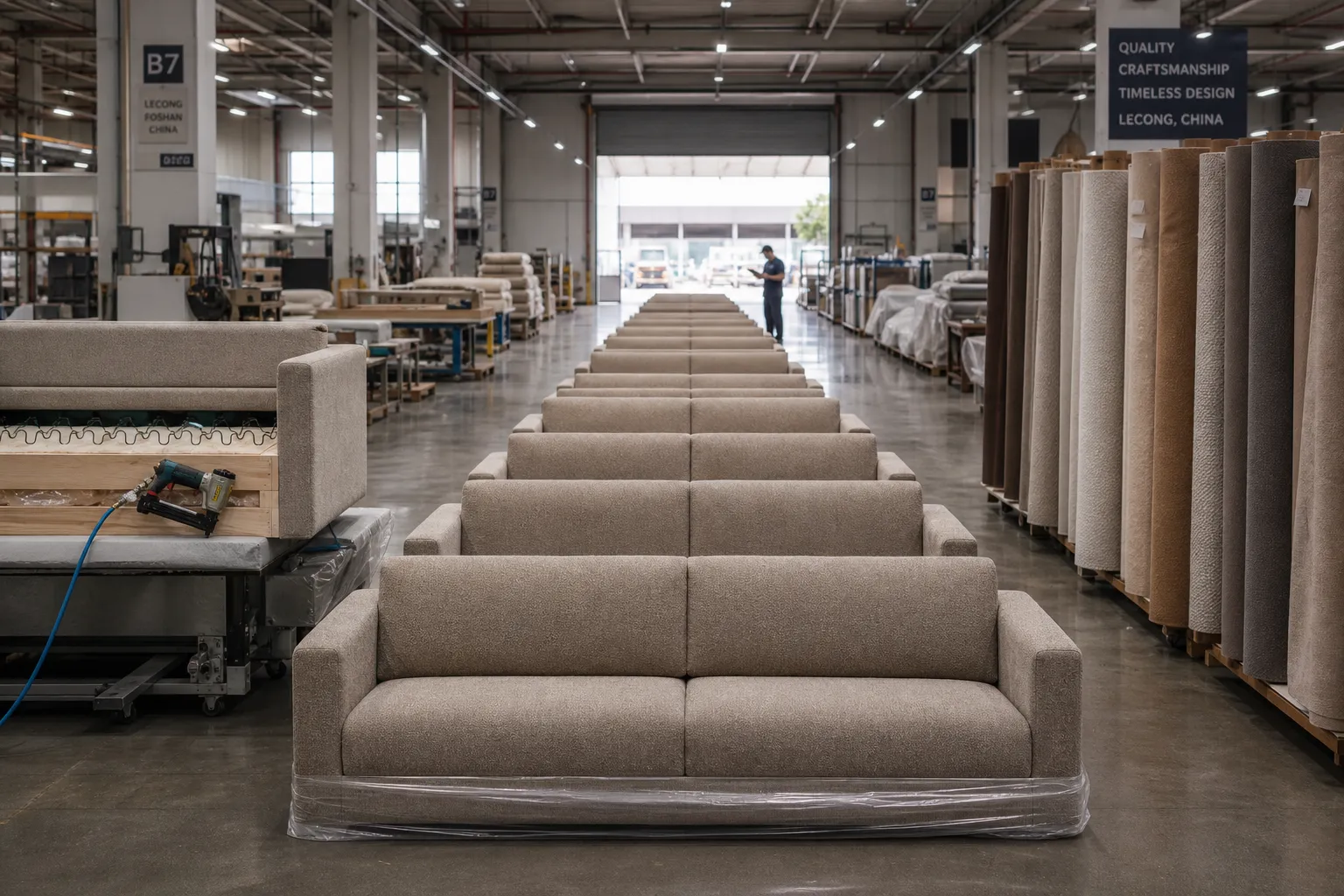
Longjiang, a few kilometres away, is the factory floor, a manufacturing base of thousands of furniture factories and the component suppliers that feed them. Lecong sells; Longjiang makes. Understanding this split matters, because a glossy showroom in Lecong is not necessarily the manufacturer, it may be a trading company displaying other factories' products, which is fine as long as you know it and price accordingly.
What factory-gate pricing actually looks like
The reason to source from Foshan directly is margin. A piece of furniture that reaches an Irish showroom has usually passed through several hands, the factory, an exporter or trading company, a European importer or distributor, and finally the retailer, each adding their cut. Buying closer to the factory removes layers of that stack.
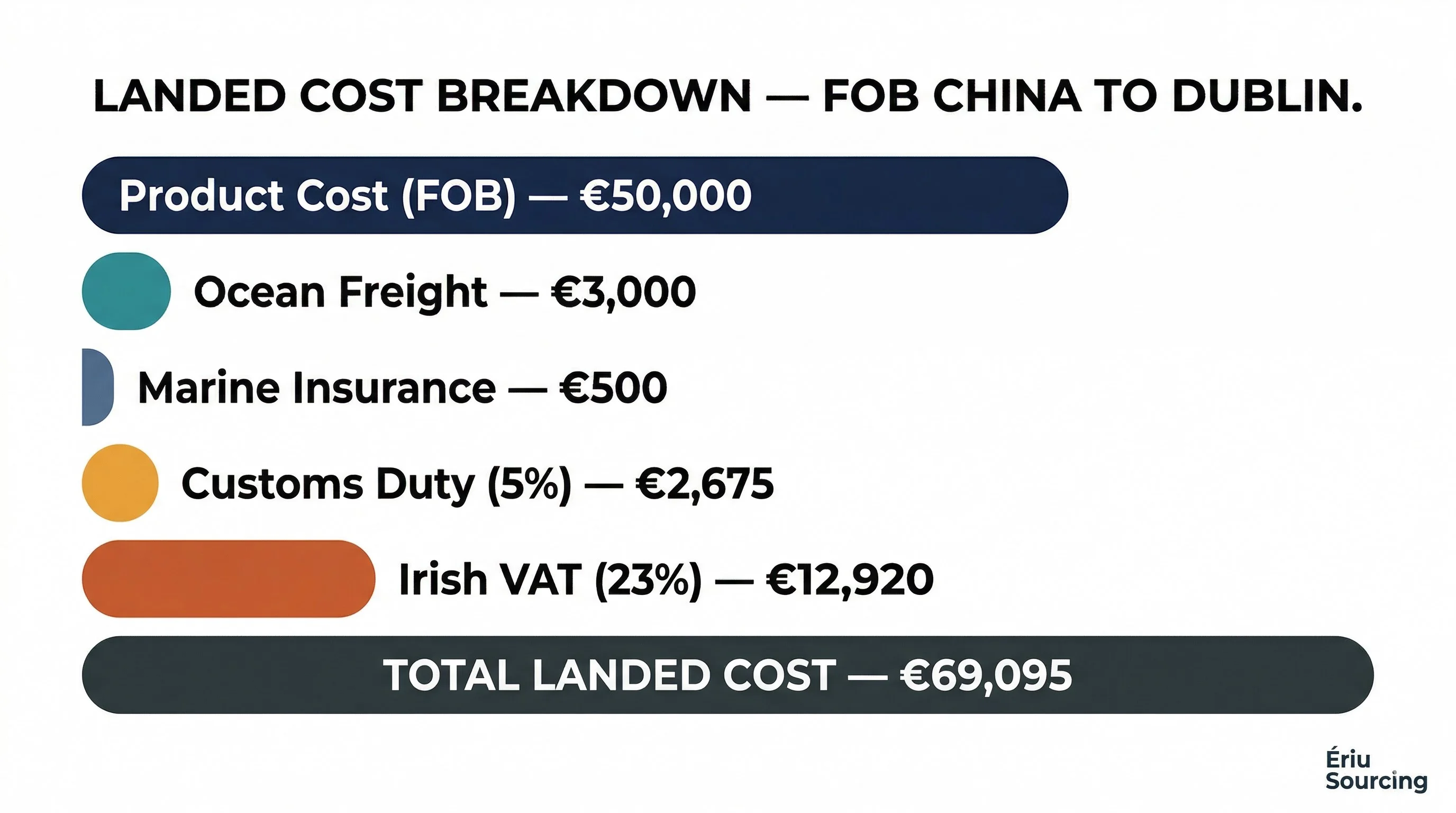
Pricing itself is highly configuration-dependent: the same sofa changes price dramatically with the frame, the foam density, the fabric or leather grade, and the mechanism. So treat any headline number as indicative until a factory quotes against your exact specification. The honest framing is not "Chinese furniture is X% cheaper", it is that you are paying the factory's real price for a defined specification, instead of paying for everyone in the chain plus their assumptions about what you can afford. We quote against your actual brief and compare on landed cost, not the ex-works sticker.
Custom vs stock: what Foshan factories can do
Foshan handles both stock and custom, but the commercial reality differs. Buying from a factory's existing range (effectively OEM stock) is fastest and cheapest, with low or no tooling cost, ideal for retailers and fit-outs that can work within an existing catalogue. Custom work, your dimensions, your fabrics, your finish, your branding, is very achievable given the depth of the cluster, but it carries minimum order quantities, sampling time and sometimes tooling costs, and the economics only work above a certain volume.
For hospitality and contract buyers in particular, the ability to specify exactly, fabric grades, fire compliance, dimensions to suit a room, is the real prize, provided the order is large enough to justify a custom run.
Fire resistance and furniture safety standards
This is the compliance area Irish and UK furniture buyers most often underestimate, and it differs by market. There is no single EU-wide furniture flammability standard, so requirements depend on where the furniture is used and sold:
- UK market: if you sell into the UK, upholstered furniture must meet the Furniture and Furnishings (Fire) (Safety) Regulations 1988, among the strictest domestic furniture fire rules anywhere. This is a hard legal requirement, not a nice-to-have.
- Ireland / EU domestic: furniture falls under general product safety obligations rather than a single harmonised flammability standard, but contract specifications routinely call up the European upholstery ignition tests EN 1021-1 and EN 1021-2 (resistance to a smouldering cigarette and a match flame).
- Contract and hospitality: hotels, restaurants and public buildings typically require higher ignition resistance, for example BS 5852 / Crib 5, specified by the project, the insurer or the fire strategy.
The practical point: decide the fire standard your project requires before you order, write it into the specification, and verify the factory can supply test evidence for the exact materials used, not a generic certificate for a different fabric. Standards are periodically updated, so confirm the current requirement for your market and use case. This is exactly the kind of detail that is cheap to get right at the specification stage and ruinous to discover after a container has landed.
Lead times and shipping options to Ireland
For a custom furniture order, plan on sampling plus production running into a couple of months before goods are ready, then freight on top. Furniture is bulky and largely ships by sea: roughly 30–40 days port to port from South China to Northern Europe, plus inland legs at both ends. Furniture's volume-to-value ratio means freight is a meaningful slice of landed cost, so consolidation and sensible container loading matter, half-empty containers are money thrown away. Build realistic timelines back from your in-store or handover date and add contingency; furniture lead times slip more often than small-goods orders.
How to organise a Foshan buying trip
If you visit, structure it. Decide your categories and budget first, then split your time between Lecong (to see breadth and finished product) and the Longjiang factories you actually want to buy from. Book showroom and factory appointments in advance, bring a written specification and your fabric/finish references, and, critically, confirm at each stop whether you are talking to the manufacturer or a trader. Photograph everything against your notes; like the Canton Fair, the showrooms blur together by the second day. And remember a showroom visit is not verification: business licence, factory tour and a specification sample still come before any deposit.
Working with a sourcing agent vs going direct
Going direct yourself is entirely possible, and for a confident buyer with time, a clear spec and the appetite to manage Mandarin-language logistics, it can work well. The trade-offs are real, though: distinguishing factories from traders, enforcing fire and quality standards, managing sampling, arranging QC and consolidating freight are all work, and all easier with someone on the ground.
A China-based sourcing agent does that legwork for you, shortlisting and verifying Foshan factories, holding the specification (including fire compliance) through sampling and production, inspecting before shipment, and consolidating the freight to Ireland. Ériu Sourcing has worked with Guangdong factories for 18 years from our base in Shenzhen. If you have a furniture brief, retail range, hospitality fit-out, or a development, see how we source furniture or send us the brief and we will map a realistic, honestly-costed route from Foshan.
Frequently asked questions
Where is Foshan and why is it important for furniture?
Foshan is a city in Guangdong Province in southern China, immediately alongside Guangzhou in the Greater Bay Area and about 45 minutes from Shenzhen by high-speed rail. It is the largest furniture manufacturing cluster in the world, producing an estimated 75% of China's furniture output, with the industry centred on Shunde District, Lecong (the world's largest furniture wholesale market) and Longjiang (the manufacturing base that feeds it).
Can Foshan factories meet UK and Irish furniture fire safety standards?
Yes, but you must specify the standard and verify it. There is no single EU-wide furniture flammability standard. Furniture sold into the UK must meet the Furniture and Furnishings (Fire) (Safety) Regulations 1988; Irish and EU contract specifications routinely call up EN 1021-1 and EN 1021-2 upholstery ignition tests, and hospitality or public-building projects often require higher resistance such as BS 5852 / Crib 5. Decide the requirement before ordering, write it into the specification, and confirm the factory can provide test evidence for the exact materials used.
Is it cheaper to buy furniture direct from Foshan?
The saving comes from removing margin layers, exporter, European importer, distributor and retailer, rather than from a secret discount, so you pay the factory's real price for a defined specification. Actual pricing is highly configuration-dependent (frame, foam density, fabric or leather grade, mechanism), and furniture's bulk means freight is a meaningful part of landed cost. The honest comparison is total landed cost against a fixed specification, not the ex-works sticker price.